Introduction
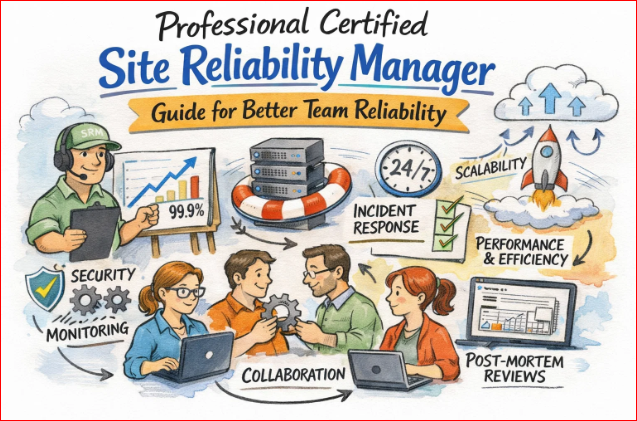
In the current landscape of high-scale digital operations, the role of a manager has shifted from simple oversight to deep technical orchestration. The Certified Site Reliability Manager program is designed for those who need to bridge the gap between complex engineering practices and organizational reliability goals. This guide is built for professionals navigating the transition into leadership within DevOps, cloud-native, and platform engineering environments. By understanding the core tenets of reliability management, you can move beyond reactive firefighting and toward a proactive, data-driven culture. This roadmap provides the clarity needed to decide if this path aligns with your career trajectory and how to effectively implement these frameworks in your current organization. Many professionals find that starting this journey with specialized training from DevOpsSchool provides a strong foundation. Pursuing this designation ensures you are equipped to handle the rigorous demands of modern production environments while leading your team toward sustainable growth.
What is the Certified Site Reliability Manager?
The Certified Site Reliability Manager designation represents a pivot from traditional IT management toward a reliability-first mindset. It exists because the complexity of distributed systems requires leaders who understand both the code and the cultural shifts necessary to maintain uptime. This certification emphasizes real-world, production-focused learning rather than abstract theory, ensuring that candidates can manage service level objectives and error budgets effectively. It aligns perfectly with modern engineering workflows by providing a structured approach to incident response, capacity planning, and post-mortem analysis. In an enterprise setting, this role ensures that reliability is treated as a core feature of the product rather than an afterthought handled by a separate operations team.
Who Should Pursue Certified Site Reliability Manager?
This path is primarily designed for engineering managers, team leads, and senior SREs who are moving into roles with broader organizational accountability. Cloud professionals and DevOps engineers who want to specialize in the management side of the house will find the curriculum highly relevant to their daily challenges. Beginners in the management space can use this to build a credible framework for leading technical teams, while experienced directors can use it to modernize their approach to infrastructure. The certification holds significant weight for both the Indian market and global tech hubs where the demand for specialized SRE leadership is growing rapidly. It provides a standardized language for discussing risk and reliability across different departments and seniority levels.
Why Certified Site Reliability Manager is Valuable and Beyond
The demand for reliability expertise is not tied to a single tool or cloud provider, ensuring long-term career longevity for those who master the discipline. As enterprises continue to adopt microservices and complex cloud-native architectures, the need for managers who can balance velocity with stability becomes critical. This certification helps professionals stay relevant by focusing on evergreen principles like observability, automation, and psychological safety within teams. The return on time and career investment is substantial, as it positions you for high-impact roles in organizations that value operational excellence. Ultimately, it equips you with the strategic mindset required to lead through technical debt and architectural transitions without compromising service quality.
Certified Site Reliability Manager Certification Overview
The certification program is delivered via the official training portal and is hosted on the sreschool.com platform. The assessment approach is designed to be practical, testing a candidate’s ability to apply SRE principles to realistic scenarios rather than just memorizing definitions. Ownership of the program lies with industry experts who have managed large-scale production environments, ensuring the content remains grounded in actual practice. The structure follows a logical flow from foundational concepts to advanced management strategies, providing a clear path for professional development. Candidates are evaluated on their proficiency in defining metrics, managing teams under pressure, and driving continuous improvement across the engineering organization.
Certified Site Reliability Manager Certification Tracks & Levels
The program is structured across foundation, professional, and advanced levels to cater to different stages of a professional’s career. The foundation level focuses on core SRE terminology and the fundamental concepts of error budgets and toil reduction. At the professional level, the focus shifts to incident command, service level management, and the implementation of observability stacks across a department. The advanced level is tailored for executives and senior leaders who need to drive reliability strategy at an enterprise scale, involving cross-departmental budgeting and culture building. These levels are designed to align with career progression, allowing an individual to grow from a technical lead into a strategic reliability director.
Complete Certified Site Reliability Manager Certification Table
| Track | Level | Who it’s for | Prerequisites | Skills Covered | Recommended Order |
| Management | Foundation | Aspiring Leads | Basic DevOps knowledge | SRE Basics, SLIs, SLOs | 1 |
| Operations | Professional | Senior SREs | 3+ years experience | Incident Mgmt, Observability | 2 |
| Strategy | Advanced | Directors/VPs | 7+ years experience | Reliability Strategy, Culture | 3 |
| Technical | Professional | Cloud Architects | Infrastructure experience | Automation, Capacity Planning | 2 |
| Security | Professional | DevSecOps Leads | Security background | Chaos Engineering, Resilience | 2 |
Detailed Guide for Each Certified Site Reliability Manager Certification
Certified Site Reliability Manager – Foundation
What it is
This certification validates a professional’s understanding of the basic terminology and core pillars of Site Reliability Engineering. It ensures the candidate can speak the language of SRE and understands how it differs from traditional systems administration.
Who should take it
It is suitable for junior engineers, project managers, or those new to the SRE domain who need a solid baseline. It is also an excellent entry point for non-technical stakeholders who work closely with SRE teams.
Skills you’ll gain
- Understanding the difference between SLA, SLO, and SLI.
- Identifying and quantifying toil in engineering processes.
- Basic principles of monitoring and alerting.
- Knowledge of the SRE engagement model and team structures.
Real-world projects you should be able to do
- Draft an initial Service Level Objective for a non-critical internal service.
- Identify three areas of manual toil and propose automation steps.
- Create a basic dashboard to track service health using standard metrics.
Preparation plan
- 7–14 days: Focus on reading the core SRE handbooks and understanding the glossary of terms.
- 30 days: Engage in practice assessments and participate in community discussions regarding SLO implementation.
- 60 days: Implement a small-scale observability project on a personal or test environment to see the concepts in action.
Common mistakes
- Confusing SLAs with SLOs in a business context.
- Over-complicating the initial set of metrics instead of starting with the basics.
- Failing to understand the cultural aspect of blamelessness.
Best next certification after this
- Same-track option: CSRM Professional
- Cross-track option: Certified DevOps Professional
- Leadership option: Technical Team Lead Certification
Certified Site Reliability Manager – Professional
What it is
This level validates the ability to manage complex production environments and lead teams through high-pressure incident response. It focuses on the tactical implementation of SRE practices at a team or department level.
Who should take it
Suitable for senior engineers, SRE leads, and hands-on managers who are responsible for the uptime of critical services. Candidates should have a few years of experience in an operational or DevOps-focused role.
Skills you’ll gain
- Advanced incident command and coordination strategies.
- Managing error budgets to balance innovation and stability.
- Designing and implementing comprehensive observability frameworks.
- Conducting effective, blameless post-mortems that drive change.
Real-world projects you should be able to do
- Lead a complex incident response for a multi-service outage.
- Renegotiate SLOs based on historical performance data and business needs.
- Implement a chaos engineering experiment to test system resilience.
Preparation plan
- 7–14 days: Review case studies of major outages and the subsequent post-mortem reports.
- 30 days: Master the use of specific observability tools and incident management platforms.
- 60 days: Conduct a mock incident drill with your team to practice the role of an Incident Commander.
Common mistakes
- Using error budgets as a stick to punish developers instead of a tool for negotiation.
- Failing to automate the data collection for SLO reporting.
- Neglecting the psychological safety of the team during high-stress periods.
Best next certification after this
- Same-track option: CSRM Advanced
- Cross-track option: Certified Cloud Security Professional
- Leadership option: Engineering Management Professional
Certified Site Reliability Manager – Advanced
What it is
This certification is built for senior leaders who shape reliability strategy across the organization. It focuses on long-term SRE planning, enterprise-level adoption, cultural transformation, architectural oversight, and executive alignment.
Who should take it
This level is ideal for Directors of Engineering, Heads of SRE, senior platform leaders, VPs, and CTOs who are responsible for reliability at a broader organizational level. It is intended for those who guide multiple teams and define the direction of operational excellence across the business.
Skills you’ll gain
- Designing enterprise-wide SRE strategy
- Driving reliability adoption across departments
- Reviewing architecture for resilience, scalability, and availability
- Managing the financial side of reliability programs
- Leading change at the organizational level
- Communicating reliability priorities with executives and stakeholders
Real-world projects you should be able to do
- Create a long-term roadmap for adopting SRE across an enterprise
- Define and negotiate reliability goals with product, engineering, and business leaders
- Lead architectural reviews for critical platforms and services
- Build executive dashboards for uptime, risk, and resilience tracking
- Align reliability investments with business goals and growth plans
- Guide cultural change that supports operational excellence at scale
Preparation plan
7–14 Days: Review strategic SRE frameworks, executive reporting models, and governance approaches used in large organizations.
30 Days: Study enterprise case studies, large-team operating models, and examples of company-wide reliability transformation.
60 Days: Focus on mentoring leaders, improving strategic thinking, and learning how successful organizations build sustainable SRE programs over time.
Common mistakes
- Becoming disconnected from the daily realities of engineering teams
- Building strategies that are too complex to adopt in practice
- Focusing too much on theory and not enough on execution
- Failing to connect reliability work with business value
- Seeing SRE only as a technical practice instead of an organizational mindset
Best next certification after this
Same-track option: SRE Fellow
Cross-track option: Chief Technology Officer Program
Leadership option: Executive Leadership Certification
Choose Your Learning Path
DevOps Path
The DevOps learning path within the reliability framework focuses on the seamless integration of development and operations through automation. Professionals on this path prioritize the CI/CD pipeline and ensuring that reliability checks are built into the code early in the lifecycle. It requires a deep understanding of infrastructure as code and how to manage configuration at scale across multiple environments. The goal is to create a frictionless path to production where stability is an inherent byproduct of the deployment process.
DevSecOps Path
In the DevSecOps path, the manager ensures that reliability and security are treated as two sides of the same coin. This involves integrating security scanning, compliance checks, and vulnerability management directly into the SRE workflow. Professionals learn how to manage the security budget alongside the error budget, ensuring that neither speed nor safety is sacrificed. It is about building resilient systems that can withstand both technical failures and malicious attacks while maintaining service availability.
SRE Path
The pure SRE path is dedicated to the engineering of reliable systems through software-defined solutions. This path focuses heavily on observability, high-scale distributed systems architecture, and the elimination of manual operations. Managers on this track are responsible for the overall health of the production environment and the development of internal tools that empower developers to own their reliability. It is a deeply technical management path that requires staying at the forefront of cloud-native technologies and performance tuning.
AIOps Path
The AIOps path explores the use of machine learning and artificial intelligence to enhance operational efficiency. Managers on this track learn how to implement automated anomaly detection, predictive maintenance, and intelligent alerting systems. This involves managing large datasets of logs and metrics to identify patterns that human operators might miss. The objective is to move toward a self-healing infrastructure where the system can autonomously respond to common failure modes and performance regressions.
MLOps Path
The MLOps path is specialized for those managing the production lifecycle of machine learning models. Reliability in this context includes monitoring for model drift, ensuring data pipeline integrity, and managing the high computational costs of training and inference. Managers learn how to apply traditional SRE principles to the unique challenges of AI workloads, such as non-deterministic outputs and complex resource requirements. It bridges the gap between data science and production engineering to ensure models remain performant and accurate over time.
DataOps Path
DataOps focuses on the reliability and velocity of data delivery across the enterprise. On this path, managers oversee the health of data pipelines, databases, and analytics platforms, ensuring that data is always available and accurate. This requires applying SRE concepts like SLOs to data quality and latency, ensuring that downstream consumers can trust the information they receive. It is a critical path for organizations where data is the core product and downtime in the data warehouse is as impactful as a website outage.
FinOps Path
The FinOps path introduces the concept of cloud financial management into the reliability domain. Managers learn how to balance performance and reliability against the cost of cloud infrastructure. This involves implementing cost-aware architecture, managing reserved instances, and ensuring that the error budget is not exceeded by excessive spending on redundant resources. It is about creating a culture of financial accountability where engineers understand the cost impact of their architectural and operational decisions.
Role → Recommended Certified Site Reliability Manager Certifications
| Role | Recommended Certifications |
| DevOps Engineer | CSRM Foundation, DevOps Professional |
| SRE | CSRM Professional, Chaos Engineering |
| Platform Engineer | CSRM Technical, Infrastructure Specialist |
| Cloud Engineer | CSRM Foundation, Cloud Architect |
| Security Engineer | CSRM DevSecOps, Security Lead |
| Data Engineer | CSRM DataOps, Data Reliability Lead |
| FinOps Practitioner | CSRM FinOps, Cloud Cost Manager |
| Engineering Manager | CSRM Professional, CSRM Advanced |
Next Certifications to Take After Certified Site Reliability Manager
Same Track Progression
Deepening your specialization within the SRE track involves moving toward highly technical or highly strategic certifications. After mastering the professional level, you might pursue advanced chaos engineering certifications or specialized courses in deep observability and kernel-level performance tuning. This path is for those who want to be recognized as the ultimate technical authority on reliability within their organization. It often leads to Principal SRE or Chief Architect roles where you define the standards for the entire company.
Cross-Track Expansion
Broadening your skills across different domains like security or data can make you a more versatile leader. Taking a DevSecOps or DataOps certification after your SRE training allows you to bridge gaps between siloed departments. This is particularly valuable in smaller organizations where a manager may need to oversee multiple disciplines. It helps you understand the unique constraints of different engineering teams and how to apply reliability principles consistently across the board.
Leadership & Management Track
Transitioning into executive leadership requires a shift from technical implementation to organizational strategy and people management. Certifications in engineering management, strategic leadership, or even an MBA focused on technology can complement your SRE background. These programs teach you how to align technical reliability goals with high-level business objectives and how to manage large-scale cultural change. This path prepares you for roles like VP of Engineering, CTO, or Head of Platform.
Training & Certification Support Providers for Certified Site Reliability Manager
DevOpsSchool
DevOpsSchool stands out as a premier destination for those looking to master site reliability and DevOps practices. They offer a comprehensive suite of courses that are deeply rooted in practical industry requirements, making them a preferred choice for corporate training. The instructors are veterans who bring real-world scenarios into the classroom, ensuring that students do not just learn the tools but the philosophy behind them. The platform provides a continuous learning ecosystem with lifetime access to materials and a strong community of professionals. Their focus on hands-on labs and project-based learning ensures that every candidate is ready to handle production-grade challenges immediately upon completion. This institute is widely recognized for its contribution to building the global DevOps workforce through consistent mentorship and high-quality educational content.
Cotocus
Cotocus is known for its highly specialized training programs that cater to the evolving needs of the global tech industry. They provide a structured approach to learning complex technologies like Kubernetes, Terraform, and advanced observability stacks. Their training methodology is designed to reduce the gap between academic knowledge and industrial application, focusing on the skills that are currently in high demand. Cotocus maintains a strong partnership with various tech giants, which helps them keep their curriculum updated with the latest trends. For professionals looking to gain deep technical expertise in a specific toolset, Cotocus offers a reliable and efficient path to mastery. They provide a blend of live training and self-paced learning to accommodate the busy schedules of working professionals while maintaining a high standard of academic rigor.
Scmgalaxy
Scmgalaxy has built a reputation as a massive knowledge hub for the DevOps and SRE community worldwide. They provide an extensive collection of tutorials, blogs, and community forums that help professionals troubleshoot real-world issues. Beyond their free resources, their formal training programs are exhaustive and cover the entire software development lifecycle from a reliability perspective. Scmgalaxy is particularly strong in the areas of configuration management and continuous integration, providing deep dives into legacy and modern toolchains. Their community-driven approach means that the learning is constantly refined by the collective experience of thousands of engineers who contribute their insights. This makes them an invaluable resource for anyone looking to stay updated on the rapidly changing landscape of software supply chain management and automation.
BestDevOps
BestDevOps focuses on delivering high-quality, boutique training experiences for small groups and individuals who want personalized attention. They specialize in creating customized roadmaps that align with an individual’s career goals and their company’s specific technology stack. Their training sessions are interactive and designed to encourage critical thinking and problem-solving rather than rote memorization. BestDevOps is an excellent choice for senior professionals who need to upskill quickly in a specific area without going through a generic, long-form course. They emphasize the best practices that have been proven in the world’s most successful engineering organizations. By focusing on a lean and effective teaching style, they ensure that every student leaves with a practical understanding of how to implement reliability at scale in their specific environment.
devsecopsschool.com
This provider is the go-to resource for anyone looking to integrate security into their SRE and DevOps workflows. They offer specialized certifications that cover everything from container security to automated compliance and threat modeling. The curriculum is designed to turn traditional operations professionals into security-conscious engineers who can defend modern infrastructure. They provide practical labs where students can practice identifying vulnerabilities and building defensive layers in a safe, controlled environment. Their focus on the intersection of speed and safety makes them an essential partner for organizations operating in highly regulated industries. By providing a clear path for security integration, they help teams build trust with their customers and stakeholders, ensuring that reliability is never compromised by security breaches or compliance failures.
sreschool.com
Sreschool.com is dedicated exclusively to the discipline of site reliability engineering, offering the most focused curriculum available today. As the host of the Certified Site Reliability Manager program, they provide the primary materials and assessment platforms for this designation. Their content is developed by SRE pioneers and is constantly updated to reflect the changing nature of cloud-native operations. The school emphasizes the mathematical and psychological foundations of reliability, ensuring students understand both the metrics and the people. For anyone serious about a career in SRE management, this is the foundational institution to engage with. They provide a direct path from technical proficiency to strategic leadership, helping engineers transition into roles where they can influence the entire engineering culture of an organization.
aiopsschool.com
Aiopsschool.com leads the way in training professionals to handle the next generation of automated operations. Their courses focus on the integration of artificial intelligence and machine learning into infrastructure management to reduce noise and predict failures. They teach engineers how to build and maintain the data pipelines required for AIOps and how to interpret the results provided by machine learning models. The curriculum is a blend of data science and systems engineering, making it a unique offering in the market. As organizations move toward autonomous operations, the training provided here becomes increasingly vital for staying competitive. They help managers understand how to leverage AI to augment their teams, allowing human engineers to focus on high-value creative tasks while the machines handle the routine monitoring and anomaly detection.
dataopsschool.com
Dataopsschool.com addresses the critical need for reliability in the data engineering space. They provide training on how to apply SRE principles to data warehouses, data lakes, and streaming platforms. Their courses cover data quality monitoring, pipeline orchestration, and the management of large-scale data infrastructure. The goal is to help data professionals deliver consistent, high-quality information to the business with the same level of predictability expected of a web application. For those managing the data backbone of an enterprise, the specialized certifications from this school provide a clear framework for operational excellence. They emphasize the importance of data integrity and availability, ensuring that data-driven decisions are based on a reliable foundation, which is essential for any modern organization looking to thrive in a competitive market.
finopsschool.com
Finopsschool.com is focused on the intersection of cloud engineering and financial management. They provide the training necessary to help organizations optimize their cloud spend without sacrificing performance or reliability. Their courses teach engineers and managers how to use cloud billing data to make informed architectural decisions and how to implement a culture of cost-awareness. They cover various frameworks for cloud governance and the tools used to track and forecast infrastructure costs. In an era where cloud bills can easily spiral out of control, the skills taught at this school are essential for every modern engineering leader. They empower managers to have meaningful conversations with finance departments, bridging the gap between technical resource allocation and corporate financial strategy to ensure sustainable business growth in the cloud.
Frequently Asked Questions (General)
- How difficult is the certification exam?The exam is designed to be challenging but fair, focusing on practical application rather than memorization. If you have hands-on experience and have followed the study guides, you should be well-prepared to pass.
- What are the prerequisites for the manager certification?While anyone can take the foundation level, the professional and advanced levels typically require several years of experience in an engineering or leadership role. A basic understanding of cloud computing and DevOps is essential.
- How long does it take to complete the program?Most candidates complete the training and exam within 30 to 60 days, depending on their existing experience level and the time they can dedicate to study.
- Is there a renewal process for the certification?Yes, to ensure that professionals stay up to date with the latest industry changes, there is typically a renewal or continuing education requirement every two to three years.
- Does this certification help with salary negotiations?Specialized management roles in the SRE space often command higher salaries due to the high demand and the critical nature of the work.
- Can I take the exam online?Yes, the certification is designed to be accessible globally through online proctored platforms, allowing you to take it from the comfort of your home or office.
- What is the ROI of this certification?The return on investment is seen through faster career progression, the ability to lead higher-impact projects, and improved operational stability within your organization.
- Is the curriculum updated for cloud-native technologies?Absolutely, the materials are regularly refreshed to include the latest practices in Kubernetes, serverless, and multi-cloud management.
- Are there group discounts for corporate teams?Most providers offer customized packages for teams looking to upskill their entire department.
- What happens if I fail the exam?Most programs offer a retake policy after a short cooling-off period, allowing you to review the areas where you struggled and try again.
- Do I need to know how to code to be a Site Reliability Manager?While you don’t need to be a full-time developer, you must be able to read code and understand architectural patterns to effectively lead SRE teams.
- How does this differ from a standard Project Management certification?This certification is deeply technical and focuses on the specific operational and cultural challenges of managing software reliability, which standard PM courses do not cover.
FAQs on Certified Site Reliability Manager
- What is the core focus of the Certified Site Reliability Manager role compared to a standard SRE?The manager role focuses on the strategic alignment of reliability with business goals, managing team culture, and overseeing the implementation of error budgets across multiple services. While an SRE engineer focuses on the “how” of automation, the manager focuses on the “why” and the organizational impact of these technical decisions.
- How does this certification prepare you for high-pressure incident management?It provides a structured framework for incident command, teaching you how to coordinate multiple teams, communicate with stakeholders, and lead a blameless post-mortem process that prevents future occurrences.
- Will this certification help me implement SRE in a traditional enterprise environment?Yes, it specifically addresses the challenges of moving from a legacy “siloed” operations model to a modern, collaborative SRE model, including how to manage the necessary cultural shift.
- How does the Certified Site Reliability Manager handle technical debt?The program teaches you how to use error budgets as a data-driven way to prioritize technical debt reduction and infrastructure improvements over new feature development.
- Is the Certified Site Reliability Manager certification recognized by global technology companies?The curriculum is based on industry-standard practices used by leading tech giants, making it highly relevant and recognized by hiring managers globally who are looking for SRE leadership.
- What kind of community support is available after getting certified?Certified professionals often gain access to exclusive forums and alumni networks where they can share insights and find career opportunities.
- Does the course cover the use of specific observability tools?While it focuses on the principles of observability, the practical labs often involve industry-standard tools like Prometheus, Grafana, and various ELK stacks to ensure you have hands-on experience.
- How does the certification address the human element of SRE?It places a significant emphasis on psychological safety, team burnout prevention, and building a culture of blamelessness, which are critical for the long-term success of any SRE initiative.
Conclusion
When you reach a certain point in your career, you realize that technical skills alone aren’t enough to drive large-scale organizational change. You need a framework to manage the inherent chaos of modern software systems. The Certified Site Reliability Manager designation provides that framework. It isn’t just about a badge for your profile; it is about adopting a mindset that views reliability as the most fundamental feature of any system. If you are tired of the constant cycle of firefighting and want to build a team that is proactive, data-driven, and resilient, then this path is worth every hour of investment. It prepares you to be the leader that modern engineering organizations desperately need—someone who can bridge the gap between business velocity and system stability without breaking the team in the process.
