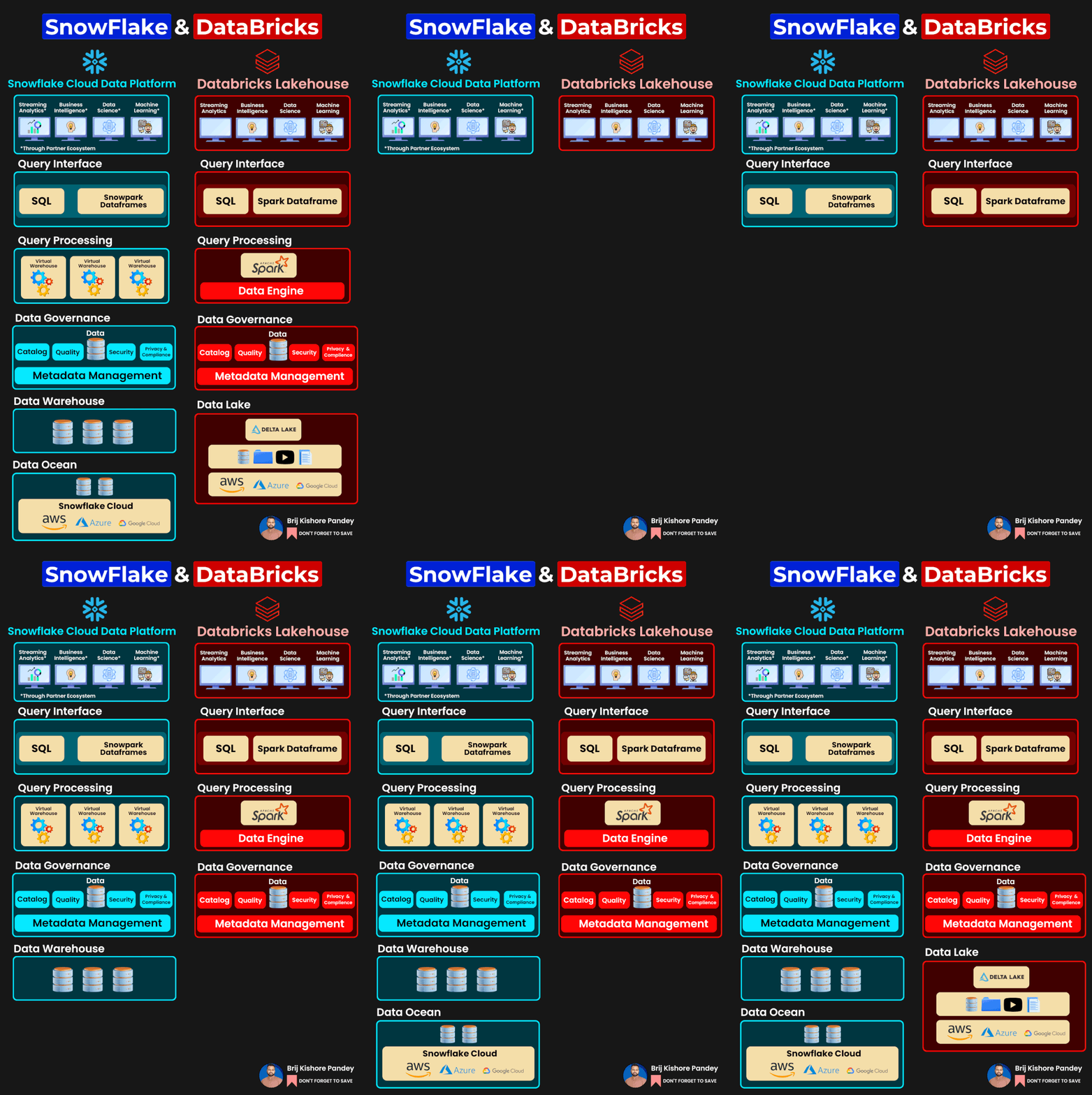
Snowflake vs Databricks: A Comprehensive Comparison
Both Snowflake and Databricks are cloud-based data platforms designed for big data analytics, but they cater to different use cases. Let’s compare them in terms of architecture, performance, pricing, use cases, and more.
1. Overview
| Feature | Snowflake | Databricks |
|---|---|---|
| Type | Cloud Data Warehouse | Data Lakehouse |
| Best For | SQL-based analytics & BI | AI/ML, data engineering |
| Storage | Managed Cloud Storage (Object Storage) | Data Lake (Delta Lake) |
| Processing Engine | Snowflake Compute Engine | Apache Spark |
| Use Case | Structured Data, Business Intelligence | Structured + Unstructured Data, AI/ML |
| Query Language | SQL | SQL + PySpark, Scala, R |
2. Architecture
Snowflake Architecture
✅ Separation of storage, compute, and services
✅ Uses cloud object storage (AWS S3, Azure Blob, GCP Storage)
✅ Multi-cluster, shared-nothing architecture
✅ Auto-scaling and concurrency handling
🔹 Strength: Best for structured data with high-performance SQL queries.
Databricks Architecture
✅ Lakehouse architecture (Data Lake + Warehouse)
✅ Built on Apache Spark with Delta Lake support
✅ Multi-language support (SQL, Python, R, Scala)
✅ Optimized for ML, AI, and real-time streaming
🔹 Strength: Best for complex data processing, AI/ML workloads.
3. Performance Comparison
| Feature | Snowflake | Databricks |
|---|---|---|
| Query Performance | Fast for structured SQL queries | Fast for large-scale distributed processing |
| Data Processing | Best for batch analytics | Best for real-time + batch |
| Concurrency | Handles multiple concurrent queries well | Optimized for parallel, distributed processing |
| Latency | Low latency for analytical queries | Higher latency but better for large workloads |
| Machine Learning Support | Limited ML support | Strong ML & AI support (Spark ML, TensorFlow, PyTorch) |
🔹 Verdict:
- Snowflake is better for BI, SQL analytics, and reporting.
- Databricks is better for big data processing, AI, and ML workloads.
4. Pricing Model
| Pricing Factor | Snowflake | Databricks |
|---|---|---|
| Billing | Pay-per-use per second (compute & storage separate) | Pay-as-you-go (DBUs – Databricks Units) |
| Compute Cost | Virtual warehouses pricing based on size | Based on cluster type (Standard, Premium, Enterprise) |
| Storage Cost | Uses cloud object storage (cheaper) | Also uses cloud storage but Delta Lake adds extra cost |
🔹 Verdict:
- Snowflake is more cost-efficient for traditional BI and SQL workloads.
- Databricks is better for high-scale data processing & ML, but can be expensive for small-scale workloads.
5. Ease of Use
| Feature | Snowflake | Databricks |
|---|---|---|
| Ease of Setup | Easy – fully managed | Moderate – needs configuration |
| User Interface | SQL-based web UI | Notebook-based UI (Jupyter, Databricks UI) |
| Learning Curve | Low (SQL-friendly) | High (requires PySpark, ML expertise) |
🔹 Verdict:
- Snowflake is easier to learn and use for business analysts and data engineers.
- Databricks is more technical and best suited for data scientists and engineers.
6. Security & Compliance
| Feature | Snowflake | Databricks |
|---|---|---|
| Encryption | Data encrypted at rest & in transit | Data encrypted at rest & in transit |
| Compliance | HIPAA, GDPR, SOC 2, ISO 27001 | HIPAA, GDPR, SOC 2, ISO 27001 |
| Role-based Access | RBAC, MFA, OAuth, SSO | RBAC, fine-grained access control |
🔹 Both platforms provide enterprise-grade security & compliance.
7. Integration & Ecosystem
| Feature | Snowflake | Databricks |
|---|---|---|
| Cloud Platforms | AWS, Azure, GCP | AWS, Azure, GCP |
| BI Tools | Tableau, Looker, Power BI | Tableau, Looker, Power BI |
| Data Science Tools | Limited ML support | Full ML support (TensorFlow, PyTorch, MLflow) |
| ETL/ELT Tools | dbt, Talend, Fivetran, Informatica | Apache Spark, Airflow, dbt |
🔹 Snowflake integrates better with BI tools, while Databricks excels in ML and ETL workflows.
8. When to Choose What?
| Use Case | Snowflake ✅ | Databricks ✅ |
|---|---|---|
| Business Intelligence (BI) | ✅ | ❌ |
| SQL-based Analytics | ✅ | ❌ |
| Data Warehousing | ✅ | ❌ |
| Big Data Processing | ❌ | ✅ |
| Machine Learning & AI | ❌ | ✅ |
| Streaming Data (Real-time) | ❌ | ✅ |
| Advanced Data Science | ❌ | ✅ |
🔹 Choose Snowflake if your focus is on structured data analytics, BI, and reporting.
🔹 Choose Databricks if you need big data, AI/ML, and real-time data processing.
Final Verdict
Both platforms serve different purposes:
- Snowflake = Best for structured data & BI analytics 📊
- Databricks = Best for data engineering, AI/ML, and unstructured data 🤖
