Here’s something most software ads never admit: half the tools bought each year sit unused within three months. Sounds surprising? It shouldn’t. Bright banners promise magic fixes. Sales pages hide the boring details. Then reality hits once the invoice arrives and the team barely opens the app. This pattern repeats across small startups and big companies alike. The good news is, it does not have to repeat for you. A clear-headed research habit changes everything. BestAIToolix.com was built for exactly this purpose. It offers a steady, fact-based space to check any tool before your card gets charged. This guide shares the lessons most buyers only learn the hard way, so you can skip straight to the smart choice.
Getting to Know BestAIToolix.com
BestAIToolix.com works more like a librarian than a salesperson. Nobody there hands you a pushy pitch. Instead, you get a large, organized catalog covering countless tools. Filters let you narrow things down by cost, purpose, or company size. Every single listing passes through the same review standard. No brand skips the line by paying extra. That one rule keeps the whole place trustworthy for everyday buyers.
Why Random Searching Wastes Your Whole Day
Typing “best project tool” into a search bar rarely ends well. You get ads disguised as articles and outdated top-ten lists. A proper software directory changes this entirely. It sorts tools by real categories, not by who paid the most for placement. You click, filter, and land on options that actually fit. A messy, hour-long hunt shrinks down to a five-minute browse.
Choosing Tools Built Around Your Real Work
Copying what another company uses rarely works well. Their team size, budget, and daily tasks differ from yours completely. Start with your biggest pain point instead. Is it messy scheduling? Slow communication? Then look at platform needs, since some staff work only from phones. Check how pricing changes once your team grows past a certain number. This approach leads you to the best software tools suited to your exact situation, not a copied checklist from someone else’s blog.
Paid Praise Versus Honest Feedback
Some five-star ratings come with a price tag attached. A brand pays, and suddenly an average product gets flooded with polished software reviews. This trick fools plenty of rushed buyers every single day. That is precisely why independent software reviews carry so much weight. Real users share what actually broke, what felt clunky, and what genuinely worked well. Reading a stack of honest opinions before purchase saves you from an expensive regret later.
Table 1: A Quick Gut-Check Before You Buy
| Evaluation Factor | What to Look For | Why It Matters for Teams |
|---|---|---|
| Setup Simplicity | Fast onboarding, minimal training needed | Gets your team productive sooner |
| Cost Honesty | Transparent pricing, no confusing tiers | Prevents unexpected billing shocks |
| Response Time | Fast, reachable customer support | Fixes minor issues before they escalate |
| Data Handling | Clear encryption and privacy terms | Protects sensitive business information |
| System Fit | Connects smoothly with current apps | Reduces repetitive manual entry |
| Long-Term Fit | Supports growing user counts easily | Avoids another costly switch soon |
Learning Apps Are Quietly Taking Over Daily Tasks
A newer breed of software does more than follow fixed commands. These learning-based apps, usually called AI tools, now draft messages, generate code, and design visuals within seconds. They cut hours off repetitive weekly work. But new ones appear constantly, making the choice genuinely confusing. An AI tools directory removes that confusion fast. It groups these smart apps by exact purpose, helping you spot the best AI tools without burning an entire weekend testing random links.
A Practical Way to Judge AI Products
Skip the polished demo reel entirely. When you compare AI tools, run your own quick test instead. Note how fast each tool responds under real conditions. Ask plainly where your uploaded information gets stored. Then examine the output honestly, not through a marketing lens. Give the same prompt to two competing tools and see which performs better. This direct method reveals more truth than any glossy sales page ever will.
Company Purchases Demand Extra Caution
Buying a personal app is simple enough. Buying for an entire organization involves far more risk. Every department needs a security review, not just the tech team. Counting exact user seats matters too, since forgotten unused accounts quietly drain your budget. A thorough business software comparison places every candidate side by side for full visibility. This kind of software comparison protects leadership from a rushed, costly decision.
Table 2: Software Needs Across Different Business Stages
| Business Stage | Main Software Need | Critical Feature | Risk to Avoid |
|---|---|---|---|
| Fresh Startup | Basic task and time tracking | Low, predictable monthly cost | Committing to a lengthy contract early |
| Growing Company | Cross-team communication tools | Easy syncing with other apps | Performance dropping as staff numbers rise |
| Established Firm | In-depth analytics and reporting | Reliable, strong data security | Rolling out change without staff buy-in |
| Large Enterprise | Fully custom automated workflows | Dedicated, responsive account manager | Locked-in deals with no clear exit path |
A Steady Roadmap Toward Your Next Purchase
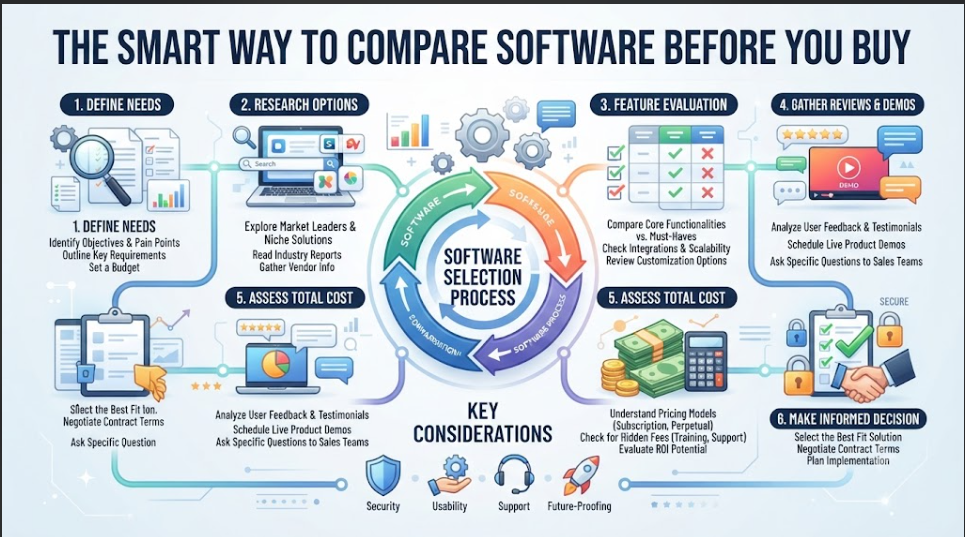
Set a firm budget number before browsing a single option. Hold that number no matter how tempting an upsell sounds. Run an actual trial next, involving your full team for at least a week, not just a quick solo click-through. Contact their support desk with a genuine question and clock how fast they answer. Finally, read the contract in full, paying close attention to cancellation terms. This complete software buying guide keeps both your budget and your peace of mind intact.
Real Situations Teams Run Into
- A design studio nearly locks into a costly annual plan before spotting a flexible monthly alternative.
- A customer support team trials two AI chat assistants and keeps the one clients actually respond to.
- A finance department realizes three separate tools are handling one single invoicing task.
- A logistics company skips a privacy review, then faces an awkward client conversation after a leak.
Eight Mistakes That Quietly Drain Budgets
- Committing to a plan without ever running a trial.
- Judging cost only by the first month’s price tag.
- Believing a polished demo over your own honest testing.
- Never checking a tool’s past uptime or reliability record.
- Underestimating the real time staff need to adapt.
- Overlooking whether support hours align with your team’s hours.
- Accepting annual billing before anyone truly likes the tool.
- Choosing an overly complicated system when a simple one suffices.
The Role BestAIToolix.com Plays in All This
BestAIToolix.com keeps every score fully visible instead of hiding behind vague stars. Side-by-side comparison charts let you weigh features and pricing within seconds. Listings get refreshed regularly, so outdated information never misleads you. The overall feel is closer to advice from a well-informed friend than to another sales funnel trying to close a deal.
A Straightforward Seven-Step Selection Process
- Goal: Write down your exact problem in a single sentence.
- Search: Browse categories that directly relate to that problem.
- Shortlist: Narrow the list down to three or four strong contenders.
- Compare: Set pricing and features next to each other clearly.
- Ask: Contact each support team with a genuine question.
- Verify: Double-check security details, pricing, and contract clauses.
- Decide: Settle on the option that solves your actual problem.
Frequently Asked Questions
Question 1: Why do so many software purchases end in regret?
Regret typically stems from moving too fast. A convincing ad pushes someone to buy without any real testing. Nobody consults the people who will use the tool daily. Weeks later, it clearly fails to match the actual workflow. Slowing down for even a few extra days often prevents this exact outcome. A patient buying process saves genuine frustration down the line.
Question 2: Is it safe to trust a free software plan?
Read the privacy terms carefully, even for free tools. Free rarely means completely risk-free. Some companies quietly sell collected user data to cover their own costs. Look for plain, clear language about how your data gets used. Independent software reviews often expose how a company truly handles information behind the scenes. Vague or missing privacy details should raise immediate concern.
Question 3: What benefit does a software directory really offer?
A software directory organizes countless apps into clean, purposeful categories. Rather than scrolling endlessly through search results, you browse a structured list instead. Filters let you narrow by price, feature, or company size within moments. This structure saves considerable time and mental energy. A strong directory turns a stressful, scattered hunt into a short task finished during a coffee break.
Question 4: How seriously should online reviews be taken?
Give extra weight to reviews mentioning both strengths and flaws honestly. A review with zero criticism often feels manufactured or paid. Seek out detailed software reviews describing specific frustrations, like a confusing dashboard layout. Genuine users typically share concrete examples rather than vague compliments. That balance signals authentic feedback rather than content shaped purely for marketing purposes.
Question 5: What really separates AI tools from ordinary software?
Ordinary software sticks to fixed rules configured once during setup. AI tools instead adjust and improve based on the data they process over time. A writing assistant, for instance, offers sharper suggestions the longer you use it. This adaptability saves genuine time on repetitive daily tasks. Still, always confirm privacy practices, since these tools frequently handle large volumes of sensitive information.
Question 6: What is the fastest fair way to compare AI tools?
Run one identical task through two or three competing tools. Compare their response speed, accuracy, and how natural the output actually reads. Check pricing per user closely, since AI tool costs often climb fast with heavier usage. Test their customer support channel once before committing any funds. This hands-on comparison beats reading marketing copy, since you witness real performance rather than promised performance.
Question 7: What should larger companies verify before signing anything?
Larger companies should confirm solid security certifications first, given the wider exposure across more staff. Count exact user seats needed to avoid wasted spending on unused accounts. Review contract length and cancellation clauses line by line without skimming. Ask directly about dedicated account support, since generic ticket systems often delay urgent fixes. A brief pilot run with real employees typically surfaces problems no sales call ever mentions.
Question 8: How many employees should be involved in testing a new tool?
Involve at least three or four people spanning different roles during testing. A single tester can easily miss issues that others would catch immediately. Bring in a daily user, a manager, and someone technical if that role exists. Their combined input reveals whether the tool genuinely fits daily operations, rather than simply looking polished during a brief guided demo session.
Question 9: What hidden costs commonly surprise software buyers?
Watch closely for setup charges, required training fees, and storage limits carrying extra costs. Certain vendors also raise prices sharply once your user count crosses a set threshold. Data export fees frequently appear the moment you try leaving a platform. Always request a complete written cost breakdown before signing any agreement. This single habit prevents jarring billing surprises just a few months into the contract.
Question 10: How frequently should a business reassess its software stack?
Schedule a full reassessment at least once a year without fail. This process catches subscriptions the team quietly stopped using months earlier. It also reveals overlapping tools performing the exact same function twice over. Set a recurring reminder so this task never gets skipped accidentally. During the check, ask each department whether every current tool still earns its monthly cost fairly.
Question 11: What should a genuinely helpful software buying guide cover?
A genuinely helpful software buying guide should walk through budgeting steps, testing methods, and clear warning signs to watch for. It needs plain, everyday wording instead of dense technical language. It should also flag frequent traps, such as skipping trials or overlooking exit clauses entirely. The strongest guides serve a tiny two-person team and a sprawling enterprise equally well.
Question 12: How does BestAIToolix.com maintain fairness across its listings?
BestAIToolix.com applies one consistent checklist to every tool featured on the platform. No company can purchase its way into a higher ranking or a better overall score. Each listing gets judged using identical factors, including pricing clarity, support responsiveness, and genuine user feedback. This uniform approach keeps the platform neutral, giving buyers honest comparisons instead of results influenced by advertising budgets.
Final Thoughts
The smartest software decisions rarely come from speed. They come from patience and a genuine willingness to test before trusting. Define your real problem clearly before browsing a single option. Try everything through an honest trial, never just a rushed guided demo. Read the entire contract, paying particular attention to how easily you can leave later. Choose feedback over flashy marketing language whenever the two disagree. Above all, pick tools that solve a genuine problem for your team, not ones that merely photograph well in a pitch deck. BestAIToolix.com keeps this whole journey calmer by offering research that stays current, transparent, and honestly free from bias.
