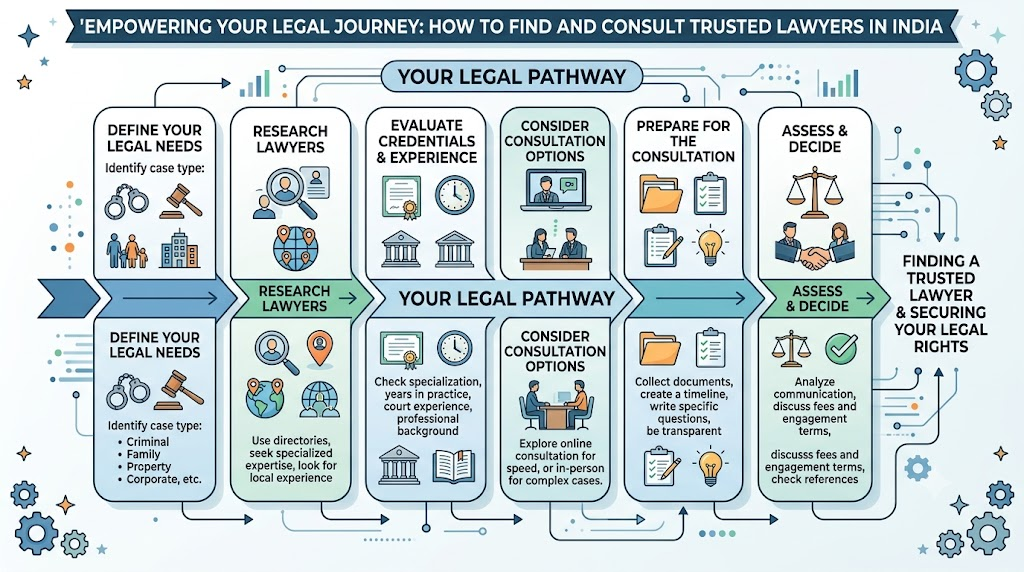
Navigating the Indian legal system can feel overwhelming when faced with an unexpected dispute, complex property transaction, matrimonial conflict, or corporate compliance requirement. Whether you are an individual protecting your personal rights, a family dealing with inherited assets, a startup founder establishing business contracts, or an NRI managing property remotely, identifying the right legal representation is the single most critical step in safeguarding your interests. Understanding your legal rights, recognizing when a situation requires formal court intervention, and knowing how to evaluate a lawyer’s experience allows you to make informed decisions. This guide breaks down the core practice areas in Indian law, outlines essential lawyer selection criteria, explores modern online legal consultations, and highlights actionable best practices for managing legal proceedings effectively.
Understanding the Legal System & Discovery in India
The legal framework of India is grounded in a unified judicial system comprising the Supreme Court, state High Courts, and district or subordinate courts. Legal matters generally fall into two broad categories: civil law, which resolves disputes between private individuals or organizations, and criminal law, which deals with offenses against the state or society.
Navigating this structure requires distinguishing between general legal information and personalized legal advice. General legal information offers foundational knowledge regarding statutes, rights, procedural steps, and options. Personalized legal advice, conversely, involves a qualified advocate analyzing specific case facts, drafting court pleadings, and providing formal representation.
       [ Indian Judicial Framework ]
                     │
         ┌───────────┴───────────┐
         ▼                       ▼
   [ Civil Law ]         [ Criminal Law ]
  (Disputes/Rights)      (Offenses/State)
         │                       │
         └───────────┬───────────┘
                     ▼
       [ Legal Discovery & Search ]
  (Matching Needs with Practice Experts)
Digital legal discovery platforms like WakilSahab simplify this landscape. By structuring lawyer directory services by practice area, location, court experience, and consultation modes, these platforms enable users to research suitable advocates, understand essential legal processes, and initiate formal inquiries with confidence.
Why Professional Legal Guidance Matters
Attempting to resolve complex legal disputes without professional assistance often leads to missed statutory deadlines, procedural errors, and unfavorable outcomes. Early consultation with a qualified advocate ensures your rights are protected from the outset.
- Procedural Compliance: Courts operate under strict procedural codes, such as the Code of Civil Procedure (CPC) and the Bharatiya Nagarik Suraksha Sanhita (BNSS). Missing a deadline or filing an incomplete document can compromise an entire case.
- Risk Mitigation: In commercial transactions, property purchases, or employment agreements, legal review identifies hidden liabilities and ambiguous terms before commitments are finalized.
- Effective Dispute Resolution: Experienced advocates assess whether a dispute can be resolved through alternative dispute resolution (ADR)—such as mediation, conciliation, or arbitration—saving time and litigation costs.
- Strategic Drafting: Issuing or responding to a formal legal notice requires accurate factual framing and legal grounding, as these documents form the evidentiary base for subsequent court proceedings.
Key Legal Practice Areas and Specialized Representation
Law in India encompasses diverse legal specializations. Selecting an advocate with dedicated experience in the specific subject matter ensures tailored handling of your case.
1. Criminal Law
Criminal law governs offenses ranging from minor infractions to serious allegations. A specialized criminal lawyer near me manages key stages including the drafting of First Information Reports (FIR), anticipatory or regular bail applications, police custody representation, cross-examination, and trial defense under relevant provisions of the Bharatiya Nyaya Sanhita (BNS).
2. Family & Matrimonial Law
Matrimonial and family disputes require a balanced combination of technical legal knowledge and empathetic advocacy. A dedicated divorce lawyer near me manages proceedings involving mutual consent divorce, contested divorce, child custody arrangements, maintenance under Section 125 CrPC / Section 144 BNSS, and restitution of conjugal rights.
3. Property & Real Estate Law
Real estate transactions involve intricate statutory verifications and local land laws. A property lawyer near me assists buyers, sellers, and family members with title search verification, partition suits, boundary disputes, ancestral property claims, tenancy conflicts, and drafting sale deeds or lease agreements.
4. Cybercrime & Digital Security Law
With the expansion of digital banking and online infrastructure, digital fraud and identity theft have increased significantly. A cyber crime lawyer near me assists victims of financial fraud, data breaches, unauthorized access, online harassment, and intellectual property theft, working alongside specialized cyber police cells and IT adjudicating officers.
5. Corporate & Business Law
Businesses, startups, and established enterprises operate within a regulatory framework overseen by the Ministry of Corporate Affairs (MCA). A corporate lawyer in India drafts commercial contracts, ensures statutory compliance, manages founder agreements, protects intellectual property (IP), and guides companies through mergers, acquisitions, and employment law obligations.
| Practice Area | Primary Focus Matters | Suitable For |
| Criminal Law | FIR review, anticipatory bail, trial defense, criminal appeals | Individuals facing criminal charges or victims seeking legal prosecution |
| Family Law | Mutual/contested divorce, child custody, alimony, partition of family assets | Spouses, parents, and family members resolving personal status disputes |
| Property Law | Title verification, land disputes, partition suits, registration | Buyers, sellers, property developers, NRIs, and inheritance claimants |
| Cybercrime Law | Online financial fraud, identity theft, data theft, cyber harassment | Victims of digital crimes, fintech platforms, and online enterprises |
| Corporate Law | Contract drafting, MCA compliance, IP registration, shareholder agreements | Startups, MSMEs, corporate entities, and entrepreneurs |
How to Choose the Right Lawyer in India
Selecting the right advocate requires careful evaluation of several factual and professional criteria rather than relying on location alone.
       [ Lawyer Selection Process ]
                     │
  1. Identify Practice Area & Case Type
                     │
  2. Evaluate Advocate's Court Experience
                     │
  3. Review Communication & Language Compatibility
                     │
  4. Discuss Fee Structure & Engagement Terms
                     │
  5. Conduct Consultation & Verify Records
- Verify Practice Specialization: Ensure the lawyer has direct, documented experience in the specific legal domain governing your issue.
- Evaluate Relevant Court Experience: A lawyer with active practice experience in the specific District Court, High Court, or specialized Tribunal (e.g., NCLT, NGT, DRT) handling your matter understands local registry procedures and judicial precedents.
- Assess Communication and Accessibility: Choose an advocate who explains complex legal processes clearly in a language you understand and maintains transparent communication regarding case progress.
- Review Fee Structures and Terms: Professional fees vary significantly based on complexity, lawyer seniority, and geographical jurisdiction. Discuss engagement terms upfront to avoid misunderstandings.
- Utilize Verified Discovery Directories: Using a structured lawyer directory India allows you to compare professional profiles, practice focus areas, and consultation formats systematically.
| Factor | What to Check | Why It Matters |
| Specialization | Past case history in relevant practice areas | Ensures subject-matter expertise tailored to your specific matter |
| Court Experience | Practice standing in District Court, High Court, or Tribunals | Familiarity with local court rules and registry filing requirements |
| Fee Transparency | Fixed retainers, per-appearance fees, or consultation rates | Prevents unexpected financial costs during ongoing litigation |
| Client Communication | Responsiveness and clarity in explaining legal options | Keeps you updated and aligned on strategic case decisions |
Online Lawyer Consultation vs. In-Person Meetings
The adoption of digital communication has introduced online lawyer consultation India as a viable option alongside traditional office meetings.
Online legal consultations allow individuals to discuss initial case facts, review draft agreements, obtain preliminary procedural clarity, and receive document checklists without travel. This format is particularly helpful for busy professionals, elderly citizens, and NRIs managing Indian legal matters from abroad.
For matters requiring extensive physical evidence review, complex trial strategy, or immediate court filings, in-person meetings remain essential. Many legal disputes benefit from a hybrid approach: an initial online consultation for early strategy, followed by in-person meetings for court preparation.
| Consultation Parameter | Online Lawyer Consultation | In-Person Lawyer Consultation |
| Primary Utility | Initial case review, agreement vetting, quick advice | Heavy document physical verification, trial strategy, court prep |
| Geographical Reach | Connect with advocates across any city or state in India | Restricted to local advocates near your immediate physical location |
| Convenience & Access | Instant booking, remote access, minimal travel time | Requires physical travel, schedule coordination, and office waiting |
| Document Sharing | Digital uploads (PDFs, scans, email exchanges) | Direct hand-over of original physical physical files and evidence |
When to Seek Immediate Professional Legal Representation
Recognizing when a legal situation requires immediate professional assistance helps prevent serious personal, financial, or legal consequences.
                  [ Trigger Event ]
                          │
  ┌───────────────────────┼───────────────────────┐
  ▼                       ▼                       ▼
[ Receive Legal Notice ] [ Police Summons / FIR ] [ Property Transaction ]
  │                       │                       │
  └───────────────────────┼───────────────────────┘
                          ▼
            [ Consult Qualified Advocate ]
- Receipt of a Formal Legal Notice: Failing to respond to a legal notice within the stipulated timeframe (typically 15 to 30 days) can prejudice your defense in subsequent court proceedings.
- Police Inquiries or FIR Registration: If an FIR has been registered or police summons issued, consult a criminal lawyer immediately to discuss protective measures like anticipatory bail.
- High-Value Property or Financial Deals: Before signing agreements or paying advance amounts, ensure title verification and contract terms are reviewed by a property lawyer.
- Marital or Custody Separation: When domestic disputes reach an impasse, early legal consultation helps clarify options regarding maintenance, custody rights, and mutual settlements.
- Corporate Disputes or Contract Breaches: Companies facing shareholder disputes, customer litigation, or breach of contract notices require prompt corporate counsel to limit financial exposure.
Understanding Legal Fees and Engagement Structures in India
Legal fees in India are not standardized by central regulation; they vary based on case complexity, advocate experience, location, and the nature of representation.
- Consultation Fees: Charged for initial case reviews, strategy discussions, or document vetting (typically billed per session or per hour).
- Per-Appearance Fees: Common in court litigation, where advocates charge a predetermined fee for each effective court hearing or appearance.
- Lump-Sum / Stage-Wise Retainers: A fixed fee agreed upon for an entire proceeding, often divided into stages (e.g., drafting and filing, evidence recording, final arguments).
- Drafting Charges: Specific fees charged for drafting legal notices, plaints, written statements, bail applications, or commercial contracts.
Important Note: Under Bar Council of India rules, advocates are strictly prohibited from charging contingency fees (basing fees as a percentage of the litigation outcome or recovered amount).
Common Legal Mistakes to Avoid
Litigants often make avoidable errors due to panic, lack of legal awareness, or reliance on informal advice.
- Delaying Professional Consultation: Waiting until a court deadline passes or an arrest warrant is issued severely limits your advocate’s defensive options.
- Relying Exclusively on Generic Online Advice: While searching for free legal advice online India provides helpful general information, online articles cannot account for the specific facts of your case.
- Hiding Facts from Your Advocate: Withholding unfavorable information prevents your lawyer from preparing effective defenses against opposing claims.
- Signing Unread Legal Documents: Signing contracts, settlement deeds, or affidavits without thorough legal vetting exposes you to unintended legal liabilities.
- Selecting Representation Based Solely on Low Fees: Choosing a lawyer strictly on price without verifying their practice area experience often leads to inadequate representation in court.
Expert Tips for Managing Your Legal Case Effectively
Implementing structured organization habits improves communication with your lawyer and strengthens your legal position.
- Maintain a Document Dossier: Organize all relevant documents, communications, receipts, notices, and agreements in chronological order before your initial consultation.
- Draft a Factual Timeline: Prepare a concise, date-wise summary of events leading to the dispute to help your lawyer grasp the facts quickly.
- Document Every Transaction: Retain bank transaction records, email exchanges, text messages, and written notices as potential evidence.
- Prepare Specific Questions: List clear questions regarding expected timelines, procedural steps, filing requirements, and fee structures prior to meetings.
- Preserve Original Records Safely: Store original documents securely, sharing clear physical copies or digital scans with your legal team unless originals are specifically required by a court.
Best Practices for Lawyer Selection and Legal Engagement
Following established professional standards ensures a productive working relationship with your advocate.
- Prioritize Specialization Over Proximity: Choose an advocate based on their documented expertise in your specific matter rather than choosing solely based on office location.
- Verify Professional Standing: Confirm that your advocate is enrolled with the relevant State Bar Council and holds a valid license to practice law in court.
- Clarify Scope of Representation Upfront: Ensure both parties agree on what services are covered under the professional fee—such as drafting, court appearances, and appeals.
- Respect Court Timelines and Judicial Process: Provide requested documents, signed affidavits, and inputs promptly to avoid delay in court filings.
- Consider Mediation When Feasible: Explore alternative dispute resolution mechanisms to settle civil, commercial, or family disputes efficiently before embarking on prolonged litigation.
The Future of Digital Legal Discovery in India
The Indian legal ecosystem is undergoing a significant digital transformation, driven by technology initiatives like the e-Courts Integrated Mission Mode Project, virtual hearings, digital court filings, and structured online legal discovery platforms.
Modern digital legal directories enhance access to justice by providing transparent information about legal services. Users can search for advocates by practice area, location, language, and court experience without relying exclusively on informal networks. As legal technology evolves, structured lawyer discovery platforms will continue to bridge the information gap between citizens and legal professionals across India.
Why Explore Legal Options via WakilSahab?
WakilSahab serves as an intuitive legal information and discovery platform designed to connect individuals, startups, and enterprises with appropriate legal professionals in India.
- Comprehensive Practice Area Coverage: Effortlessly navigate profiles across specialized legal domains including criminal law, family law, property disputes, corporate compliance, and cybercrime.
- Location & Court-Based Discovery: Search for practitioners tailored to specific geographical regions, district courts, or High Courts across India.
- Flexible Consultation Options: Discover advocates offering both online legal consultations and traditional in-person office appointments.
- Educational Legal Resources: Access structured legal information, procedural guides, and statutory overviews designed to simplify complex legal concepts for non-lawyers.
By using WakilSahab, users can explore legal resources, understand their rights, and make informed choices when selecting legal representation.
Frequently Asked Questions
1. How can I find a qualified lawyer near me in India?
You can find a qualified lawyer by utilizing structured online legal discovery directories like WakilSahab. Filter your search based on practice area, geographical location, relevant court experience, and client consultation preferences. Always verify that the advocate is actively registered with their respective State Bar Council.
2. How does an online lawyer consultation work in India?
An online lawyer consultation India allows you to schedule a virtual appointment with an advocate. You share case details and digital documents securely beforehand, discuss your matter via phone or video call, obtain initial legal information, and determine appropriate next steps without traveling to an office.
3. What is the difference between legal information and legal advice?
Legal information provides general, educational guidance about statutory provisions, court procedures, legal rights, and documentation requirements. Legal advice involves a licensed advocate applying the law to your specific factual circumstances, issuing formal recommendations, drafting court pleadings, and representing you in judicial proceedings.
4. When should I consult a criminal lawyer near me?
You should consult a criminal lawyer immediately if an FIR has been registered, if you receive a police summons, face potential criminal allegations, or require urgent legal protection such as anticipatory bail or regular bail representation under the provisions of the Bharatiya Nagarik Suraksha Sanhita (BNSS).
5. What should I prepare before consulting a divorce lawyer near me?
Before consulting a divorce lawyer near me, prepare a chronological timeline of your marriage, details of ongoing disputes, records of financial assets or joint properties, information regarding child care requirements, and copies of key documents such as your marriage certificate, identity proofs, and income statements.
6. Why is title verification important before buying property in India?
Title verification by a property lawyer near me ensures that the seller holds clear, marketable title ownership to the property. It identifies hidden liabilities, outstanding mortgages, legal claims, encumbrances, pending court litigation, or local land revenue compliance issues before you make financial commitments.
7. How can a cyber crime lawyer near me assist with online financial fraud?
A cyber crime lawyer near me guides you through reporting digital fraud to the National Cyber Crime Reporting Portal (cybercrime.gov.in) and specialized police cells. They assist in filing formal complaints, freezing compromised bank accounts, communicating with financial institutions, and pursuing legal remedies under the Information Technology Act.
8. What services does a corporate lawyer in India provide to startups?
A corporate lawyer in India assists startups with business entity incorporation, founder agreements, employment contracts, intellectual property registration, regulatory compliance with the Ministry of Corporate Affairs (MCA), investor term sheets, and drafting commercial vendor contracts to protect business interests.
9. Are online legal advice services in India reliable?
Online legal consultations are valuable for preliminary reviews, document vetting, understanding rights, and discussing initial strategy. However, complex court litigation, trial cross-examinations, and formal court filings require physical representation and ongoing engagement with an advocate practicing in the relevant court.
10. How do lawyers in India charge professional fees?
Lawyers in India charge fees through various structures, including fixed per-session consultation fees, per-appearance charges for court hearings, stage-wise retainers, or flat drafting fees for notices and contracts. Indian Bar Council rules strictly prohibit charging contingency fees based on litigation outcomes.
11. Can I seek a second legal opinion on an ongoing court case?
Yes, seeking a second legal opinion is common practice in complex litigation. You can consult another advocate to review existing court pleadings, orders, and strategies to obtain an independent perspective on your case’s progress and potential options.
12. How do legal discovery directories help citizens find advocates?
A legal discovery platform like a lawyer directory India aggregates verified advocate profiles, categorizing them by practice area, office locations, practice standing, court experience, and available consultation formats. This helps citizens compare options and select suitable legal professionals transparently.
13. What documents do I need to bring to a property lawyer consultation?
For a property consultation, bring all available property documents, including previous title deeds, mother deeds, mutation entries, land revenue receipts, approved building plans, encumbrance certificates, draft sale agreements, and identity documentation of the involved parties.
14. What happens if I miss the deadline to reply to a legal notice?
Failing to respond to a legal notice within the specified timeframe can harm your legal position. The sender may initiate formal civil or criminal court proceedings, and your lack of response may be viewed in court as a failure to contest the claims raised initially.
15. Is free legal advice online in India sufficient for handling court cases?
While resources offering free legal advice online India help build basic legal awareness, generic information cannot substitute for personalized legal representation. Court litigation requires customized drafting, evidence evaluation, statutory interpretation, and physical representation by a qualified advocate.
Conclusion
Understanding the Indian legal framework and identifying appropriate legal representation is essential when resolving personal, property, financial, or corporate disputes. Navigating court systems, statutory deadlines, and documentation requirements demands practical guidance from qualified legal professionals who understand local judicial procedures. Relying solely on informal recommendations often limits your access to suitable advocates. Digital legal discovery platforms address this gap by providing structured access to advocate profiles across specialized practice domains—such as criminal law, matrimonial disputes, property verification, cybercrime, and corporate compliance.
