Introduction
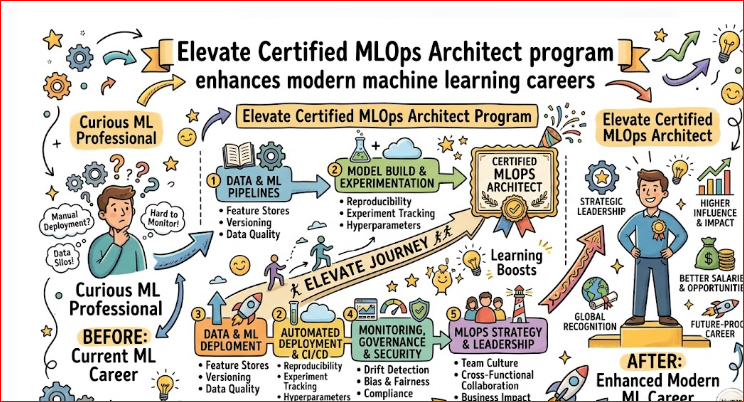
The Certified MLOps Architect is a professional designation aimed at engineers who want to master the operational side of machine learning. This guide provides a detailed roadmap for technical professionals to bridge the gap between building models and running them in production. It matters today because businesses are shifting from experimental AI to scalable, production-grade systems that require rigorous automation. By following this guide, you can navigate the complex ecosystem of tools and practices needed to succeed in modern engineering roles. AIOpsSchool hosts this program to ensure that the next generation of architects is prepared for the challenges of managing AI at scale.
What is the Certified MLOps Architect?
The Certified MLOps Architect is a framework and credential focused on the engineering principles required to maintain machine learning models in live environments. It exists to address the unique challenges of ML systems, such as data drift, model decay, and the need for continuous retraining. The program emphasizes real-world, production-focused learning over academic theory, preparing engineers to handle actual system failures. It aligns with modern engineering workflows by integrating data science into the standard CI/CD and DevOps culture of an organization. This ensures that enterprise practices remain agile while maintaining the reliability and security of their AI-driven applications.
Who Should Pursue Certified MLOps Architect?
This program is designed for software engineers, SREs, and cloud professionals who are looking to specialize in the operational aspects of AI. Data engineers and security professionals will also find it valuable for understanding how to secure and scale data pipelines for machine learning. It is suitable for beginners who want a clear learning path, as well as experienced leaders who need to manage technical teams effectively. The curriculum has global relevance and is particularly important for the technology market in India, where AI adoption is accelerating. Managers and technical leaders should pursue this to gain a strategic understanding of how MLOps fits into a broader technical organization.
Why Certified MLOps Architect is Valuable and Beyond
The value of this program lies in its focus on longevity and enterprise-grade reliability in an era of rapid AI growth. As more companies adopt machine learning, the demand for professionals who can automate the model lifecycle continues to grow. It helps professionals stay relevant despite tool changes by focusing on architectural patterns rather than just specific software. The return on time and career investment is high, as MLOps skills are currently among the most sought-after in the global tech industry. By mastering these principles, you ensure that your skills remain critical as enterprises move toward fully automated and self-healing AI systems.
Certified MLOps Architect Certification Overview
The Certified MLOps Architect program is delivered via the official course page and is hosted on the AIOpsSchool website. The program uses a practical assessment approach that requires candidates to demonstrate their skills in simulated production environments. This structure ensures that anyone who earns the certification has the hands-on experience needed to solve real-world architectural problems. The ownership of the program lies with industry experts who have years of experience in scaling complex technical systems. It is structured into logical levels that allow learners to progress from basic concepts to advanced enterprise-level architectural design.
Certified MLOps Architect Certification Tracks & Levels
The certification is organized into three distinct levels: foundation, professional, and advanced. The foundation level covers the basics of ML lifecycles and the core differences between standard DevOps and MLOps. The professional level focuses on implementing automation and monitoring for models in mid-to-large-scale environments. The advanced level is for those designing complex, multi-cloud architectures with high availability and security requirements. These tracks align with various career stages, allowing professionals to specialize in areas like reliability, security, or financial optimization. This tiered approach ensures that your learning remains focused and relevant to your specific career progression goals.
Complete Certified MLOps Architect Certification Table
| Track | Level | Who it’s for | Prerequisites | Skills Covered | Recommended Order |
|---|---|---|---|---|---|
| Operational ML | Foundation | Junior Engineers, Managers | Basic IT awareness | ML Basics, Lifecycle | 1st |
| ML Automation | Professional | DevOps, Data Engineers | 2 years IT experience | CI/CD for ML, Testing | 2nd |
| Cloud Architecture | Advanced | Senior SREs, Architects | Professional cert | Scaling, DR for ML | 3rd |
| Compliance/Sec | Advanced | Security Analysts | Professional cert | Model Audit, Bias | 4th |
Export to Sheets
Detailed Guide for Each Certified MLOps Architect Certification
Certified MLOps Architect – Foundation Level
What it is
This entry-level certification validates a foundational understanding of how machine learning models move from development to production. It focuses on the core terminology and the primary stages of the MLOps lifecycle.
Who should take it
This is ideal for individuals new to the AI space, including junior developers, project managers, and IT recruiters. It is also a perfect starting point for traditional system administrators looking to transition into AI operations.
Skills you’ll gain
- Understanding of model training and inference phases.
- Knowledge of core MLOps terminology and industry standards.
- Ability to identify the components of a basic machine learning pipeline.
- Awareness of the challenges involved in scaling AI projects.
Real-world projects you should be able to do
- Create a flowchart for a standard model deployment process.
- Assist in the basic setup of version control for machine learning code.
- Identify potential bottlenecks in a manual model deployment workflow.
Preparation plan
- 7-14 days: Study the basic terminology and the six stages of the ML lifecycle.
- 30 days: Complete the introductory modules and review common case studies.
- 60 days: Engage with online communities to understand common beginner challenges in MLOps.
Common mistakes
- Overlooking the differences between data versioning and code versioning.
- Assuming that standard DevOps tools work perfectly for ML without modification.
- Ignoring the cultural aspect of collaboration between data scientists and engineers.
Best next certification after this
- Same-track option: Certified MLOps Architect – Professional.
- Cross-track option: Certified DevOps Engineer.
- Leadership option: Junior Product Manager (AI).
Certified MLOps Architect – Professional Level
What it is
This level validates your ability to build and maintain automated pipelines for machine learning models. It ensures you can handle more complex tasks like automated testing, model registration, and basic monitoring.
Who should take it
This is designed for practicing DevOps engineers, data engineers, and cloud specialists who are working on AI projects. It requires a solid understanding of containers and basic automation scripts.
Skills you’ll gain
- Proficiency in building CI/CD pipelines specifically for machine learning.
- Ability to implement automated model testing and validation.
- Skills in setting up model registries and metadata tracking systems.
- Knowledge of basic model monitoring for performance and drift.
Real-world projects you should be able to do
- Automate the deployment of a model using a container orchestration tool.
- Build a dashboard to track model accuracy in a staging environment.
- Configure automated alerts for when model performance falls below a threshold.
Preparation plan
- 7-14 days: Focus on mastering containerization for machine learning workloads.
- 30 days: Build an end-to-end automated pipeline for a sample model.
- 60 days: Practice troubleshooting pipeline failures and managing model versions.
Common mistakes
- Failing to automate the validation step before model deployment.
- Not tracking the specific dataset version used for a particular model training.
- Creating overly complex pipelines that are difficult for the team to maintain.
Best next certification after this
- Same-track option: Certified MLOps Architect – Advanced.
- Cross-track option: Certified Cloud Security Professional.
- Leadership option: MLOps Lead or Technical Lead.
Certified MLOps Architect – Advanced Level
What it is
The advanced level validates expertise in designing and managing global-scale machine learning architectures. It covers high availability, multi-region deployments, and complex governance and security strategies.
Who should take it
This is for senior architects, principal engineers, and SREs who are responsible for an organization’s entire AI infrastructure. Significant experience in production environments is required for success here.
Skills you’ll gain
- Design of resilient and scalable multi-cloud MLOps architectures.
- Implementation of advanced security and encryption for AI systems.
- Strategy for long-term model governance, auditing, and bias detection.
- Expertise in optimizing high-performance compute resources for AI.
Real-world projects you should be able to do
- Architect a multi-region deployment for a mission-critical AI application.
- Design a system for automated model auditing and compliance reporting.
- Implement a cost-management strategy for large-scale GPU clusters.
Preparation plan
- 7-14 days: Study advanced architectural patterns and disaster recovery for AI.
- 30 days: Draft and review architectural designs for complex global systems.
- 60 days: Conduct mock architectural reviews focusing on security and cost optimization.
Common mistakes
- Ignoring the legal and compliance requirements of different geographical regions.
- Designing a system that is too rigid to adapt to new AI frameworks.
- Neglecting the financial impact of unoptimized cloud resource usage.
Best next certification after this
- Same-track option: Specialty in Generative AI Ops.
- Cross-track option: Certified FinOps Professional.
- Leadership option: Chief Architect or VP of Infrastructure.
Choose Your Learning Path
DevOps Path
This path is for engineers who want to integrate machine learning into their existing software delivery expertise. You will learn how to treat ML models as artifacts within a standard deployment pipeline. This ensures that AI applications benefit from the same speed and reliability as traditional web services. It is the best route for those who already have a strong background in automation and want to apply it to AI.
DevSecOps Path
The DevSecOps path focuses on securing the machine learning lifecycle from start to finish. You will learn how to protect datasets, secure model endpoints, and ensure that AI systems are not vulnerable to attacks. This path is essential for organizations that handle sensitive user data or operate in highly regulated sectors. It ensures that security is built into the AI infrastructure rather than added as a late-stage fix.
SRE Path
In the SRE path, the focus is on the availability and reliability of machine learning models in production. You will learn how to use site reliability engineering principles to manage the performance of AI systems. This includes setting service level objectives (SLOs) and creating automated response systems for model failures. It is the perfect path for those who want to ensure that AI systems stay up and running under high load.
AIOps Path
The AIOps path teaches you how to use artificial intelligence to improve the management of your own IT systems. You will learn to use machine learning for log analysis, incident prediction, and automated system maintenance. This path turns the power of AI inward, making your infrastructure smarter and more proactive. It is ideal for operations professionals who want to modernize their approach to system management.
MLOps Path
The MLOps path is a dedicated journey through the specific requirements of the machine learning lifecycle. It covers everything from data ingestion and model training to deployment and ongoing monitoring. This path creates a well-rounded professional who can manage the entire flow of an AI project. It is the most direct route for those who want to be specialized experts in the field of machine learning operations.
DataOps Path
The DataOps path focuses on the flow and quality of the data that fuels machine learning models. You will learn how to build automated data pipelines that ensure information is clean, reliable, and delivered on time. This path is critical because the success of any AI project depends entirely on the quality of its input data. It emphasizes data observability and automated testing to prevent data-related system failures.
FinOps Path
The FinOps path addresses the financial side of running machine learning systems at scale. You will learn how to track and optimize the high costs associated with training models and running AI inference in the cloud. This path is becoming vital as organizations look to scale their AI efforts while maintaining financial discipline. It teaches you how to maximize the business value of AI while minimizing unnecessary infrastructure spending.
Role → Recommended Certified MLOps Architect Certifications
| Role | Recommended Certifications |
|---|---|
| DevOps Engineer | Foundation, Professional |
| SRE | Professional, Advanced |
| Platform Engineer | Foundation, Professional |
| Cloud Engineer | Foundation, Professional |
| Security Engineer | Foundation, Professional |
| Data Engineer | Foundation, Professional |
| FinOps Practitioner | Foundation, Professional |
| Engineering Manager | Foundation, Professional |
Export to Sheets
Next Certifications to Take After Certified MLOps Architect
Same Track Progression
After reaching the advanced level, you should focus on emerging specialized areas such as Generative AI Operations or LLM management. These niche topics represent the next frontier of the industry and will help you stay at the forefront of the field. Staying in the same track allows you to deepen your expertise and become a go-to authority for complex AI infrastructure. This level of specialization is often required for principal-level roles in major technology companies.
Cross-Track Expansion
Expanding your knowledge into areas like DevSecOps or FinOps can make you a more holistic and versatile engineer. Understanding how security and cost management interact with MLOps allows you to design better, more resilient systems. This breadth of knowledge is highly valued in leadership roles where you must oversee multiple different technical teams. It also helps you collaborate more effectively across the organization, ensuring that technical projects align with broader business goals.
Leadership & Management Track
For those interested in the human and strategic side of technology, the management track is a natural progression. This involves moving into roles like Engineering Manager or Director of AI Infrastructure, where you focus on team building and strategy. This path requires a shift from technical execution to long-term planning and budgeting. It is the best route for those who want to shape the future direction of an organization’s technical and AI transformation efforts.
Training & Certification Support Providers for Certified MLOps Architect
DevOpsSchool
DevOpsSchool has built a reputation as a leading provider of technical training, focusing on the practical skills needed for modern IT roles. Their curriculum is designed to be hands-on, ensuring that students gain experience with the tools they will use in their daily jobs. They offer a wide range of courses covering everything from basic automation to advanced cloud-native architectures. With a strong community of instructors and alumni, they provide a supportive environment for professionals at all stages of their careers. Their focus on real-world scenarios makes their training highly relevant for those looking to make a quick impact in their organizations.
Cotocus
Cotocus is a specialized training organization that prides itself on delivering high-quality, personalized learning experiences for engineers. They focus on emerging technologies and ensure that their content is always up to date with the latest industry trends. Their instructors are experienced practitioners who bring practical insights and “battle-tested” knowledge into the classroom. By offering flexible learning formats, they cater to busy professionals who need to balance their studies with their work responsibilities. Cotocus is known for its detailed approach to complex subjects like MLOps and SRE, helping students master even the most difficult technical concepts.
Scmgalaxy
Scmgalaxy is a long-standing community and training platform that has been a trusted resource for DevOps and configuration management for years. They offer a wealth of free resources, including tutorials and blogs, alongside their structured certification programs. Their approach to training is community-centric, encouraging students to learn from each other and share their own experiences. This collaborative environment helps professionals build a strong network while they advance their technical skills. Scmgalaxy is particularly well-known for its deep dives into automation tools and its commitment to helping engineers stay relevant in a fast-changing market.
BestDevOps
BestDevOps focuses on providing clear, concise, and efficient training paths for a variety of technical certifications. They understand that time is a valuable resource for engineers, so they design their courses to deliver maximum value in a streamlined format. Their content is highly focused on the specific requirements of certification exams, ensuring that students are well-prepared to pass on their first try. BestDevOps also provides additional career support, such as interview tips and resume reviews, to help their students achieve their professional goals. Their commitment to student success makes them a popular choice for those looking to advance their careers quickly.
devsecopsschool.com
DevSecOpsSchool is a dedicated platform for learning how to integrate security into the software development lifecycle. They offer specialized courses that cover secure coding, automated security testing, and compliance as code. As cyber threats become more sophisticated, the skills taught here are becoming essential for every modern engineer. Their training programs focus on proactive security, teaching students how to find and fix vulnerabilities before they reach production. By mastering these skills, engineers can help their organizations build more resilient and trustworthy systems. DevSecOpsSchool is a vital resource for anyone looking to specialize in technical security.
sreschool.com
SRESchool is a premier training provider for Site Reliability Engineering, focusing on the principles of reliability, scalability, and performance. Their curriculum is designed to teach engineers how to manage large-scale systems using a data-driven approach. They cover essential SRE topics such as error budgets, observability, and incident management through practical, lab-based learning. This school is ideal for those who want to move beyond traditional system administration and into high-stakes production engineering. By learning from SRESchool, professionals gain the skills needed to ensure that their organizations’ systems are always available and performing at their best.
aiopsschool.com
AIOpsSchool is at the forefront of technical training for the application of artificial intelligence in IT operations. They offer cutting-edge courses that teach engineers how to use machine learning to automate and improve system management. This includes topics like predictive analytics for infrastructure and automated root cause analysis for system failures. Their training is designed for forward-thinking professionals who want to lead the way in the next generation of IT operations. By mastering AIOps, engineers can significantly reduce the amount of manual work required to keep complex systems running smoothly and effectively.
dataopsschool.com
DataOpsSchool provides specialized education on the management and orchestration of data pipelines in a modern technical environment. They focus on the principles of DataOps, which aim to improve data quality and reduce the time it takes to get insights from data. Their courses cover essential topics like data versioning, automated testing for data, and data lineage. This training is crucial for data engineers and architects who need to ensure that their models are fed with clean and reliable information. DataOpsSchool helps professionals turn data management into a competitive advantage for their organizations.
finopsschool.com
FinOpsSchool is a dedicated resource for learning how to manage and optimize the costs of cloud computing. They provide a framework that brings together engineering, finance, and business teams to ensure that cloud spending is aligned with business goals. Their courses cover cost allocation, optimization strategies, and the cultural changes needed to implement FinOps effectively. As cloud budgets continue to grow, the ability to manage these costs is becoming a key requirement for senior technical roles. FinOpsSchool provides the practical tools and knowledge needed to achieve financial transparency and accountability in the cloud.
Frequently Asked Questions (General)
- How much industry experience is needed for the Certified MLOps Architect?
For the foundation level, no prior experience is needed, but for the professional and advanced levels, 2 to 5 years of engineering experience is highly recommended.
- Is the certification recognized globally?
Yes, the program follows international standards and is recognized by major technology companies and service providers around the world.
- Does the exam include practical labs or just multiple-choice questions?
The certification includes a significant practical component where you must complete tasks in a live environment to demonstrate your skills.
- Can I take the training and exam online?
Yes, all training modules and the final certification exams are available online to accommodate professionals from different regions.
- What happens if I do not pass the exam on the first attempt?
Most providers offer a retake policy that allows you to study your weak areas and try again after a short waiting period.
- Is there a specific language requirement for the course?
The primary language for the course and exam is English, designed to be clear and accessible for a global audience.
- How does this certification help with salary growth?
Professionals with MLOps certifications often command higher salaries due to the specialized nature of the skills and the current market demand.
- Does the program cover tools like Kubernetes and Terraform?
Yes, the curriculum includes the use of industry-standard tools for container orchestration and infrastructure as code within an ML context.
- Is there any group discount for corporate training?
Many of the support providers offer corporate packages for teams looking to certify multiple employees at the same time.
- Are the study materials updated regularly?
Yes, the course content is updated at least once a year to reflect the latest changes in tools, frameworks, and best practices.
- What is the format of the advanced architectural review?
The advanced level often involves a design-based assessment where you must create and defend a solution for a complex architectural problem.
- Who can I contact for technical support during the course?
Each training provider has a dedicated support team and community forums where you can get help with technical issues or course content.
FAQs on Certified MLOps Architect
- What makes a Certified MLOps Architect different from a Data Scientist?
A Data Scientist focuses on building and refining models, while an MLOps Architect focuses on the infrastructure and pipelines needed to deploy and maintain those models.
- Why is AIOpsSchool the provider for this certification?
AIOpsSchool specializes in the intersection of AI and operations, providing a curriculum that is specifically tailored to the needs of modern production environments.
- Does the certification cover both cloud and on-premises deployments?
Yes, the architectural principles taught in the program are designed to be flexible enough for various deployment environments.
- How does the program handle the topic of model drift?
The curriculum includes specific modules on monitoring techniques and automated retraining strategies to address model drift effectively.
- Is there a focus on ethical AI and bias detection?
Yes, the advanced levels include governance topics that cover how to audit models for bias and ensure ethical deployment practices.
- What role does automation play in the Certified MLOps Architect program?
Automation is the core of the program, focusing on reducing manual toil in the model lifecycle through CI/CD and automated monitoring.
- Can I skip the foundation level if I have experience?
While it is possible, it is recommended to review the foundation materials to ensure you are familiar with the specific terminology used in the program.
- How do I prove my certification to potential employers?
You will receive a digital badge and a verifiable certificate that can be shared on professional platforms and included in your resume.
Final Thoughts
Investing in the Certified MLOps Architect program is a strategic move for any engineer who wants to stay relevant in an AI-driven economy. This is not just another certification; it is a comprehensive guide to mastering the operational challenges that most organizations are currently facing. By focusing on practical, hands-on skills, you move beyond the hype and become a professional who can deliver real technical results.
The program provides the structure and clarity needed to navigate a fast-moving field with confidence. If you enjoy solving complex problems at the intersection of data and infrastructure, this path will offer you a rewarding and stable career. It is worth the effort for those who are committed to engineering excellence and want to lead the way in building the next generation of reliable AI systems. Take the step to validate your skills and secure your place in the future of the technology industry.
