Introduction
In today’s fast-paced digital ecosystem, individuals, marketers, and enterprises generate and share hundreds of web addresses daily. From marketing landing pages and social media campaigns to documentation, portfolio links, and affiliate paths, web links serve as the connective tissue of the internet. However, managing this expanding digital footprint without a dedicated system leads to fragmented workflows, lost resources, and broken user journeys. This comprehensive guide explores the fundamentals of digital link organization, the mechanics of automated link monitoring, and best practices for scaling your digital footprint. You will learn how structured link management enhances productivity, improves SEO performance, and how leveraging URLsNow simplifies campaign tracking and link portfolio management into a single, intuitive workflow.
What Is a URL Management Tool?
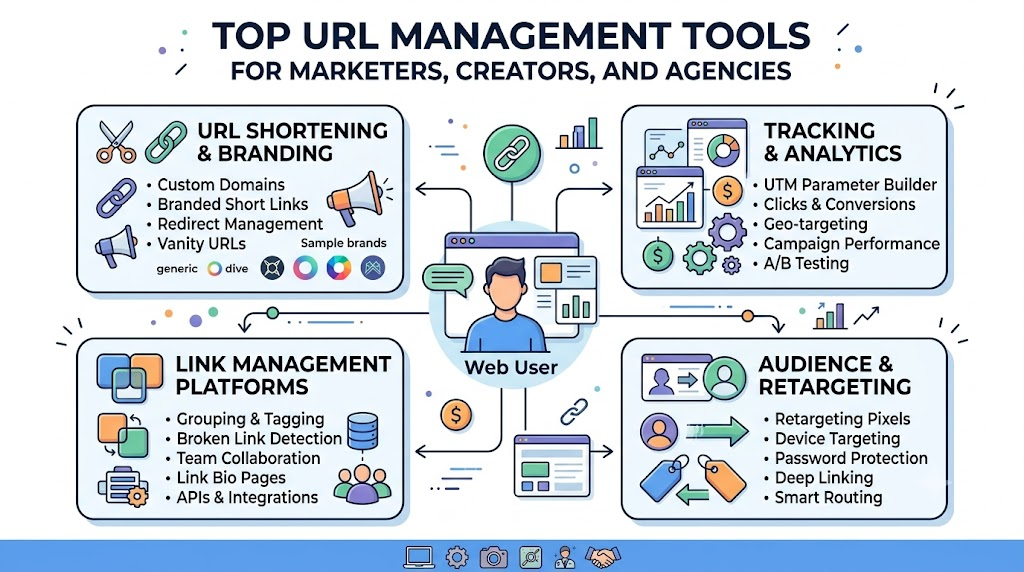
A URL management tool is a centralized SaaS application designed to help individuals, businesses, and digital teams store, organize, classify, track, and monitor web links within a single secure interface. Rather than relying on static browser bookmarks or scattered documents, these platforms turn raw URLs into interactive, metadata-rich database assets.
+-----------------------------------------------------------------------+
|                    CENTRALIZED URL MANAGEMENT                         |
+-----------------------------------------------------------------------+
                                   |
         +-------------------------+-------------------------+
         |                                                   |
         v                                                   v
+-------------------------------+               +-------------------------------+
|     RAW UNMANAGED LINKS       |               |  STRUCTURED ASSET REPOSITORY  |
+-------------------------------+               +-------------------------------+
| • Broken or 404 Errors        |               | • Categorized Folders/Tags    |
| • Scattered Spreadsheets      |               | • Real-Time Health Auditing   |
| • Lost Affiliate & Ad Tracking|               | • Shared Team Access          |
| • Eroded User Experience      |               | • Unified Digital Footprint   |
+-------------------------------+               +-------------------------------+
How URL Management Works
At its core, a link management platform functions as an intelligent database for web addresses. When a user adds a link to the system, the platform fetches relevant metadata—such as page titles, preview images, and HTTP status codes—and assigns customized categories, tags, or campaign parameters. Advanced platforms continuously poll destination servers to ensure links remain active and accessible to end users.
Why Link Organization Matters and Key Benefits
For modern digital teams, adopting a centralized link management platform delivers immediate operational benefits:
- Elimination of Digital Clutter: Systematically organize thousands of links across branded projects, client campaigns, and personal reference libraries.
- Asset Accessibility: Enable team members to retrieve verified campaign links instantly without navigating through lengthy communication channels.
- Risk Mitigation: Automatically detect server outages, redirect loops, and 404 errors before they impact marketing campaigns or user experience.
- Brand Uniformity: Ensure consistent external sharing across email newsletters, social bios, and partner portals.
Why Link Management Is Important
Effective link organization directly influences digital operations, user experience, and search engine discovery.
Productivity and Collaboration
When digital assets are scattered across personal documents and local chat threads, employees spend valuable time searching for specific landing pages or project resources. A unified system allows teams to create shared folders with granular access permissions, ensuring everyone works with the correct, updated web addresses.
User Experience and SEO Performance
Search engines like Google prioritize websites that maintain reliable internal and external navigation structures, as highlighted in the guidelines from Google Search Central. Broken links frustrate visitors, increase bounce rates, and consume search engine crawl budgets inefficiently. According to digital benchmarks published by HubSpot, maintaining clean navigation paths directly improves user retention and session duration.
Essential Features of a Modern Link Management Platform
Modern digital environments require more than basic link storage. A robust URL organizer tool includes several core operational capabilities designed for scalability and ease of use:
+--------------------------------------------------------------------+
|                ESSENTIAL URL ORGANIZER CAPABILITIES                |
+--------------------------------------------------------------------+
 [ ] 1. FOLDER & COLLECTION HIERARCHIES: Multi-level categorization
 [ ] 2. TAGGING & METADATA: Flexible cross-referencing and filters
 [ ] 3. FAST SEARCH: Instant text and domain query retrieval
 [ ] 4. ACCESS CONTROL: Granular permissions for team collaboration
 [ ] 5. AUTOMATED AUDITING: Continuous HTTP status code tracking
 [ ] 6. CUSTOM SHARING: One-click collection and portfolio distribution
+--------------------------------------------------------------------+
- Folder & Collection Management: Categorize web links into nested folder structures aligned with specific departments, clients, or creative projects. Explore the URL Collections engine to see how structured groupings streamline workflow asset retrieval.
- Tagging & Search Filtering: Apply descriptive tags (e.g.,
#q4-marketing,#affiliate,#docs) alongside instant search filters to find specific URLs in seconds. - Sharing & Access Controls: Generate secure, shareable public or private links for entire collections, giving agencies and freelancers a professional way to present deliverable lists to stakeholders.
Automatic Broken Link Monitoring
Dead links are silent conversion killers. Whether caused by domain expirations, site redesigns, or changed URL slugs, non-functional links damage reputation and harm search visibility.
+-----------------------------------------------------------------------+
|                 AUTOMATIC BROKEN LINK MONITORING                      |
+-----------------------------------------------------------------------+
|                                                                       |
|  [ Destination URL ] --> [ Scheduled Ping ] --> [ Status Code Check ] |
|                                                        |              |
|          +---------------------------------------------+              |
|          |                                                            |
|          v                                                            v
|   [ HTTP 200 OK ]                                           [ HTTP 404 / Error ]
|   • Status: Healthy                                         • Immediate Alert
|   • Logged in Dashboard                                     • Direct Fix Prompt
|                                                                       |
+-----------------------------------------------------------------------+
How URL Health Monitoring Works
An automatic broken link monitoring system regularly sends automated HTTP requests to saved web addresses. If a destination returns an error status—such as a 404 Not Found, 500 Server Error, or an infinite redirect loop—the platform alerts the user immediately within the dashboard interface.
Using a proactive URL health monitoring tool allows site owners to correct broken destinations before customers encounter dead ends. Learn how the Link Monitoring dashboard alerts you to status changes across your critical digital properties.
Campaign Link Management for Marketers
Digital marketing relies heavily on precise destination tracking across multiple acquisition channels. Managing campaign assets without a campaign link management tool often leads to lost attribution, broken tracking parameters, and mismatched promo links.
Marketing Channel Applications
- Paid Advertising: Keep ad landing page destinations categorized by channel, budget tier, and geographic region.
- Email Marketing: Verify that promotional links inside automated email flows are active and resolving correctly prior to campaign launch.
- Affiliate & Influencer Networks: Organize custom affiliate URLs by campaign partner, ensuring clean tracking across external promotion channels according to industry standards documented by Ahrefs.
Link Portfolio Management for Professionals
Freelancers, consultants, developers, and agency executives need a streamlined way to present their professional work to potential clients without sending messy lists of raw links.
Using a dedicated link portfolio management framework, professionals can consolidate case studies, live web applications, published articles, open-source repositories, and social channels into a single, polished digital showcase. Check out the Portfolio Management system to see how professionals transform raw links into client-ready presentation boards.
Free Link in Bio Tool for Creators
Social media platforms often limit profiles to a single external hyperlinked field. A free link in bio tool enables creators to maximize that single placement by directing followers to a curated landing page containing all their essential destinations.
+-----------------------------------------------------------------------+
|                    CREATOR LINK IN BIO WORKFLOW                       |
+-----------------------------------------------------------------------+
|                                                                       |
|  [ Social Bio Link ]  -->  [ Bio Landing Page ]  -->  [ Multi-Destinations ]
|                             • Latest YouTube Video    • Store Products |
|                             • Podcast Episode         • Newsletter     |
|                             • Affiliate Deals         • Event Tickets  |
|                                                                       |
+-----------------------------------------------------------------------+
By linking a customizable landing page created via the Link in Bio feature, creators can route audiences directly to new blog posts, digital storefronts, YouTube channels, and sponsor campaigns without having to constantly swap out profile links.
Content Link Management for Bloggers & Publishers
Managing content archives across large publishing platforms requires systematic tracking. As blogs grow to hundreds of posts, updating outdated references or replacing broken affiliate links manually becomes nearly impossible.
A content link management tool helps publishers map internal and external resources, track outbound references, and identify outdated URLs across older content assets. This systematic approach ensures site maintenance remains manageable while protecting existing organic search equity as defined by standards at the Mozilla Developer Network.
Digital Footprint Management
A digital footprint encompasses every public page, profile, directory listing, and media mention associated with a person or business entity.
Using a digital footprint management tool helps individuals and brands audit their complete online presence. By cataloging social profiles, media coverage, guest contributions, and corporate registries into a central management interface, organizations maintain complete visibility over their digital assets and public references.
Link Management Feature Comparison
To help select the ideal operational model for your needs, compare common link management strategies in the table below:
| Feature Dimension | Manual Bookmarks / Sheets | Basic URL Shorteners | URLsNow Centralized Platform |
| Categorization | Basic folders, no tagging | Single list, minimal tags | Advanced Folders, Collections & Tags |
| Health Auditing | Manual click-testing required | None or basic click metrics | Automated HTTP 404 & Redirect Monitoring |
| Portfolio Creation | Not supported | Basic bio pages | Professional Portfolio & Bio Landing Pages |
| Team Collaboration | Fragmented spreadsheet copies | Limited user sharing | Shared Workspace & Role Access |
| Digital Footprint | Difficult to track at scale | Tracks individual links only | Comprehensive Digital Asset Catalog |
URLsNow for Different User Types
Different professionals leverage centralized link management to achieve distinct operational goals:
Bloggers and Writers
Bloggers organize reference material, track research links, manage internal link structures, and ensure outbound affiliate paths remain active over time.
Content Creators and Influencers
Creators build branded landing pages for social bios, organize sponsored content links, and present portfolio work to potential brand partners.
Digital Marketers and Agencies
Agencies manage multi-client campaign URLs, organize UTM parameter structures, build client deliverable portfolios, and monitor landing page availability across active ad campaigns.
Developers and Technical Teams
Developers document API endpoints, organize external library documentation, catalog staging environments, and monitor service uptime via HTTP response tracking.
Freelancers and Consultants
Freelancers replace unstructured resume attachments with interactive, organized digital portfolios showcasing past client results and published work.
Best Practices for Managing URLs Effectively
Adopting structured link habits ensures long-term asset organization and prevents digital sprawl.
- Establish Standardized Tagging Protocols: Define naming conventions across campaigns and folders (e.g.,
[Client]_[Year]_[Channel]) to keep search filters consistent across teams. - Schedule Automated Link Health Audits: Set up automated scanning intervals to catch broken links before they impact real users or ad performance.
- Archive Outdated Resources Promptly: Move completed marketing campaign links or retired project URLs into dedicated archive collections to keep active workspaces clutter-free.
- Audit External Reference Security: Periodically review destination URLs to verify that external domain targets remain secure and aligned with standards from the W3C.
Common URL Management Mistakes
Avoiding key organizational mistakes prevents lost data, wasted ad spend, and poor user experiences:
- Relying on Local Browser Bookmarks: Storing critical links in personal browser bookmarks prevents team access, lacks backup redundancy, and leads to data loss when switching devices.
- Ignoring 404 Redirection Paths: Failing to catch broken destination URLs on active ad campaigns wastes marketing budget and degrades conversion rates.
- Neglecting Social Profile Links: Leaving dead or outdated links in social media bio fields creates friction for users discovering your brand for the first time.
- Using Cryptic Link Names: Saving web addresses without descriptive titles or contextual metadata makes future search and retrieval tedious.
The Future of URL Management
The digital asset management landscape continues to evolve alongside new web technologies and publishing workflows:
- AI-Assisted Link Categorization: Intelligent algorithms will automatically extract web page context, auto-tag destinations, and suggest appropriate collection groupings upon URL import.
- Real-Time Web Asset Health Predictive Analytics: Future systems will monitor domain registration statuses, SSL certificate health, and latency metrics alongside standard HTTP error codes.
- Expanded Creator Economy Integrations: Link-in-bio portals and personal digital portfolio hubs will integrate more deeply with direct payment processing, content paywalls, and subscriber management platforms.
How URLsNow Helps Users Stay Organized
Managing digital assets effectively requires purpose-built software. URLsNow simplifies the complex job of organizing web links by bringing all your essential link operations into a clean, unified dashboard.
+-----------------------------------------------------------------------+
|                       THE URLSNOW SOLUTION                            |
+-----------------------------------------------------------------------+
|                                                                       |
|  1. CENTRAL DASHBOARD --> Store, search, & organize all links         |
|  2. HEALTH MONITORING --> Get automated alerts for broken 404 links   |
|  3. PORTFOLIO BUILDER --> Turn raw links into client-ready showcases  |
|  4. LINK IN BIO       --> Maximize social media traffic distribution   |
|                                                                       |
+-----------------------------------------------------------------------+
Rather than juggling browser extensions, static spreadsheets, and isolated bio tools, URLsNow provides a complete system for your digital footprint. Users can monitor URL health automatically, create clean project portfolios, manage multi-channel marketing campaigns, and share categorized collections with teammates or clients. By taking advantage of core workspace features detailed on the Features overview page, teams eliminate digital clutter, protect campaign performance, and maintain a polished online presence.
Frequently Asked Questions (FAQ)
What is a URL management tool?
A URL management tool is a centralized platform designed to help users store, organize, categorize, monitor, and share web links from a unified dashboard. Instead of relying on static browser bookmarks or scattered spreadsheets, these platforms transform raw web addresses into searchable digital assets equipped with folder structures, tags, status tracking, and sharing capabilities.
Why is link management important?
Link management is essential because modern professionals handle hundreds of digital assets across marketing channels, social platforms, and project management tools. Unorganized links lead to wasted time, lost resources, broken customer journeys, and unmonitored 404 errors. Centralized link management improves team productivity, enhances user experience, and protects organic search visibility.
How does broken link monitoring work?
Broken link monitoring works by automatically sending periodic HTTP requests to saved web addresses in your account. The system evaluates the response codes returned by destination servers. If a link returns an error status—such as a 404 Not Found, 500 Server Error, or failed redirect—the system alerts you within the dashboard so you can update the destination URL immediately.
What is URL health monitoring?
URL health monitoring is the continuous technical assessment of saved web links to verify that they remain active, accessible, and properly configured. It checks HTTP status codes, redirection chains, and server responsiveness, helping businesses fix dead links before they affect user experience, conversion rates, or search engine crawl efficiency.
What is a link portfolio?
A link portfolio is a curated digital showcase that organizes past projects, case studies, published articles, live web applications, and social profiles into a clean visual landing page. Professionals, freelancers, and agencies use link portfolios to present their work to potential clients and prospective employers in a structured, professional format.
How does a link in bio tool help creators?
A link in bio tool allows social media creators to overcome profile link restrictions by housing multiple destinations under a single web address. Creators customize a mobile-friendly landing page containing direct links to their store items, latest YouTube videos, sponsored content, blog posts, and newsletter signups, increasing overall audience traffic.
Why should businesses organize URLs?
Businesses must organize URLs to maintain team productivity, protect campaign investments, and maintain consistent brand standards across marketing channels. Categorized link libraries prevent duplicate asset creation, ensure sales teams share correct documentation, and help marketing teams audit active landing page destinations efficiently.
Can URL management improve SEO?
Yes, structured URL management supports SEO by helping teams identify and fix broken internal and external links that hurt search engine crawl efficiency and user experience. Maintaining active, properly targeted links reduces bounce rates, preserves backlink value, and ensures search bots can index site pages efficiently.
Who should use URLsNow?
URLsNow is built for bloggers, content creators, digital marketers, agency teams, freelancers, software developers, educators, and businesses of all sizes. Anyone who regularly manages, shares, or monitors web addresses can benefit from centralizing their digital footprint within the URLsNow workspace.
How often should links be audited?
Critical marketing campaigns and high-traffic landing page links should be monitored in real-time or daily using automated health tools. General content archives, resource collections, and reference link libraries should undergo structured manual audits at least quarterly to ensure all saved destinations remain relevant and operational.
Conclusion
Managing web links effectively has become a core requirement for navigating today’s digital landscape. As individuals and businesses expand their online operations across multiple channels, relying on disorganized bookmarks, scattered spreadsheets, and unmonitored links creates unnecessary risks, wastes time, and leads to broken customer experiences. Adopting a modern URL management tool provides the structural foundation needed to organize digital assets, monitor link health automatically, and present a professional image online. Whether you are a marketer running multi-channel campaigns, a creator managing social media profiles, or a business auditing your digital footprint, structured link organization delivers immediate efficiency and peace of mind.
