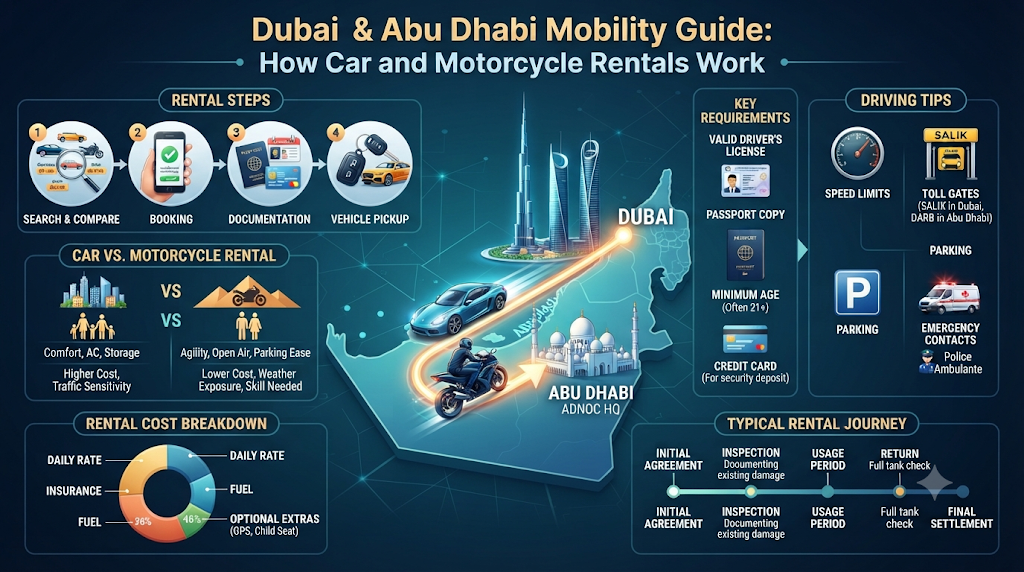
Arriving in the United Arab Emirates presents an immediate travel puzzle. Wide expressways connect glittering business districts, desert dunes, and coastal beaches, yet relying solely on taxis quickly becomes restrictive. Whether you are a visitor seeking open-road freedom, a resident needing temporary transport, or a fleet owner organizing vehicles, knowing the rules upfront saves money and stress. At MotoShare Gulf, renters and local providers can explore car and motorcycle listings online and connect directly across the Gulf.
Comparing motorcycle rental Dubai with car rental Dubai, car rental Abu Dhabi, and motorcycle rental Abu Dhabi gives you a clear roadmap before signing any rental contract. You do not need any background in UAE traffic laws or fleet management to read this guide. We use simple, everyday English to explain rental models, required documents, luxury vehicle rules, riding safety, peer-to-peer sharing, and free fleet software.
Understanding Rental Models and Marketplaces in the UAE
Before comparing vehicle rates, it helps to see how traditional agencies differ from modern online marketplaces.
Traditional Agencies vs. Online Marketplaces
A traditional rental company owns or leases its own vehicles and rents them out from physical counters under uniform branch policies. An online vehicle rental marketplace brings multiple rental companies and individual vehicle owners together on a single website.
In a peer-to-peer car rental UAE setup, private owners and participating local providers list their vehicles so customers can compare choices side by side. Real availability, insurance terms, and deposit rules always depend on the specific listing, provider policy, and UAE law.
Everyday Cars, Luxury Rides, and Motorcycles
- Standard car rental covers compact city hatchbacks, mid-size sedans, and spacious family SUVs built for everyday errands and highway travel.
- Luxury car rental Dubai and luxury car rental Abu Dhabi options focus on prestige sedans, executive SUVs, and exotic sports cars. These high-value vehicles carry higher deposit holds, stricter age limits, and tighter daily kilometer caps.
- Motorcycle rental gives licensed riders two-wheeled freedom, ranging from approachable urban bikes to high-performance machines.
What Rental Management Software Does
For fleet operators, rental management software replaces messy spreadsheets with a single digital dashboard. It helps track bookings, live vehicle availability, customer IDs, payments, and basic business reports. MotoShare Gulf advertises a free vehicle rental management software UAE tool aimed at local agencies and fleet owners; businesses should verify current features and terms directly on the platform before relying on it.
Why Flexible Rentals Fit Life Across the Emirates
Dubai and Abu Dhabi feature wide multi-lane highways, modern business centers, coastal boulevards, and scenic desert routes. Renting solves practical mobility needs for several groups:
- Independent tourists: Visitors can explore beaches, heritage quarters, and scenic drives on their own schedule rather than waiting for rides.
- Busy professionals: Executives traveling between meetings or commuting between Dubai and Abu Dhabi save time with direct door-to-door mobility.
- Residents between cars: Newcomers waiting on bank approvals, residents whose personal car is being serviced, or families hosting guests can rent for days or weeks.
- Enthusiasts and seasonal travelers: Riders and sports car fans often book special vehicles during cooler autumn and winter months, when seasonal demand rises and early booking helps secure preferred models.
- Local rental businesses: Smaller agencies and independent owners gain online visibility without building custom booking portals from scratch.
Keep expectations realistic: vehicle availability, daily pricing, and handover terms shift by provider and season, so always confirm live details before finalizing plans.
Choosing the Right Vehicle for Your Route
Matching the machine to your trip keeps your journey comfortable, safe, and within budget.
Motorcycle Categories
- Sports bikes and performance motorcycles: Built for sharp handling, strong acceleration, and high-spec braking. Riders exploring a Ducati motorcycle rental Dubai option or sports bike rental Abu Dhabi listings need proven big-bike experience, and exact models always depend on live stock.
- Touring motorcycles: Offer upright ergonomics, wind protection, and luggage mounts suited for longer highway stretches.
- Standard and street bikes: Great for moderate urban rides and smooth control, with brands such as Benelli, BMW, Aprilia, and CFMoto appearing in regional listings depending on current availability.
Car Categories
- Economy cars and sedans: Easy to park in tight mall garages and light on fuel for solo travelers or couples.
- SUVs and family vehicles: Provide generous legroom, trunk space, and high road visibility for families or inter-emirate road trips.
- Luxury, sports, and exotic cars: Chosen for special events, executive hosting, or weekend drives—always confirm current listing availability and terms before booking.
Dubai vs. Abu Dhabi: Local Driving and Rental Details
While both emirates share smooth highways and strict speed cameras, small local differences matter:
- Fleet selection and pickup: Both cities offer economy cars, SUVs, luxury vehicles, and motorcycles, though exact models vary by provider and date. Some operators offer branch pickup, while others deliver to hotels, homes, or airports for an agreed fee.
- Electronic road tolls: Dubai and Abu Dhabi operate automated toll gates on major highways. Providers typically log toll passes electronically and bill them at return or deduct them from your deposit.
- Parking zones: Street parking requires paid tickets or mobile app payments during active hours, while residential zones often require resident permits. Always read nearby signs before leaving your vehicle.
- Speed enforcement: Speed limits change quickly between city avenues and expressways, and radar cameras enforce limits strictly.
Ten-Step Roadmap for Renting a Vehicle Smoothly
Follow this clear sequence from initial search to final return:
- Pick your vehicle category: Choose a car or motorcycle based on passengers, luggage, route length, and real driving or riding skill.
- Set your city and dates: Select Dubai, Abu Dhabi, or another supported area along with exact pickup and return times.
- Compare listings across providers: Check daily rates, included kilometers, fuel policies, and deposit rules side by side.
- Calculate total costs upfront: Add base rates, delivery fees, optional protection upgrades, and applicable taxes.
- Confirm license and age eligibility: Make sure your license class, nationality rules, and age meet UAE law and provider terms.
- Review insurance and deposit terms: Understand what basic coverage includes, what excess applies, and how deposit refunds work.
- Submit your reservation: Provide accurate identification and contact details through the booking flow.
- Inspect the vehicle at pickup: Walk around the car or bike in bright light, photograph every panel, wheel, and tire, check lights and fuel, and verify vehicle papers.
- Follow road and contract rules: Respect speed limits, parking rules, daily mileage caps, and permitted driving areas.
- Complete the return handover: Bring the vehicle back on time and at the agreed fuel level, sign the return report, and keep receipts until your deposit clears.
Documents, Eligibility, and UAE Rental Rules
Required paperwork varies by residency status, vehicle type, and provider policies. Always verify official UAE government guidance and provider terms before booking:
- Identification: UAE residents typically present a valid Emirates ID, while tourists present a passport with entry stamp or visa details.
- Driving or riding license: Residents need a valid UAE license matching the vehicle type (car or motorcycle). Tourists need an accepted home-country license and, where required by nationality or license type, an International Driving Permit (IDP) or official translation.
- Age and experience minimums: Providers often set higher minimum ages and minimum years of license tenure for luxury cars and high-powered motorcycles.
- Payment card and security deposit: Most providers require a credit or debit card in the primary driver’s name for rental fees and a refundable security deposit hold.
- Rental contract: Keep a digital or printed copy of your agreement with you during every trip.
Motorcycle Safety and Riding Preparation in the Gulf
Warm temperatures, fast multi-lane highways, and occasional blown sand make rider preparation essential:
- Full protective gear: Wear a certified helmet, ventilated armored jacket, riding gloves, long abrasion-resistant pants, and sturdy over-the-ankle boots.
- Match the bike to your skill: High-output motorcycles found in a Ducati motorcycle rental Dubai or sports bike rental Abu Dhabi search react quickly to throttle and brake inputs. Never rent a powerful sports bike without solid big-bike road experience.
- Five-minute pre-ride inspection: Check tire pressure and tread depth, front and rear brake feel, chain tension, mirrors, horn, headlights, brake lights, indicators, and fuel level before setting off.
- Defensive road habits: Stay out of car blind spots, watch for sudden lane changes near highway exits, hydrate well in warm weather, and keep generous braking distances.
Luxury and Performance Car Rules to Know
High-value cars carry stricter terms than everyday rentals:
- Higher deposit holds: Refundable security deposits are substantially larger to match repair and deductible costs.
- Stricter driver screening: Expect higher minimum age requirements and clean driving history checks.
- Tighter daily kilometer limits: Luxury listings often include fewer daily kilometers, with higher per-kilometer charges if you exceed the cap.
- Extra care on ramps and curbs: Low front splitters can scrape speed bumps or parking curbs, so approach angles slowly and choose wide, well-lit parking spaces.
How Peer-to-Peer Vehicle Rentals Work in the UAE
In a peer-to-peer vehicle rental marketplace, individual owners and participating local rental partners list vehicles online so customers can discover and book them directly.
| Comparison Factor | Traditional Rental Agency | Peer-to-Peer Rental Marketplace |
| Fleet Ownership | Owned or leased by one corporate agency | Listed by participating owners and local rental partners |
| Vehicle Variety | Standardized commercial fleet models | Diverse mix of daily cars, specialty bikes, and unique listings |
| Discovery Process | Single-company website or branch counter | Side-by-side comparison across multiple providers and owners |
| Rules & Insurance | Uniform branch policy across locations | Varies by specific listing, provider terms, and UAE rules |
In the UAE, both vehicle owners and renters must ensure every rental complies with applicable transport, registration, commercial licensing, and insurance laws. Never assume a private vehicle can be rented out without proper legal and insurance approval.
Understanding Rental Costs and Security Deposits
Your total rental expense reflects several separate items:
- Base rate and duration: Daily, weekly, or monthly rates vary by vehicle class, model year, and travel season.
- Pickup and delivery: Branch pickup is often included, while hotel, home, or airport delivery may carry an extra fee.
- Mileage, tolls, and traffic fines: Extra kilometers, electronic road tolls, paid parking, and any traffic fines are billed according to your agreement.
- Refundable security deposit: Providers hold a temporary deposit to cover potential damage, unpaid tolls, or late fees, releasing it once final checks finish.
For example, in a hypothetical three-day booking at AED 210 per day (AED 630 base), adding AED 50 for doorstep delivery and a AED 1,500 refundable security deposit hold means paying AED 680 for the rental plus the temporary AED 1,500 hold. Actual prices and deposit amounts vary widely by vehicle and provider.
Fleet Management Software for UAE Rental Operators
Running a growing car or motorcycle fleet on spreadsheets quickly leads to double bookings, missed service intervals, and slow billing. Vehicle rental management software brings daily operations into one organized dashboard:
- Centralized fleet and booking calendar: Track which cars or bikes are rented, reserved next week, or in maintenance.
- Customer and payment records: Store renter IDs, signed contracts, deposit holds, and payment statuses neatly.
- Basic operational reporting: Review fleet utilization and revenue summaries to plan seasonal pricing and servicing.
Agencies and independent operators exploring free vehicle rental management software UAE options—such as the business tool advertised by MotoShare Gulf—should check exact features, user limits, and onboarding rules directly on the platform.
Practical Habits to Improve Rental Business Operations
Rental agencies and vehicle owners can build stronger trust and reduce operational friction with five simple habits:
- Keep availability updated daily: Remove booked or serviced vehicles promptly so customers never face last-minute cancellations.
- Display all terms upfront: State deposit amounts, mileage caps, fuel rules, and late fees clearly before checkout.
- Standardize photo inspections: Take timestamped check-in and check-out photos from every angle to prevent damage disputes.
- Stick to preventive maintenance: Check tires, brakes, fluids, and batteries on schedule—especially during hot UAE summer months.
- Send clear handover details: Share exact map pins, parking instructions, and emergency contact numbers ahead of pickup.
Common Mistakes Renters and Businesses Should Avoid
Mistakes Renters Make
- Booking before checking license rules: Always confirm your foreign license or IDP meets UAE rules for cars or motorcycles.
- Skipping insurance fine print: Know your deductible amount and which incidents basic insurance excludes.
- Forgetting pickup photos: Failing to record existing scratches or wheel scuffs can lead to charges at return.
- Exceeding daily kilometer caps: Check mileage limits before planning long trips between emirates.
- Returning late without notice: Even a short unannounced delay can trigger an extra day’s charge.
Mistakes Businesses Make
- Leaving outdated listings live: Stale rates or unavailable cars frustrate customers and waste staff time.
- Tracking bookings in scattered chats: Disorganized messages cause double bookings and missed handovers.
- Delaying routine maintenance: Skipping tire and brake checks hurts safety and creates costly downtime.
Best Practices for a Smooth Experience
- For renters: Compare multiple listings, verify documents and insurance coverage early, inspect the vehicle thoroughly at pickup, obey UAE speed and parking laws, and choose a vehicle suited to your real experience.
- For businesses: Maintain accurate listings, use clear rental contracts and photo checklists, follow preventive maintenance schedules, explain fees transparently, and evaluate rental management software against daily workflow needs.
Future Trends in Gulf Vehicle Rentals
Mobility across the UAE continues to modernize:
- Faster digital check-in: Mobile comparison, digital ID uploads, and paperless agreements are shortening pickup wait times.
- Flexible shared models: Peer-to-peer marketplaces and short-term flexible rentals are growing alongside traditional rental branches.
- Connected and electric fleets: GPS telematics, automated service alerts, and electric or hybrid vehicles are gradually expanding across select UAE fleets.
How MotoShare Gulf Connects Renters and Providers
MotoShare Gulf serves as an online vehicle rental marketplace built to help users discover motorcycle and car rentals across locations such as Dubai and Abu Dhabi. Customers can compare vehicle categories, review daily pricing, and connect with participating owners or rental agencies, while fleet operators can list vehicles and explore a free vehicle rental management software offering. As with any marketplace, always verify live vehicle availability, contract terms, and software features directly on the platform.
Frequently Asked Questions
1. How do I arrange a motorcycle rental in Dubai safely?
First verify that your driving license covers motorcycles in the UAE and meets the provider’s minimum age and experience rules. Compare Dubai motorcycle listings, review insurance, helmet, and deposit policies, complete your reservation, and inspect tires, brakes, and lights at pickup.
2. What documents are required for a car rental in Abu Dhabi?
UAE residents typically present a valid Emirates ID and UAE driving license. Tourists usually need a passport, entry visa or stamp, an accepted home-country driving license, an International Driving Permit where required, and a payment card for rental fees and security deposits.
3. Can tourists legally rent motorcycles or sports bikes in the UAE?
Yes, visitors can rent motorcycles if they hold a valid motorcycle license recognized under current UAE rules, carry an International Driving Permit if required, meet minimum age limits, and satisfy the provider’s insurance and deposit conditions.
4. What should riders check before booking a Ducati motorcycle rental in Dubai or sports bike rental in Abu Dhabi?
Confirm your big-bike riding experience, verify license eligibility and live model availability, review security deposit and insurance excess terms, and make sure you wear full protective riding gear suited to UAE highway conditions.
5. How is a luxury car rental in Dubai or Abu Dhabi different from an economy car rental?
Luxury rentals generally carry higher refundable security deposits, stricter minimum age and driving-experience thresholds, tighter daily mileage allowances, and higher fees for excess kilometers or damage deductibles.
6. How does peer-to-peer car rental in the UAE work?
A peer-to-peer marketplace lets individual owners and participating local providers list cars or motorcycles online so renters can compare and book them. Eligibility, insurance coverage, and legal compliance depend on the specific listing, provider terms, and UAE transport laws.
7. Why do UAE rental providers require a security deposit?
A refundable security deposit protects the vehicle owner or rental company against potential damage, unpaid road tolls, traffic fines, fuel differences, or late return charges. Always confirm the exact refund timeline in your rental contract.
8. What factors change car and motorcycle rental prices in the UAE?
Total rates depend on vehicle category and model, rental duration, seasonal travel demand, pickup city, doorstep delivery options, daily mileage limits, insurance upgrades, and optional extras.
9. Who benefits from free vehicle rental management software in the UAE?
Independent vehicle owners, small rental agencies, and growing fleet operators use rental management software—such as the free solution advertised by MotoShare Gulf—to organize bookings, vehicle availability, customer records, payments, and basic reporting.
10. What should I check during a vehicle pickup inspection?
Walk around the car or motorcycle in good light, take photos or video of any existing scratches, dents, or wheel scuffs, test headlights, brake lights, and indicators, check tire tread and fuel level, and make sure existing marks are noted on the handover form.
11. What happens if I exceed the daily mileage limit on my rental?
Most UAE rentals set a daily or total kilometer limit. Driving beyond that cap incurs a per-kilometer excess fee stated in your rental contract, which is billed at return or deducted from your security deposit.
12. Are online marketplace listings guaranteed to be available on my travel dates?
No. Vehicle availability changes continuously based on active bookings, maintenance schedules, and seasonal demand, so always confirm real-time availability and booking confirmation with the provider.
Conclusion
Whether you want to ride a motorcycle along coastal highways, drive a family SUV across emirates, or run a more organized rental fleet, smart preparation protects both your time and budget. Verify license and insurance rules early, inspect vehicles carefully at pickup, and rely on clear rental agreements. Checking official UAE guidance and provider terms before booking ensures every mile on the road stays safe and predictable.
