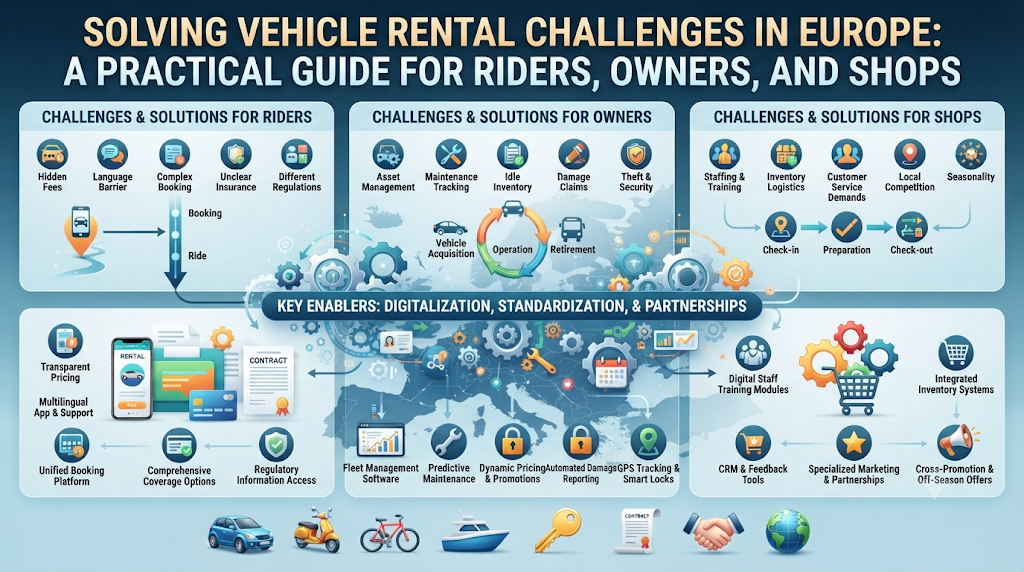
Every day across Europe, three groups face a similar problem from different angles. Travelers want an easy way to rent a bike, scooter, or car without hidden counter fees. Private owners want a safe way to earn money from vehicles sitting idle in their garages. Meanwhile, independent rental shops lose hours each week juggling paper calendars and phone bookings. Online platforms like MotoShare Europe connect these three groups in one marketplace while promoting free digital tools for small rental operators.
This guide shows how to solve the most common rental problems across Europe. You will learn how travelers find fair deals, what drives daily rental rates, how private owners list vehicles safely, and how software keeps small fleets running without double bookings.
Finding the Right Vehicle for European Roads
Europe offers everything from tight medieval alleys in southern towns to wide alpine highways in the north. Picking the wrong vehicle for your route can turn a fun holiday into a tiring trip.
When planning a motorcycle rental Europe journey, match your ride to your daily travel plan:
- 50cc and 125cc Scooters: Light, nimble, and easy to park in crowded coastal towns or historic city centers.
- Mid-Weight Street Bikes: Ideal for solo riders exploring winding country roads and short weekend routes.
- Large Touring and Adventure Bikes: Built for long highway stretches, passenger comfort, and carrying side luggage across regions.
- Compact and Family Cars: Best when traveling in groups, carrying heavy suitcases, or riding during rainy autumn months.
How Peer to Peer Motorcycle Rental Europe Solves Traveler Frustrations
Traditional rental agencies often rely on rigid pickup hours, limited fleet choices, and extra fees added at the counter. A peer to peer motorcycle rental Europe marketplace removes many of these hurdles by connecting travelers directly with private riders and small neighborhood shops.
Here is why many riders prefer booking through a peer-to-peer platform:
- Direct Host Communication: You message the owner before booking to ask about seat height, luggage mounts, or local road conditions.
- Clear Upfront Pricing: You see the daily rate, gear fees, and deposit rules before confirming your dates.
- Flexible Handover Times: Instead of rushing to beat a 6:00 PM shop closing time, you arrange a pickup hour that fits your travel schedule.
- Authentic Local Advice: Private hosts often share favorite scenic loops, safe overnight parking spots, and fuel station tips.
Traditional Counters vs. Peer-to-Peer Marketplaces
| Comparison Area | Traditional Rental Agency | Peer-to-Peer Marketplace |
| Vehicle Supply | Standard corporate fleet models | Personal motorcycles, scooters, and local shop bikes |
| Price Visibility | Base rate plus counter add-ons | Transparent upfront totals agreed upon online |
| Pickup Timing | Strict storefront hours | Flexible meeting times arranged with the host |
| Route Guidance | General tourist brochures | First-hand local riding tips from the owner |
Breaking Down Motorcycle Rental Cost Europe
Rental rates vary widely across the continent because every country has different taxes, insurance laws, and tourist seasons. Understanding the motorcycle rental cost Europe structure helps you plan your budget and compare listings accurately.
Seven main items shape what you pay:
- Country and Local Economy: Daily rates in countries like Switzerland, Norway, or Sweden are typically higher than rates in Portugal, Spain, or Croatia.
- Engine Size and Bike Class: A small 125cc scooter costs a fraction of what a 1200cc touring motorcycle costs per day.
- Seasonality: July and August bring peak holiday crowds and top prices. Traveling in May, June, or September often lowers your daily rate.
- Trip Length: Renting for seven days or longer usually unlocks a lower daily price compared to a two-day weekend booking.
- Security Deposit: Providers place a temporary hold on your payment card to cover potential scratches, traffic fines, or late returns.
- Insurance Coverage Tier: Basic third-party liability insurance is mandatory by law, while optional packages that lower your damage excess add a daily fee.
- Kilometer Limits and Fuel: Check whether your rate includes unlimited distance or a daily cap, and remember that most rentals follow a full-to-full fuel rule.
Illustrative Example of a 6-Day Coastal Trip Budget
Note: This scenario is a hypothetical example created to show how rental costs add up and does not reflect a live listing.
Imagine a traveler booking a 650cc touring bike in southern Spain for 6 days in September. The host sets the base price at €70 per day (€420 total). Adding a top box and phone mount costs €8 per day (€48 total), and choosing a reduced-excess protection plan adds €12 per day (€72 total). The total rental comes to €540, alongside a refundable €700 security deposit released after a clean return.
European Driving Licences and Cross-Border Rules
Europe is made up of more than forty independent countries, and traffic laws change when you cross national borders. Checking your documents early prevents last-minute cancellations at pickup.
- EU Motorcycle Licence Tiers: European motorcycle permits use four standard categories: AM (mopeds up to 50cc), A1 (light bikes up to 125cc), A2 (medium bikes up to 35 kW), and A (unrestricted motorcycles). Your licence must cover the exact engine power of your rental.
- Car Licence Exceptions for 125cc Scooters: Countries such as Spain, Italy, and France allow drivers who have held a Category B car licence for two or three years to ride 125cc scooters inside their own borders. However, this local rule does not automatically allow riding across borders into neighboring nations.
- International Driving Permits (IDP): Travelers visiting from outside Europe should carry an IDP alongside their original home driving licence, especially if the home permit is not written in the Latin alphabet.
- Cross-Border Permission: Never ride a rented vehicle into another country without written approval from the owner or rental shop. Standard insurance coverage often stops working if you cross a border without permission.
How Vehicle Owners Earn Money Without the Headache
A motorcycle, scooter, or car parked in a garage still costs money every year in road tax, insurance, and routine maintenance. Sharing your vehicle with checked travelers turns idle time into helpful extra income.
Five Steps to Rent Out My Motorcycle Safely
If you are asking, “How do I rent out my motorcycle without risking damage or legal trouble?” follow this clear checklist:
- Confirm Legal and Insurance Rules: Check your country’s rules on private vehicle sharing and ask your insurer whether paid peer-to-peer rentals are covered. Never assume personal commuting insurance covers a paying rider.
- Check Mechanical Readiness: Inspect tire tread depth, brake pads, chain tension, engine oil, and all lights before every handover.
- Post Clear, Honest Photos: Upload bright daytime photos of every side of the bike, the dashboard, and any minor scratches so riders know what to expect.
- Verify Rider Documents in Person: Always check the renter’s physical driving licence and passport or ID before handing over the keys.
- Take Timestamped Handover Photos: Walk around the bike together at pickup and return to record its exact condition.
Five Steps to List My Car for Rent
If you have an unused car at home and want to list my car for rent, follow the same routine. Vacuum the interior, remove personal items, check fluid levels and tire pressure, and leave the registration papers and safety vest inside the car. Always tell visiting drivers whether the car uses petrol, diesel, or electric charging so they never put the wrong fuel in the tank.
How Small Rental Shops Eliminate Double Bookings
Independent rental shops face a tough operational problem during busy tourist seasons. Tracking twelve scooters, twenty bicycles, or ten rental cars in paper notebooks or basic spreadsheets leads to missed calls, overlapping reservations, and slow check-ins.
Adopting free vehicle rental management software gives small operators a clean digital control panel without expensive monthly software subscriptions.
Digital Tools Built for Different Fleets
Different rental shops rely on specialized features to keep daily work moving fast:
- Vehicle Rental Booking System: Gives customers a live online calendar to check free dates, view total prices, and send reservation requests while automatically blocking booked days.
- Scooter Rental Software: Built for fast city check-ins, helping staff log short hourly or daily rentals, track helmet sizes, and store rider IDs quickly.
- Bike Rental Software: Helps bicycle and e-bike shops track frame sizes, battery charging levels, lock codes, and family group bookings without paper clutter.
- Free Car Rental Software: Helps small car agencies manage multi-day reservations, record starting and ending mileage, log fuel levels, and store signed agreements digitally.
Paper Logs vs. Digital Rental Software
Moving daily shop tasks onto one digital system saves hours of repetitive admin work each week.
| Shop Task | Paper Notebooks & Spreadsheets | Digital Rental Management Software |
| Checking Fleet Status | Flipping through pages or searching files | Live visual calendar showing free and booked units |
| Double-Booking Prevention | High risk during busy summer weekends | Automatic date blocking once a booking is confirmed |
| Customer Records | Loose paper forms and scattered emails | Searchable digital profiles with licence history |
| Payment & Revenue Logs | Slow manual math at month-end | Organized payment tracking and revenue summaries |
| Handover Checklists | Paper sheets that are easy to lose | Digital trip records saved in one central system |
Common Mistakes That Cost Time and Money
Avoiding a few everyday mistakes keeps trips smooth and protects your wallet:
- Travelers Ignoring Luggage Needs: Booking a small naked bike without checking rack space makes carrying two suitcases nearly impossible.
- Owners Guessing Insurance Coverage: Renting out a personal bike or car without confirming valid rental insurance creates serious financial exposure.
- Shops Waiting Until Peak Season to Digitize: Sticking with paper calendars until July arrives almost always leads to scheduling errors and stressed staff.
Four Simple Rules for Smooth European Rentals
Follow these four habits whether you are booking a ride, sharing a vehicle, or managing a fleet:
- Put Every Agreement in Writing: Confirm pickup times, mileage limits, fuel policies, and border permissions inside your booking chat.
- Match Licence to Engine Size: Verify that the driver’s physical licence covers the exact vehicle class before handing over keys.
- Photograph Both Handovers: Five minutes of clear photos at pickup and return prevents disagreements later.
- Use One Central Schedule: Keep availability, customer records, and payment logs inside one reliable digital tool.
How MotoShare Europe Connects Renters, Owners, and Shops
MotoShare Europe operates as an online vehicle rental marketplace designed to connect travelers, motorcycle enthusiasts, local residents, private vehicle owners, and independent rental shops across Europe. Focused on motorcycles, scooters, bicycles, and cars, the platform enables users to compare transparent listings and send booking requests directly to participating local providers.
For independent rental shops and fleet operators, MotoShare Europe also promotes free vehicle rental management software. Its advertised features are designed to help operators manage vehicle listings, reservations, customer records, fleet availability, payments, revenue tracking, and operational reporting from one place. Because regional availability and software tools can vary by country and business setup, travelers and shop owners should always review current details directly on the platform.
Conclusion
Solving European vehicle rental challenges comes down to clear information and reliable habits. Travelers enjoy better holidays when they match their vehicle to the route, check national licence laws, and inspect the ride at pickup. Private owners earn extra income safely when they verify insurance and check rider documents carefully. Meanwhile, independent rental shops save valuable hours every week by replacing paper logs with modern digital booking tools.
Take your next step today by checking your driving licence categories, preparing a simple handover checklist, or exploring transparent online marketplaces that simplify European mobility.
Frequently Asked Questions (FAQs)
1. How do travelers find a dependable motorcycle rental Europe provider?
Compare verified local shops and peer-to-peer marketplaces online well before your trip. Look for clear daily pricing, bright photos from every angle, honest condition notes, and written rules covering deposits and daily mileage caps.
2. What advantages does a peer to peer motorcycle rental Europe platform offer?
Peer-to-peer platforms connect travelers directly with private owners and small neighborhood hosts. This model often provides more flexible pickup times, unique motorcycle models, and practical local route advice from experienced riders.
3. What determines motorcycle rental cost Europe travelers pay?
Prices depend on the destination country, travel season, engine size, and rental duration. Small scooters in southern Europe generally cost much less per day than large touring bikes in higher-cost countries during peak summer months.
4. Can I ride a 125cc scooter in Europe with a standard car driving licence?
Several European countries—such as Spain, Italy, and France—allow drivers who have held a Category B car licence for two or three years to ride 125cc scooters locally. However, rules vary by nation, and this permission does not automatically let you cross into neighboring countries.
5. When do non-European tourists need an International Driving Permit?
Visitors arriving from outside the EU usually need an International Driving Permit (IDP) alongside their original home driving licence, especially if the home permit was issued outside Europe or is not printed in the local alphabet.
6. What should I check before I rent out my motorcycle to a guest?
First, verify your country’s vehicle-sharing laws and confirm with your insurance provider that paid peer-to-peer rentals are covered. Next, inspect your tires, brakes, chain, fluids, and lights, and verify the renter’s physical licence at pickup.
7. How can I safely list my car for rent in my local area?
Clean the car inside and out, confirm that your insurance allows rental use, upload clear daylight photos, and set clear daily mileage and fuel rules. Always verify the driver’s physical licence and ID before handing over the keys.
8. How does free vehicle rental management software help small shops?
It replaces paper notebooks with a single digital dashboard where independent shops can track vehicle availability, manage customer reservations, store driver records, and log payments without paying high monthly software fees.
9. What makes scooter rental software and bike rental software useful for city shops?
These tools speed up fast hourly or daily check-ins, track helmet sizes or lock codes, monitor e-bike battery levels, and keep customer ID records organized during busy tourist hours.
10. Why should small agencies use free car rental software instead of spreadsheets?
Spreadsheets require manual updates and easily lead to double bookings when multiple staff members take reservations. Dedicated car rental software keeps vehicle calendars, mileage logs, customer records, and payment statuses updated in real time.
11. How does a vehicle rental booking system prevent scheduling overlaps?
A vehicle rental booking system links your live fleet calendar directly to online reservation requests, automatically locking booked dates as soon as a customer reservation is confirmed.
12. Are refundable security deposits standard across European vehicle rentals?
Yes, nearly all commercial rental shops and many peer-to-peer hosts hold a refundable security deposit on a payment card to cover potential minor damage, missing gear, or unreturned fuel until the vehicle is returned safely.
