Introduction
Imagine water flowing through pipes into your kitchen sink. If a pipe breaks or the water gets dirty, nobody can drink it. Computer information moves through pipes too, called data pipelines. Companies need clean information every single day to make smart choices. When information arrives late, broken, or messy, leaders make bad decisions.
This is where DataOps saves the day. DataOps helps engineers build smooth paths for information so it arrives safely and quickly.
Learning how this system works helps anyone understand modern computers better. Educational platforms like TheDataOps.org show how these practices help teams solve everyday data troubles together.
Understanding the Basics of DataOps
DataOps is not just a single computer tool you download. It is a smart way of working that combines good habits, helpful tools, and teamwork.
The word comes from mixing “Data” with “Operations.” It borrows great ideas from software teams who build phone apps quickly without making mistakes.
In simple terms, DataOps treats data work just like making a dependable toy in a factory. Every piece gets checked, cleaned, and moved along an automated belt.
Why Teams Need DataOps Today
Years ago, companies only looked at reports once a month. Today, businesses need fresh answers every minute.
Without automated checks, data engineers must fix broken files by hand late at night. That manual work causes stress and creates mistakes.
DataOps brings balance. It lets analysts explore facts while automated tests catch bad data before anyone sees it on a chart.
A Simple Kitchen Recipe Example
Think about baking cookies with friends. One person measures flour, another mixes sugar, and a third runs the oven.
If someone accidentally adds salt instead of sugar, the cookies taste terrible. In DataOps, an automated taste tester checks the bowl immediately.
If the mix is wrong, the machine stops the oven right away. That quick test saves time, ingredients, and effort.
How Data Pipelines Work in Practice
A data pipeline is a digital highway. It picks up raw numbers from places like shopping apps and carries them to safe storage rooms called data warehouses.
Along the way, the information gets cleaned, reshaped, and organized so people can read it easily.
The Steps Inside a Healthy Pipeline
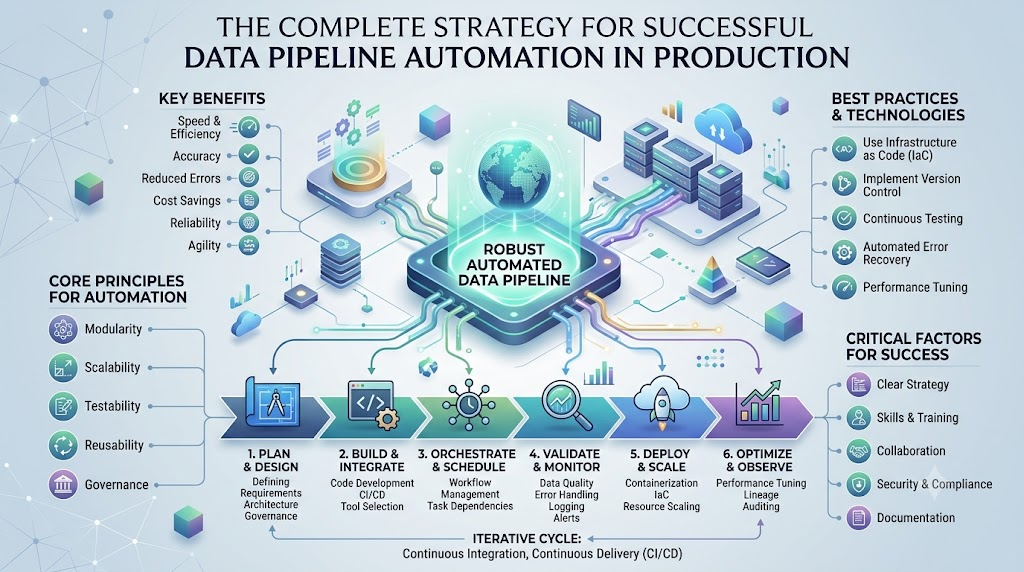
First comes ingestion, where the system gathers raw records. Next is transformation, where numbers get organized into neat tables.
Finally comes delivery, where reports show up on screens for business managers.
Automated checks watch every transition. If a file arrives empty, the alert bell rings instantly so engineers can step in.
| Pipeline Stage | What Happens Here | How Automation Helps |
| Ingestion | Collects raw facts from apps and databases | Starts the journey automatically on time |
| Transformation | Cleans messy text and calculates totals | Uses code to format tables without mistakes |
| Quality Testing | Verifies numbers look correct and complete | Stops bad records from moving forward |
| Monitoring | Watches the speed and health of systems | Sends quick alerts if something gets stuck |
| Reporting | Shows clean charts to business leaders | Delivers fresh information every morning |
Key Concepts That Keep Systems Running
To keep information moving without hiccups, engineers use several smart techniques. Each piece protects the pipeline in a different way.
Data Pipeline Automation
Doing chores by hand takes too much time. You would not want to sweep your floor every five minutes yourself.
Data pipeline automation runs tasks on a schedule or whenever fresh information arrives. Tools like Apache Airflow act like conductors, telling each computer script when to play its part.
Data Quality Management
Bad information causes big trouble. If a store thinks it has ten bikes when it has zero, customers get angry.
Data quality management sets rules for incoming numbers. It makes sure phone numbers have enough digits and prices are never negative numbers.
Continuous Testing and Delivery
Software teams use continuous integration to test their code automatically. Data teams do the exact same thing with their pipelines.
Every time an engineer writes a new data cleaning rule, the computer runs tests against sample records. If the test passes, the change goes live smoothly.
Monitoring and Data Observability
Watching a pipeline is like checking the dashboard of a car. You want to know your speed, your fuel level, and if the engine is running too hot.
Data observability goes one step deeper. It does not just tell you that a pipe stopped working; it helps you figure out exactly why it broke.
Observability tracks five important pillars:
- Freshness: Is the information new, or is it several days old?
- Distribution: Do the numbers look normal, or are they surprisingly large?
- Volume: Did all expected records arrive, or did half get lost?
- Schema: Did someone change the table layout without warning the team?
- Lineage: Where did this record come from, and who is using it right now?
When teams track these five items, finding bugs takes minutes instead of days.
Choosing the Right Tools and Technologies
Teams use different tools to manage their data pipelines effectively. No single tool does everything, so engineers connect them together like building blocks.
A modern DataOps platform brings orchestration, testing, and infrastructure into one organized workspace.
Here are common tools engineers use:
- Apache Airflow schedules and runs complex data workflows.
- Apache Kafka streams real-time messages quickly from one app to another.
- Apache Spark processes huge piles of data across many computers at once.
- Kubernetes runs software containers so applications stay healthy and scalable.
- Grafana displays visual dashboards to show system health and alert teams.
| Tool Name | Primary Purpose | How Teams Use It |
| Apache Airflow | Workflow Orchestration | Schedules data jobs and tracks their progress |
| Apache Kafka | Real-Time Streaming | Passes live events between different services |
| Apache Spark | Large-Scale Processing | Cleans massive datasets very quickly |
| Grafana | System Dashboards | Shows visual health metrics and system alerts |
Common Challenges Teams Face
Building reliable systems takes practice. Teams often run into hurdles when they start modernizing their data operations.
One common problem is messy communication. When data analysts and software developers do not talk often, they build mismatched tables.
Another challenge is legacy systems. Older computers were not built for automation, making updates slow and scary.
Finally, dirty raw data happens constantly. Outside vendors change their file formats without notice, causing pipelines to halt unexpectedly.
Strong DataOps consulting and good team habits help organizations solve these problems step by step.
Growing as a DataOps Engineer
Because data systems grow larger every day, skilled professionals are in high demand. A DataOps engineer connects software engineering with data analysis.
These engineers write code in languages like Python, manage cloud systems, and set up automated pipelines.
If you want to grow these technical skills, structured learning is a great first step. Exploring a DataOps course or preparing for a DataOps certification helps build confidence with real tools.
Many professionals visit TheDataOps.org to study DataOps training materials, read helpful tutorials, and understand best practices for building strong data teams.
FAQs
What is DataOps and why is it important?
DataOps is a set of practices that automates the building, testing, and delivery of data pipelines. It is important because it prevents errors, saves time, and ensures decision-makers receive trustworthy information quickly.
How does data observability differ from simple monitoring?
Simple monitoring tells you that a pipeline failed or is running slowly. Data observability looks inside the system to show you why it failed, tracking data freshness, volume, and lineage to help you fix bugs faster.
What tools does a typical DataOps platform use?
A typical platform connects workflow tools like Apache Airflow, streaming tools like Kafka, processing engines like Apache Spark, and dashboard monitors like Grafana to keep data flowing safely.
What does a DataOps engineer do every day?
A DataOps engineer builds automated delivery pipelines, writes tests to verify data accuracy, monitors system health, and helps data scientists and analysts work together smoothly without manual delays.
How can beginners start learning DataOps practices?
Beginners can start by learning basic Python, understanding how relational databases work, and practicing pipeline automation. Educational resources on TheDataOps.org also provide structured guidance to help learners build strong operational foundations.
Final Thoughts
Modern businesses rely on healthy, fast data to solve tough challenges. When data pipelines break, work stops and mistakes happen. DataOps brings order to this digital world through smart automation, active testing, and clear team communication. It turns fragile data tasks into dependable pipelines that run smoothly every day. Whether you want to build automated pipelines, explore observability, or start a new career path, building solid technical foundations makes all the difference. Learning resources like TheDataOps.org offer valuable insights to help engineers, analysts, and students understand these essential operational practices.
