Your flight lands on Friday night. You have five days in Japan and no plans yet. You’d like to see a festival, hear some live music, and maybe join a local workshop. Where do you begin?
Many travelers face this same puzzle. They open page after page, compare dates, and still feel unsure. Organizers face the opposite problem. They have a good event, but they need the right people to find it.
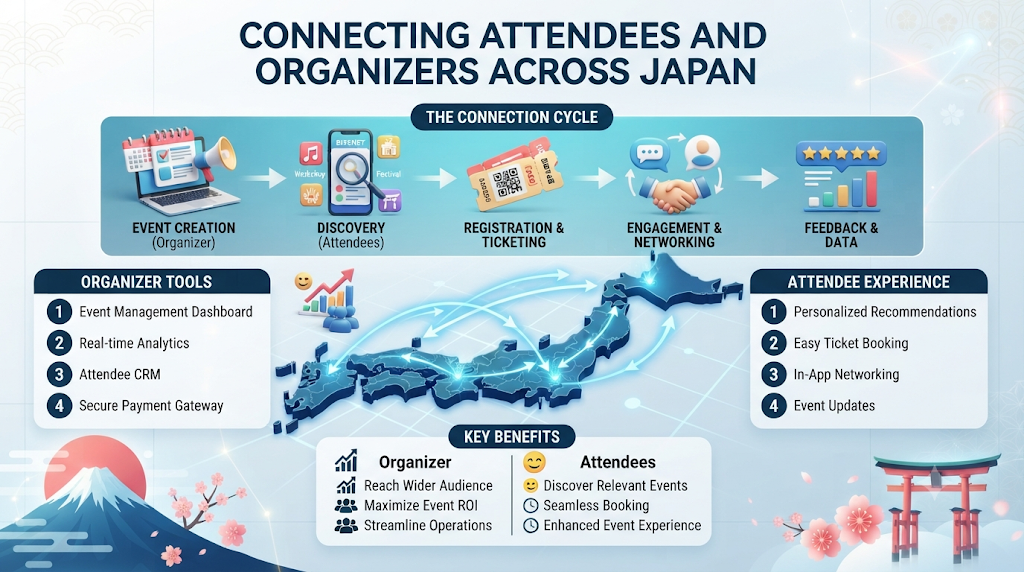
MyEventsNow Japan sits between these two groups. It’s an online place to find events, check ticket details, and share new events. This guide follows one event from the first search to the final booking. It also shows what organizers do behind the scenes.
A Closer Look at MyEventsNow Japan
MyEventsNow Japan is an online platform for event discovery, ticket booking, and event promotion. It connects event organizers, businesses, communities, and attendees across Japan.
The people who use it come from many backgrounds. Residents look for weekend plans. International visitors look for local culture. Students, music fans, and working professionals look for events that match their interests.
The platform lists many kinds of events. You can find concerts, festivals, workshops, exhibitions, conferences, networking events, and cultural celebrations. Visitors can also explore ticket information and check the registration and booking options that are available.
Beyond listings, the marketplace offers more. It includes venue exploration, cultural experiences, organizer management, and community engagement. Think of it as a meeting point. Attendees come to find something worth doing. Organizers come to be found.
Attendees and Organizers Side by Side
The two groups use the platform in different ways. This table shows the main differences in a quick view.
| Area | For Attendees | For Organizers |
|---|---|---|
| Main purpose | Find events that fit your plans | Share events with interested audiences |
| Discovery or publishing | Browse upcoming events | Create event listings |
| Tickets and admission | Review ticket information | Share admission details |
| Registration and participation | Use available registration options | Offer registration processes where supported |
| Event information | Check schedules and venues | Publish schedules and venue information |
| Marketplace extras | Explore venues, culture, and community | Manage events and engage the community |
Read the table one row at a time. Each row shows one task from two points of view. What an attendee reads, an organizer writes.
This is why a complete listing matters so much. Good details from the organizer lead to better choices for the attendee.
Part One: The Attendee Journey, From Search to Booking
Finding what’s coming up across the country
The platform gathers Upcoming Events in Japan in one place. You can browse concerts, festivals, workshops, exhibitions, conferences, networking events, and cultural celebrations. This helps anyone who wants plans without checking many different pages.
Start with your dates. Then pick the type of event that suits your mood. A traveler with a free weekend may enjoy a festival. A student may prefer a workshop or an exhibition. A busy professional may scan for networking evenings.
Here’s a useful tip. Open two or three listings before you choose. Compare the dates, venues, and admission details side by side. A short comparison saves time and avoids mix-ups later.
A look at Tokyo
Events in Tokyo cover a wide range. The platform mentions live performances, technology meetups, nightlife, professional seminars, food festivals, and entertainment experiences. That mix suits visitors, residents, and people who travel to the city for work.
Think about how you want to spend your time. A developer may look for a technology meetup. A food lover may check for a food festival. Someone with a free evening may browse nightlife or a live performance.
Here’s a tip. Match the event to your travel plan. Check the venue and the start time before you commit. A clear plan keeps your day calm and your schedule realistic.
A look at Osaka
Events in Osaka offer plenty to see and do. The platform lists music concerts, business conferences, cultural activities, community gatherings, and local experiences. Together, they give visitors and residents many ways to spend a day.
A music fan can look for a concert. A business traveler can check for a conference. A curious visitor can try a cultural activity or a local experience. Community gatherings suit people who like to meet others who share an interest.
For a practical tip, read the event description closely. Look for the venue, the schedule, and any participation notes. These small details tell you if the event fits your day.
Seasonal celebrations and traditional events
Japanese Festivals and Events have their own directory on the platform. It highlights traditional celebrations, seasonal festivals, cultural performances, and unique Japanese experiences. Residents and international visitors can both use it.
This section helps people who want to meet local culture with care and respect. A traditional celebration often follows a season or a custom. A cultural performance shows art in a live setting. Each description tells you what to expect.
Here’s a tip. Check the date early. Seasonal events follow the calendar, so timing matters. Also read the venue and admission details before you travel, so your trip fits the event.
For music lovers: live shows, new artists, and DJ nights
Music fans have plenty to explore. The platform lists live music performances, independent artists, DJ events, and entertainment programs across Japanese cities. This suits fans who want to find new artists as well as enjoy a night out.
If you search for Concert Tickets Japan, start with the event page. Check the ticket information and the available booking options. These options can differ from one event to the next, depending on the organizer.
Independent artists gain something here too. A listing helps an artist share a show with people who may want to attend. That said, a listing doesn’t promise a crowd.
Here’s a tip. Confirm the date, venue, and admission details before you plan any travel.
For learners and professionals: seminars, conferences, and networking
Learning and career events have a home here as well. The platform lists workshops, exhibitions, conferences, networking events, and professional seminars. Students, working professionals, and curious learners can all find something useful.
A workshop suits someone who wants to learn by doing. A conference helps someone who wants to follow a topic in depth. A networking event fits someone who wants to meet people from the same field.
For a practical tip, read the description before you sign up. Look at the topic, the schedule, and the venue. Then ask whether the event matches your goal. If a registration option is available, note each step in the participation information.
Reading event details before you book
Online Event Ticket Booking Japan starts with a clear event page. Look at the ticket information, the schedule, the venue, and the available registration or booking options. Not every event offers the same options. It depends on the organizer and on what the platform supports.
Reading takes only a few minutes. It also helps you avoid surprises. Ask yourself three questions. Does the date fit my plan? Is the venue easy to reach? Do I understand the admission details?
Here’s a tip. Write the key details in a short note. If the organizer asks you to register, follow the participation information. When communication options are available, use them to stay up to date.
Comparing Tokyo and Osaka in One View
Both cities offer a good mix of events. This table shows what the platform mentions for each one.
| Event Type | Tokyo | Osaka |
|---|---|---|
| Music and live performances | Live performances | Music concerts |
| Business and professional events | Professional seminars | Business conferences |
| Technology events | Technology meetups | Not specified |
| Cultural and community activities | Not specified | Cultural activities, community gatherings |
| Food, nightlife, and entertainment | Food festivals, nightlife, entertainment experiences | Not specified |
Always check each event’s date, venue, and admission details before you make plans.
Part Two: The Organizer Side, From Listing to Management
Writing a clear listing with schedule, venue, and admission details
Organizers can create event listings, publish schedules, provide venue information, and share admission details. MyEventsNow Japan works as an Event Ticketing Platform Japan organizers can use to share their plans with interested audiences. A good listing answers the questions people ask first.
This helps any organizer who wants a clear, simple page. It suits a first-time host as well as an experienced team. Start with what the event is and who it’s for. Then add the time, the place, and the entry details.
Here’s a tip. Write the description first. Then add the facts one by one. Read the finished page as if you’d never heard of the event. If a question comes to mind, answer it in the text.
Who can post events
Many kinds of groups can use the platform. Businesses, educational institutions, event agencies, community groups, and independent professionals can list events. They can also improve their visibility among potential participants.
If you want to List Your Event in Japan, the list of eligible groups is wide. It includes teams and solo professionals alike. A school can share a public workshop. A business can share a seminar. A community group can share a local gathering.
Visibility is the goal here, but no result is guaranteed. Here’s a tip. Describe your event in words your audience would use. Say who it’s for and what they’ll gain from attending.
Handling registration and talking with participants
The platform connects attendees with organizers through available registration processes, participation information, and event communication options. It can serve as an Event Registration Platform Japan groups use to guide interested people. Features depend on what’s supported and enabled for each event.
This part helps organizers who want a calm, orderly start to their event. Good registration notes remove guesswork. Attendees know what to do and when to do it.
Here’s a tip. Explain the steps in plain words. Tell people what you need from them. Then use the communication options to share updates. A short, clear message often prevents many questions.
Selling tickets online and publishing with care
The platform provides event publishing workflows. It also describes registration and payment-processing capabilities where supported and enabled. Organizers who want to Sell Event Tickets Online Japan can begin with the publishing workflow.
Not every event will offer online payment or ticket sales. That’s why each organizer should check what’s available for their own event. The answer may differ from one listing to another.
Here’s a tip. Before you publish, confirm which features are enabled for you. Then write the admission details so they match. If your page and your setup tell the same story, attendees feel more confident.
Beyond Listings: Venues, Culture, and Community
The marketplace does more than list events. It also helps people explore venues, enjoy cultural experiences, manage events, and take part in the community.
Venue exploration gives attendees a way to learn about places where events happen. This helps you picture your day before you arrive. It also helps organizers who want to show where their event takes place.
Cultural experiences add depth to a trip or a weekend. A visitor can look beyond sightseeing and join something local. Residents can rediscover traditions in their own area. Both groups can find these experiences through the same marketplace.
Organizer management supports the people who run events. It keeps their listings, details, and plans in one place. Community engagement brings people together around shared interests.
Taken together, these parts show a simple idea. An event is more than a date on a page. It’s a place, a culture, and a group of people.
Practical Tips for Listings and Bookings
For attendees
- Check the date and venue first. A great event doesn’t help if the day or place doesn’t work for you.
- Read the admission details before you decide. They tell you what you need to know about entry.
- Confirm the registration steps. Some events may ask you to sign up, so note what the organizer asks for.
- Save the key details in one note. Keep the date, venue, and schedule where you can find them fast.
For organizers
- Keep your description complete. Include the schedule, venue, and admission details so readers don’t have to guess.
- Update changes quickly. If a time or place changes, edit the listing as soon as you can.
- Say who the event is for. A clear audience helps the right people recognize your event.
- Stay in touch with participants. Use the available communication options to share helpful news.
A Hypothetical Scenario: A Community Group in Osaka
This is a hypothetical example, not a real event.
A small community group in Osaka wants to run a cultural workshop. One member starts with the description. They write what the workshop covers, who it suits, and what guests will do. The text stays short and plain.
Next, the group adds the practical details. They enter the venue information and the schedule. They also add the admission details. Then they read everything once more and publish the listing.
The group hopes people will sign up. So they check which registration options are enabled for their event. Where an option is available, they explain the steps in the description. They also use the communication options to share updates.
Now picture an attendee. A visitor staying in Osaka for the weekend opens the platform and browses the listings. The workshop catches their eye. They open the page, read the description, and check the venue. They compare the schedule with their plans.
Then they review the admission details. If a registration or booking option is available, they follow it. If not, they read the participation information and decide what to do next.
Nothing here promises a result. The example only shows how the pieces fit together.
Frequently Asked Questions About MyEventsNow Japan
Where can I look for events happening soon across the country?
You can browse upcoming events on the platform. It lists concerts, festivals, workshops, exhibitions, conferences, networking events, and cultural celebrations. Pick your dates and read each listing.
Does the platform cover traditional celebrations?
Yes, it has a directory for traditional celebrations and seasonal festivals. It also lists cultural performances and unique Japanese experiences. Residents and international visitors can both use it.
Can I find live music and DJ nights?
The platform lists live music performances, independent artists, and DJ events. Entertainment programs appear across Japanese cities. Check each page for ticket information.
What should I check before booking a ticket?
Open the event page and read the ticket information. Look at the date, venue, and admission details too. Booking and registration options can vary by event.
Which kinds of Osaka events does the platform mention?
Osaka listings include music concerts, business conferences, cultural activities, community gatherings, and local experiences. Browse the page to see what’s available for your dates.
How does an organizer put an event on the platform?
Organizers create an event listing. They add the schedule, venue information, and admission details. Then they publish it for interested audiences.
Who is allowed to publish events?
Businesses, educational institutions, event agencies, community groups, and independent professionals can list events. Each group can reach potential participants this way.
Can attendees sign up through the platform?
The platform connects attendees with organizers through available registration processes. It also offers participation information and event communication options. What you see depends on the event.
Is online ticket selling part of the service?
The platform provides event publishing workflows. It describes registration and payment-processing capabilities where supported and enabled. Organizers should check what applies to their event.
Will a listing bring more people to my event?
A listing can improve visibility among potential participants. The platform can’t promise results. A clear, complete page gives your event a fair chance.
Final Thoughts
Finding an event and sharing an event are two sides of one story. MyEventsNow Japan brings both sides into the same place.
Attendees can browse, compare, and review details at their own pace. They can explore Tokyo, Osaka, festivals, music, and learning events. Organizers can write clear listings, add practical details, and reach people who may care.
Good information makes the difference for everyone. When organizers share it well and attendees read it closely, events run more smoothly. That’s a quiet but steady kind of value.
