You’ve landed in the UK for a short break. Your work is done, and you have one free evening. You’d love to see something local, but you don’t know where to start.
That small problem is common. Plenty of people want a good night out but can’t tell what’s on. At the same time, organisers have events that need an audience. MyEventsNow UK aims to link the two. It’s an online platform for finding events, booking tickets, and managing event details across the United Kingdom.
Below, you’ll see the platform from both sides. First comes the attendee’s path. Then comes the organiser’s.
A Plain Look at the Platform
MyEventsNow UK is an event discovery, ticket booking, and event management platform. It brings together organisers, businesses, venues, service providers, and attendees from across the United Kingdom. Each group has its own reason to be there.
Attendees come to look around. They can find local experiences, read event information, and use the ticket booking and registration options that are available. The platform lists concerts, festivals, comedy shows, workshops, exhibitions, business conferences, networking meetups, and community gatherings.
Organisers come to share their work. They can create listings, publish schedules, post venue information, and reach people who might be interested.
There’s also a wider side. The marketplace includes business promotion and community engagement. It has room for venues and for event-related service providers, too. So the platform reaches beyond a simple ticket list.
Two Views of the Same Platform
Attendees and organisers look at the same events from opposite ends. The table below puts those two views side by side. Use it as a quick map before you read the details.
| Area | For Attendees | For Organisers |
|---|---|---|
| Main purpose | Find events and experiences around the UK | Get events in front of interested people |
| Discovery or publishing | Search by location, category, date, and interest | Build listings and publish schedules |
| Tickets and booking | Use the booking and registration options on offer | Use publishing and ticketing workflows to promote events |
| Registration and communication | Register and keep in touch with organisers | Handle booking information and message participants |
| Event information | Read the details before you choose | Share schedules and venue information |
| Marketplace extras | Venue discovery and community gatherings | Business promotion and community engagement |
Read the table one row at a time. Each row names a topic, then shows what each group does with it.
You’ll see a pattern. What organisers publish is what attendees read. That link is what keeps the platform useful for both sides.
Your Path as an Attendee: Search, Read, Book
Scanning what’s on across the country
Begin with a wide view. On MyEventsNow UK, you can scan Upcoming Events in the UK without picking a date or place first. The range runs from concerts and festivals to workshops and community gatherings.
This suits people who feel stuck. A tourist with a free evening can look around. A student with a spare Saturday can do the same. So can working professionals and families.
Each listing holds event information, so you can learn the basics at a glance. You don’t have to commit to anything yet.
Here’s a useful habit. Open three listings that look very different from each other. Read each one for a minute. You’ll often find a better idea than the one you started with.
Narrowing the list to suit your day
Now shrink the list. Many people type Events Near Me when they want something close. On this platform, you can find activities by location, category, date, and personal interest.
Think of these as four dials. Turn one, and the list changes. Turn two, and it gets shorter still.
A tourist may choose a place and a free date. A parent may pick a category that fits a family day. A professional may look for a business event on an evening that works.
The platform doesn’t say it finds your location by itself. You pick the details.
Try this tip. Set your date first, since that’s your hardest limit. Then add interests one at a time until the list feels right.
The capital and six other cities
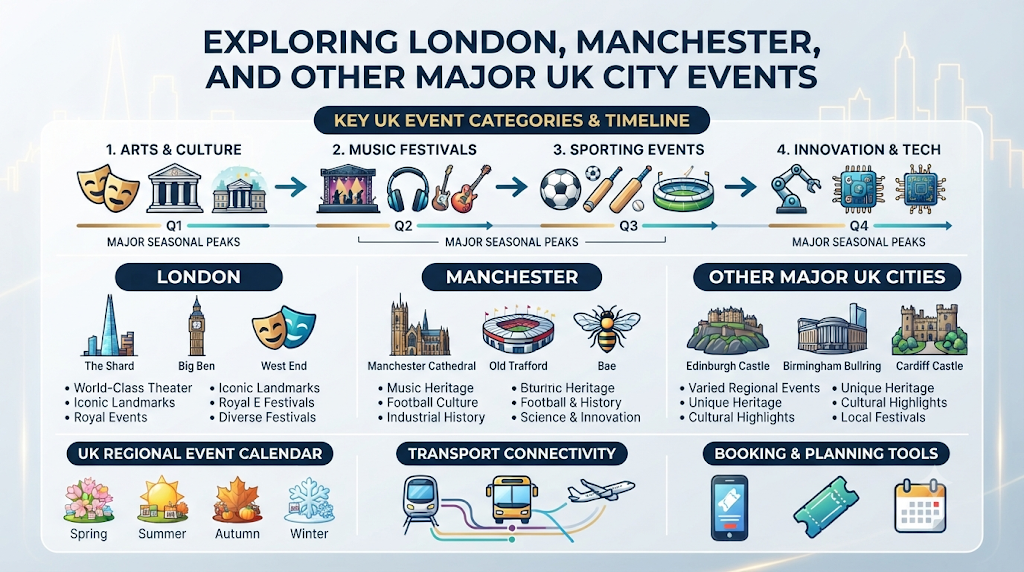
Many visitors want to start in the capital. The platform aims to help users find Events in London, whether they live there or pass through for a weekend. Browse the listings to see what organisers have shared.
It also aims to help people explore Manchester, Birmingham, Glasgow, Edinburgh, Bristol, and Belfast. That doesn’t mean every event type exists in each city. The choice depends on what organisers publish.
This helps students who travel between cities. It also helps anyone planning a trip with friends in different places.
A simple tip: search one city at a time. Write down your dates for each city first. Then pick events that fit those dates, so nothing clashes.
Live sound, festival fields, and late nights
Music fans have plenty to look at. If Concert Tickets UK is your search, start with the music section. It covers live performances, music festivals, independent artist events, entertainment shows, and nightlife experiences.
Each style fits a different mood. A festival suits a long weekend. An independent artist event suits a quieter, closer night. A nightlife experience suits a group that wants to stay out late.
Ticket options vary from event to event. Some listings may offer booking choices, and others may only give information. The page will show you which.
Here’s a tip. Try an independent artist event as well. Smaller shows are easy to miss. Check the date and venue before you tell your friends.
Laughter, skills, art, and business contacts
Not every good night has a guitar in it. The platform also lists comedy shows, workshops, exhibitions, business conferences, and networking meetups. That gives you room to choose.
Comedy fans can look for a show to share with friends. Curious people can try a workshop or visit an exhibition. Professionals can browse conferences and meetups, which may help them meet new contacts.
Each type serves a goal. Comedy is for laughing. A workshop is for learning. A meetup is for meeting people.
Here’s a tip. Think about your energy that day. If you’re tired, pick something light. If you feel social, pick a meetup. The right match makes the evening easier.
Reading the page before you book
Booking comes last, and it goes best after some checking. The platform gives access to available ticket booking and registration options. Online Event Ticket Booking UK starts with a careful read of the listing.
Look for the date, the venue, the schedule, and any ticket details. These tell you if the event fits your plans. If a detail is missing, pause before you decide.
Groups get the most from this step. When five friends must agree, clear information cuts down the back-and-forth.
Booking options differ by event, so each page may look a little different. Try this tip. Read the whole page once. Then read the date and venue a second time. It takes one minute and can save a wasted trip.
Event Types at a Glance
The platform covers many kinds of events. This table shows what attendees can explore and what organisers can do in each category.
| Event Category | What Attendees Can Explore | What Organisers Can Do |
|---|---|---|
| Concerts and music | Live performances, music festivals, independent artist events, nightlife | Share schedules and venue information |
| Comedy and entertainment | Comedy shows and entertainment shows | Create listings that reach interested attendees |
| Workshops and exhibitions | Workshops and exhibitions | Publish event details and manage registration |
| Business conferences and networking | Business conferences and networking meetups | Connect with prospective customers |
| Community gatherings and festivals | Community gatherings and festivals | List events to attract interested audiences |
Always check each event’s date, venue, and ticket details before you decide.
Your Path as an Organiser: Publish, Register, Manage
Setting up a listing people can follow
Every event begins with a listing. On an Event Ticketing Platform UK like this one, organisers can create listings, publish schedules, and share venue information. Those three parts give attendees the basics.
A clear page helps a first-time promoter as much as a busy agency. People decide fast. If your page answers their questions, they’re more likely to read on.
Think of the listing as your front door. It should say what the event is, when it happens, and where to go.
Here’s a tip. Write the description as if you’re texting a friend about the night. Use plain words. Put the date and venue near the top, so nobody has to hunt for them.
Which groups can share events
Many kinds of organisers can use the platform. Businesses, event agencies, educational institutions, charities, community organisations, and independent promoters can all list events online. That’s a broad group with different goals.
You don’t need to be a big company to List Your Event Online UK. A school might share a workshop. A charity might share a fundraiser. A promoter might share a night of live music.
The aim is to give events more visibility and help them meet interested audiences. The platform doesn’t promise results, though. A good page still needs good details.
A tip for newcomers: decide who the event is for before you write. Is it for students, families, or professionals? That choice shapes your words and keeps the page focused.
Sign-ups and staying in touch
Registration turns an idea into a guest list. The platform’s registration capabilities are designed to simplify attendee registration, booking information management, and communication between organisers and participants.
That’s the job of Event Registration Software UK. It helps organisers keep sign-ups in one place. It also gives them a way to reach the people who plan to come.
Good communication matters most when plans shift. A start time moves, or a room changes. Guests need to hear about it.
Try this tip. Keep your records tidy from day one. Use the same format for every sign-up. Check your list a few days before the event. Small habits prevent big headaches.
Putting tickets in front of interested people
Once the listing is ready, publishing comes next. Organisers can use event publishing and ticketing workflows to promote events and connect with prospective customers. These workflows turn a listing into something people can act on.
Many organisers want to Sell Event Tickets Online UK without building a website of their own. The platform offers a route for that. It doesn’t promise sales, but it gives organisers a place to start.
Think about the order of your tasks. First write the description. Then add the schedule and venue. Last, handle the publishing and ticketing step.
Here’s a tip. Before you publish, read the page like a stranger would. Can you find the date, venue, and ticket details quickly? If not, fix them first.
Keeping the whole event in one view
Events have many moving parts. The platform’s event management experience brings together event information, registration workflows, event promotion, and venue discovery. It also opens doors for event-related service providers.
For an organiser, this works like Event Management Software UK. Fewer tools can mean fewer mix-ups. You see the listing, the sign-ups, and the promotion as parts of one picture.
Small teams may like this most. A community group with three volunteers can’t juggle ten tools. One place makes the work lighter.
A good tip is to set a weekly check. Review your listing and your registration records on the same day. That rhythm helps you spot gaps early.
Beyond Tickets: Venues, Suppliers, and Local Spirit
The platform is more than a list of events. It’s a marketplace with several layers. Each layer gives people another reason to visit.
Venue discovery is one layer. Organisers can look for places to host events. Attendees can also learn about venues through the listings they read. Both groups gain from knowing where things happen.
Event-related service providers form another layer. The platform includes opportunities for them. That means businesses that support events may find a place to show their work.
Business promotion adds a third layer. Companies can use the marketplace to be seen by people who care about events. It’s a way to share what they do with an interested audience.
Community engagement ties these layers together. Charities, schools, and community groups can share events that matter to people nearby. When guests show up, those groups grow stronger.
The platform doesn’t claim any set results from these extras. They simply give people more ways to connect.
Practical Habits for Attendees and Organisers
For attendees:
- Plan around the schedule. A start time that clashes with your travel can spoil the night.
- Open the full listing, not just the title. The details often hide the answer you need.
- Compare booking options when you see more than one. A short comparison helps you choose calmly.
- Recheck the date a few days before. A quick look keeps surprises away.
For organisers:
- Put the key facts first. Date, venue, and schedule should be the easiest things to find.
- Keep every description complete. Gaps make people hesitate.
- Review your registration records before event day. A clean list makes the day run smoothly.
- Share clear updates when plans change. Short, honest messages keep guests calm.
A Hypothetical Evening in Bristol
This story is hypothetical. It shows how the platform might work, and it isn’t a real event or a real result.
Imagine an independent promoter in Bristol. She wants to run a small music night for local artists. It’s her first ticketed event, and she feels a little nervous.
She starts with the description. She keeps it short and friendly. She says what kind of night it is, who it suits, and why she’s hosting it.
Next, she adds the venue and the schedule. The listing shows where the night happens and when the music starts. She reads every detail twice.
Then she publishes the listing. It joins the other music events on the platform. She also uses the registration workflow to keep booking information in one place and stay in touch with guests.
Now picture a visitor spending a weekend in Bristol. She searches by city and by music category. She spots the night and opens the page.
She reads the date, the venue, and the schedule. Then she looks at the booking or registration option that’s available. She shares the link with a friend, and they decide together.
Later, the promoter notices that the start time must shift. She updates the listing and tells her guests. The whole process stays calm and clear for both sides.
Questions People Often Ask About MyEventsNow UK
Where can I see which events are coming soon?
You can browse upcoming events across the UK on the platform. The list includes concerts, festivals, comedy shows, workshops, exhibitions, and more. Each listing carries event information.
Does the platform list anything besides music?
Yes. It lists comedy shows, workshops, and exhibitions as well. Attendees can look through these and read the details for each one.
Can professionals find work-related events?
Business conferences and networking meetups are part of the platform. Professionals can browse them and check dates, venues, and ticket details. Each page shows what’s on offer.
What should I check before I book a ticket?
Look at the date, venue, schedule, and ticket details. Then see which booking or registration option is available. Pause if something is missing.
How does an organiser put an event online?
Organisers create a listing, publish a schedule, and share venue information. A clear description helps interested people understand the event fast.
Can organisers talk to the people who sign up?
Registration capabilities are designed to help with this. They aim to simplify sign-ups and booking information. They also support communication between organisers and participants.
Is there a way to sell tickets through the platform?
Organisers can use publishing and ticketing workflows to promote events. These help them connect with prospective customers. No sales results are promised.
What does event management include here?
It brings together event information, registration workflows, event promotion, and venue discovery. The idea is to keep key tasks in one place.
Can the platform help me find a venue?
Venue discovery is part of the marketplace. Organisers and attendees can learn about places where events happen. The choices depend on what’s listed.
Why does the platform mention community and business promotion?
The marketplace includes both. Businesses can promote their work, and community groups can share local events. These extras give people more ways to connect.
Wrapping Up
MyEventsNow UK gives two groups one shared space. Attendees can browse, search, read details, and book through the options on offer. Organisers can list events, publish schedules, handle sign-ups, and manage details.
Clear information helps everyone. A complete listing helps people choose well. A careful reader makes fewer mistakes.
Whether you’re planning a free evening or your first event, take your time. Read the details, check the dates, and pick what suits you. A good plan usually starts with a calm look around.
