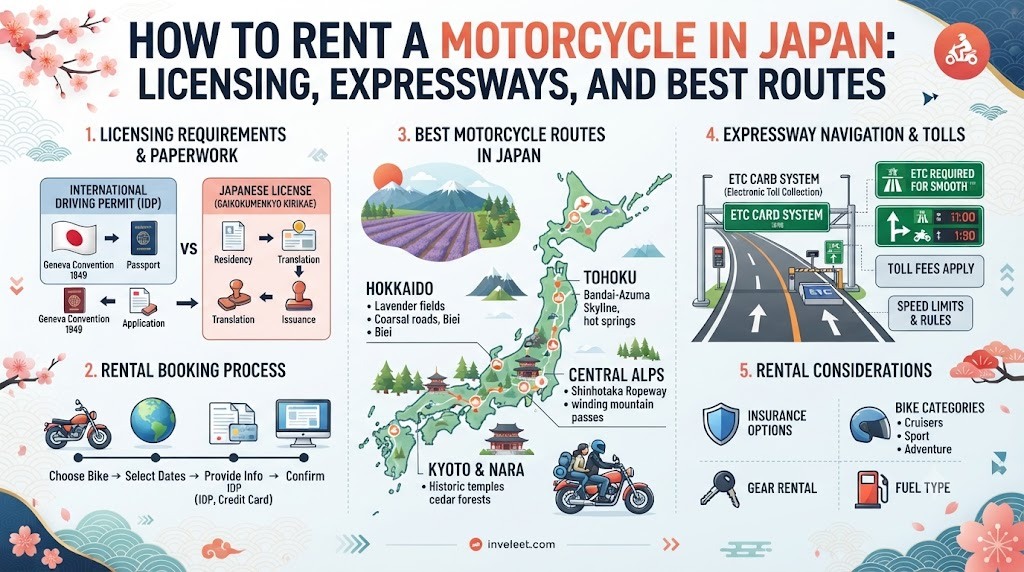
Introduction
Japan is a rider’s dream. The asphalt is smooth, the mountain passes are legendary, and the neon city streets glow after dark. Traveling by road gives you total freedom to explore at your own pace.
A train ticket takes you from station to station. A rental bike or car takes you to hidden shrines, coastal cafes, and mountain lookouts. You choose when to stop and when to go.
MotoShare connects riders, tourists, and local fleet owners on one easy platform. Riders find trusted vehicles. Shop owners fill their calendars. This guide covers everything you need to know before you book.
Why Rent a Motorcycle in Japan?
Riding across Japan feels like a moving postcard. Clean highway rest stops, called Michi-no-Eki, offer local food and free maps. Winding mountain roads climb past cedar forests and quiet countryside shrines.
You also skip crowded trains and rigid timetables. A bike lets you chase good weather and follow your curiosity. That freedom is why so many travelers return to Japan just to ride.
But you must match the engine class to your real skill level. Japan sorts bikes into clear groups. A 50cc moped suits slow city hops. A 125cc small bike handles local roads with ease.
A 250cc light motorcycle is the sweet spot for day tours. Heavy bikes above 400cc suit experienced riders on long highway trips. Be honest about your experience, because mountain switchbacks punish overconfidence.
Choosing Your Ride: Scooters, Touring Bikes, and Cars
Picking the right vehicle makes or breaks your trip. Busy Japanese streets favor light, narrow machines. High-speed tollways reward stable, powerful bikes. Families and rainy days often call for a car instead.
Use this table as a quick guide before you book.
| Vehicle Type | Best Use | Rider License Class Needed | Luggage Space | Road Comfort |
|---|---|---|---|---|
| City Scooter (50cc–125cc) | Short city hops, errands, sightseeing | Valid bike license for that class | Small underseat box | Basic, fine for low speeds |
| Standard Commuter (250cc) | Day tours, suburbs, light highways | Mid-class bike license | Medium rear box option | Good for one rider |
| Touring Motorcycle (400cc–1000cc+) | Long tours, mountains, expressways | Full heavy bike license | Large panniers and top box | Excellent, stable and fast |
| Compact Rental Car / Kei Car | Families, rain, heavy bags, rural trips | Standard Japanese car license | Full trunk and cabin space | High, climate controlled |
Now the rules. Japanese highways cap speeds at 100 km/h, and city roads sit much lower. Toll gates accept cash, but an ETC card lets you pass smoothly through the electronic lane.
Cars carry passengers freely, but bikes have strict tandem rules. We cover those later. Always confirm your license class covers the vehicle you book.
レンタルバイク 東京 and Motorcycle Rental Tokyo
Tokyo rewards riders with unforgettable views. Cross the Rainbow Bridge at sunset and watch the bay light up. Loop through Odaiba for waterfront parks and futuristic buildings. Then dive into central avenues buzzing with energy.
Plan your route around traffic. Early mornings and weekends flow best. Central roads calm down late at night, when the neon reflects off the asphalt. Avoid rush hour if you can.
Tokyo is also a perfect launchpad. Ride west on a weekend getaway toward Hakone and Mount Fuji. The mountain roads open up within two hours. The air cools, and the city noise fades behind you.
This is where レンタルバイク 東京 services shine. Shops near major stations let you grab a bike and go. Booking motorcycle rental Tokyo online saves time and locks in your preferred model.
Compare engine classes before you decide. A 250cc bike handles highways and mountain passes with ease. A small scooter keeps city costs low. Choose based on your route, not just the price.
Also check shop pickup times and return rules. Some shops close early on Sundays. A quick call or online check avoids a rushed final day.
スクーターレンタル 東京 and Affordable Urban Cruising
Scooters rule Tokyo’s backstreets. They slip through narrow lanes, park easily, and sip fuel. For commuting, errands, or short tourist hops, nothing beats them.
Light 50cc scooters often come with low daily rates. That makes 東京 バイク レンタル 安い options genuinely within reach for budget travelers. A スクーターレンタル 東京 shop near your hotel makes the whole day simple.
But parking demands respect. Central wards mark designated motorcycle bays with white lines and signs. Sidewalk parking invites swift fines from ward monitors. Always check the sign before you stop.
Some paid parking towers accept bikes. Others do not, so read the entry signs carefully. Shopping malls and stations often have dedicated two-wheel spaces. Use them, and you avoid trouble.
Also plan your fuel stops. Scooter tanks are small, but gas stations appear everywhere in the city. Keep a little cash handy, and you will never feel stuck.
レンタルバイク 日本 and Touring Across the Country
Japan’s long-distance touring is world class. The Izu Peninsula offers coastal roads with ocean views at every bend. Nagano delivers mountain switchbacks and cool alpine air. Hokkaido rewards riders with wide open plains.
Weather changes fast on these routes. Mountain mornings stay chilly even in summer. Heated grips and a warm layer make early starts comfortable. Pack rain gear that actually fits over your jacket.
Seasonal typhoons can disrupt plans from late summer into autumn. Check forecasts daily and keep route options flexible. Riding through a storm is never worth the risk.
Roadside stations remain your best friends. They offer food, clean restrooms, and local route tips. Many also sell regional snacks you will not find in cities.
This is why レンタルバイク 日本 services matter for tourists. A well-run motorcycle rental Japan shop provides a road-ready bike and honest route advice. That setup turns a good trip into a great one.
Always return with a full tank if your contract requires it. Keep fuel receipts, and note toll spending along the way.
Pre-Ride Safety Check and Highway Rules
A quick walk-around check prevents most problems. It takes five minutes. It protects your deposit, your safety, and your trip. Use this checklist before you ride off.
| Check Point | What to Look For | Why It Matters |
|---|---|---|
| Tire Tread & Air Pressure | No cracks, no bald spots, firm tires | Grip and braking depend on healthy tires |
| Front & Rear Brake Levers | Firm feel, quick return, no slack | Brakes are your first safety system |
| Headlight & Turn Signals | Bright, clear, all lamps working | You must be seen at night and in rain |
| Jibaiseki Insurance Papers | Valid document stored in the bike | Proof of mandatory liability coverage |
| ETC Card Unit & Reader | Unit powers on, card reads correctly | Smooth passage through toll gates |
| Mirrors & Handlebar Controls | Tight mirrors, working horn and switches | Clear view and control at all times |
Next, the big rule: Japan drives on the left. Streets and highways follow this everywhere. Stay left in your lane until you need to pass.
On expressways, tandem riding has strict rules. The passenger must be at least 20 years old. The rider needs a heavy-class license and at least three years of experience. Also, the bike must be over 125cc.
Finally, take check-in photos of the bike. Capture scratches, the odometer, and the fuel gauge. These photos protect you from deposit disputes later.
レンタカー 東京 and Car Rental Tokyo for Groups
Sometimes a car simply works better. The rainy season soaks riders for weeks. Suitcases and shopping bags strain any bike. Families with small children need seats and space.
Cars also shine on long rural trips. You can visit temples in Nikko without chasing train timetables. You can stop anywhere and change plans freely.
Toll systems favor cars too. An electronic ETC card handles expressway gates without cash. Rentals often include or offer these cards. Ask when you book.
Compact Kei-cars squeeze through narrow alleyways with ease. They also fit small parking towers that reject larger vehicles. Fuel costs stay low, so long days stay affordable.
This is where レンタカー 東京 services make travel easy. Booking car rental Tokyo online lets you compare compact hybrids and spacious vans. You pick up the car, load the bags, and go.
But watch parking signs closely in the city. Some spots ban overnight parking. Others charge by the hour with steep late fees. Read every sign, and your car stay stays stress free.
Modern Fleet Software: バイクレンタル 管理システム
Running a rental shop is harder than it looks. Bookings pile up. Bikes need servicing. Customer licenses need checks. Deposits need tracking. Paper calendars break down fast.
Modern software solves these problems. A バイクレンタル 管理システム handles online reservations in real time. It shows which bikes are free, booked, or under repair. That means no double bookings and no angry customers at the counter.
License checks also become simple. Staff scan and store customer documents digitally. The system flags expired permits before pickup. Deposits and payments sync automatically.
Fleet data becomes useful too. The system tracks mileage, service dates, and maintenance history. You see which bikes earn money and which ones cost you. That data drives smarter buying and pricing.
A レンタカー 管理システム brings the same power to car fleets. Vehicle categories, insurance records, and cleaning schedules all live in one place. Staff spend less time on admin and more time with customers.
Good software also supports multiple channels. Online marketplaces, walk-ins, and phone bookings flow into one schedule. Your calendar stays accurate, and your team stays calm.
How MotoShare Connects Renters and Rental Businesses
MotoShare works for both sides of the market. Travelers use it to discover bikes, scooters, and cars across Japan. Local shops use it to list fleets and manage every booking.
For renters, prices appear in Japanese Yen (JPY) with no surprises. Listings come from verified local fleet partners. You compare models, dates, and locations in one place. Then you book in a few clicks.
For owners, MotoShare acts as an all-in-one management platform. You post your available vehicles and set your own rates. Bookings land in one dashboard. There are no hidden platform fees eating your margin.
The result is a fair marketplace. Tourists find real local shops, not anonymous middlemen. Small operators gain visibility they could never buy alone. Everyone wins.
Real-Life Travel and Business Scenarios
Here are four realistic situations that show how this works in practice.
- An international tourist lands at Haneda Airport and rents a 250cc bike on day one. They ride toward Mount Fuji and Hakone, stopping at lake viewpoints. A two-day loop feels easy on a light, reliable machine.
- A Tokyo resident wants a cheap weekend scooter to explore coastal cafes in Kamakura. A 125cc rental near the station keeps costs low. They ride south along the coast and back before dinner.
- A family rents a spacious hybrid car in Tokyo to visit temples in Nikko. Without train timetables dictating the day, they linger at shrines and stop for local soba. The kids nap in the back seat.
- A local motorcycle shop owner in Tokyo adopts modern rental software as the fleet grows. Online bookings sync with service schedules. Double bookings vanish, and weekend walk-ins get smoother, faster service.
Common Mistakes to Avoid When Renting Vehicles in Japan
These errors trip up many visitors. Each one has a simple fix. Learn them now, and your trip stays smooth.
- Carrying the wrong International Driving Permit type. Japan requires the 1949 Geneva Convention version. Get the correct permit at home before you fly. Otherwise, rental staff must refuse you.
- Parking motorcycles on public pedestrian sidewalks. Ward monitors issue fines quickly, and scooters get towed. Use marked two-wheel parking bays and paid towers instead.
- Forgetting to request an ETC toll card. Long expressway journeys slow down with cash gates. Ask for the card when booking, then glide through electronic lanes.
- Riding tandem on the Shuto Expressway without meeting the rules. The passenger must be 20 or older, and the rider needs three years of heavy-class experience. Check the law before you ride two-up.
- Skipping a close walk-around inspection. Small scratches become big deposit arguments. Photograph every panel, the odometer, and the fuel gauge before leaving.
- Taking a lightweight moped under 125cc onto expressways. Entry requires over 125cc, full stop. Plan local routes on small bikes and save the highways for bigger machines.
- Assuming every gas station offers full service. Many use automated self-service pumps with Japanese prompts. Learn the button order once, and refueling becomes easy.
- Running low on cash or local credit cards in rural towns. Some unmanned toll gates and small shops only take cash. Carry paper Yen and a major credit card on every ride.
Simple Rental Booking Checklist
Tick these items off before pickup day. Each one removes a common hiccup.
- Valid 1949 Geneva Convention International Driving Permit, or an official Japanese driver’s license with a certified translation for residents.
- Original passport for foreign travelers, because shops verify identity at pickup.
- Major credit card for the security deposit pre-authorization, since cash deposits are rare.
- Certified motorcycle helmet meeting Japanese JIS or equivalent safety standards, often available as an add-on rental.
- Confirmed full-tank fuel policy and return schedule, so you avoid extra fees and late-night drop-off problems.
Frequently Asked Questions
1. What driver’s license do foreign tourists need to rent a motorcycle in Japan?
Foreign tourists need a valid International Driving Permit from the 1949 Geneva Convention. Bring the physical booklet, not a copy. Your home license must match the bike class you rent. Some countries also allow official Japanese translations instead. Always check your country’s agreement with Japan before booking.
2. Which side of the road do vehicles drive on in Japan?
Japan drives on the left side. This applies to every road, from small alleys to expressways. Left-hand traffic shapes intersection turns and highway merging. Give yourself an hour to adjust after arrival. Follow the car ahead, and keep the center line on your right.
3. Are motorcycle helmets legally required for all riders across Japan?
Yes, every rider and passenger must wear a certified helmet. The law covers all engine sizes. Rental shops provide helmets meeting Japanese safety standards. Check the fit before you leave, because a loose helmet gets painful on long rides. Bring your own if you prefer a perfect fit.
4. Are motorcycles permitted to ride on Japanese expressways and toll roads?
Bikes over 125cc may use expressways and toll roads. Mopeds under 125cc are banned from these routes. Tandem riding has extra rules covering age and license history. Tolls apply, and an ETC card makes gate passage faster. Plan your route around these limits.
5. What is the mandatory Jibaiseki insurance policy in Japan?
Jibaiseki is Japan’s mandatory liability insurance for all motor vehicles. It covers injury claims to other people in an accident. By law, every rental bike and car carries it. It does not cover your own injuries or the vehicle damage. Consider extra coverage options from the rental shop.
6. What is an ETC card, and why should motorcycle renters ask for one?
ETC stands for Electronic Toll Collection. The card slots into a reader unit and pays expressway tolls automatically. You skip cash lanes and keep rolling. Rental shops offer these cards as add-ons. Ask at booking, because popular dates sell out quickly in peak season.
7. Where can riders legally park motorcycles and scooters in central Tokyo?
Use marked two-wheel parking bays and paid parking towers that accept bikes. Shopping malls and stations often provide dedicated spaces. Sidewalk parking invites fines from ward monitors. Read every sign before you stop, because rules differ from block to block across central wards.
8. Can two people ride tandem on a motorcycle in Japan?
Yes, but strict rules apply on expressways. The passenger must be at least 20 years old. The rider needs a heavy-class license and three or more years of experience. The bike must exceed 125cc. On regular roads, check local rules and your rental contract first.
9. When should a traveler choose a rental car instead of a motorcycle in Tokyo?
Pick a car during the rainy season, or when you carry heavy luggage. Families with small children need seats and safety belts. Long rural trips favor cars too. A car also helps when your group includes non-riders. Match the vehicle to your daily plan.
10. What should a rider do if they encounter an accident or flat tire on a Japanese highway?
Pull over to a safe spot behind the guardrail and turn on your hazard lights. Call the emergency number 110 for police and 119 for ambulances. Then contact the rental shop’s support line. Do not attempt roadside repairs on expressways. Safety comes first, paperwork second.
11. How does a rental management system help Japanese vehicle shop operators?
The software tracks bookings, bike availability, and service schedules in real time. It verifies customer licenses and stores documents digitally. Deposits and payments sync automatically. Double bookings disappear, and staff save hours on admin. Fleet data also guides smarter pricing and maintenance decisions.
12. Why should riders and fleet owners use a platform like MotoShare in Japan?
Riders get transparent JPY prices, verified local shops, and easy comparisons. Owners gain visibility, one dashboard for bookings, and no hidden fees. The platform connects real people with real fleets. That means less guesswork and more time on the road for everyone involved.
Conclusion
Japan rewards riders who plan well. Match the vehicle to your route, your luggage, and your license class. Watch the mountain weather, respect the left-hand traffic, and carry the right permit.
Respect local road etiquette, and the country opens up to you. The smooth asphalt, the neon streets, and the quiet shrine roads are all waiting. Book early, ride safely, and enjoy the open highway.
