Introduction
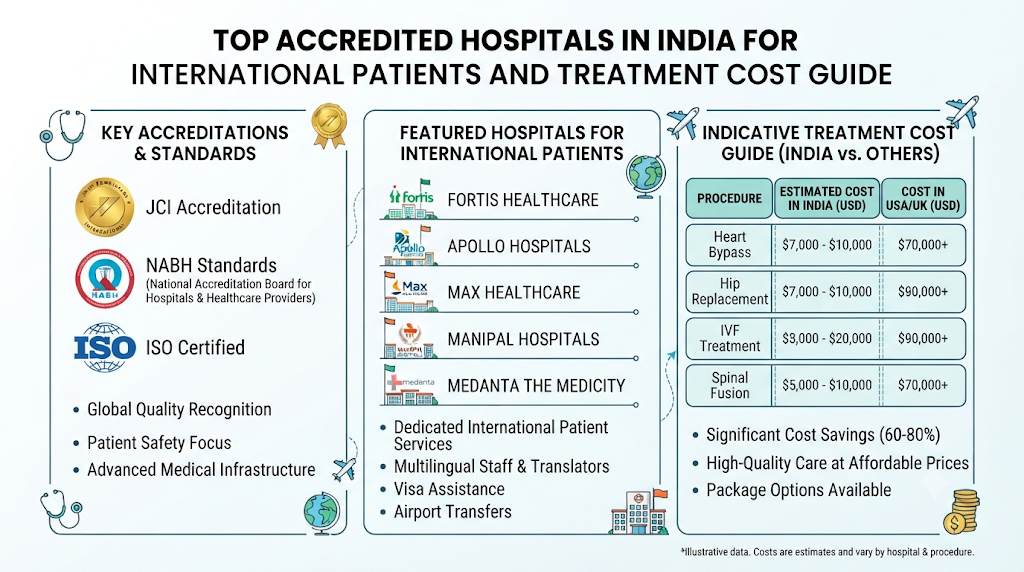
Global healthcare costs continue to climb every year, forcing millions of individuals to seek high-quality, budget-friendly medical treatment outside their home countries. Facing long waiting lists and expensive medical bills, patients often look across borders for timely and advanced clinical interventions. Over the past decade, India has emerged as a premier destination for complex clinical treatments, blending world-class clinical expertise with state-of-the-art diagnostic infrastructure. To simplify this journey and gain reliable, transparent data on top-tier global medical institutions, patients can utilize MyMedicPlus. This digital platform helps healthcare travelers discover accredited facilities, review comprehensive pricing options, and read detailed insights to make safe, life-changing medical decisions.
Featured Snippet
What Is Medical Tourism in India?
Medical tourism in India is the practice of international patients traveling to India to receive high-quality medical, surgical, and dental care. Driven by highly qualified English-speaking specialists, internationally accredited clinical infrastructure, and significant cost savings, India serves as a globally trusted hub for complex cardiac, orthopedic, and oncology treatments.
Understanding Medical Tourism in India
What Is Medical Tourism?
Medical tourism occurs when individuals travel across international borders to obtain medical, dental, or surgical care. While historically patients traveled from developing countries to major medical hubs, modern medical tourism involves patients from highly developed nations traveling to destinations that offer equal or superior clinical care at a fraction of the cost.
Why India Has Become a Leading Medical Tourism Destination
India’s rise as a premier healthcare hub is built on a massive network of corporate hospital chains that prioritize global quality standards. The country features dozens of hospitals accredited by the Joint Commission International (JCI) and the National Accreditation Board for Hospitals & Healthcare Providers (NABH). These facilities deploy the latest medical technologies, ranging from robotic surgical systems to advanced proton beam therapies.
Growth of International Patient Care
The infrastructure supporting international patient care in India has evolved into a seamless, specialized ecosystem. Modern medical centers feature dedicated International Patient Service departments that handle everything from medical visa invitations and airport transfers to language interpretation and customized dietary needs.
Key Advantages of Seeking Treatment in India
| Factor | India | Typical High-Cost Healthcare Destinations |
| Average Cost Savings | 60% to 85% lower than Western nations | Premium pricing with substantial out-of-pocket costs |
| Waiting Periods | Near-zero wait times for major surgeries | Weeks to months under insurance or public systems |
| Surgeon Experience | Exceptionally high procedural volumes per surgeon | Highly regulated but often lower lifetime case numbers |
| Language Barriers | English is the primary language of healthcare | Highly variable depending on the destination region |
Special Patient Education Framework
In Simple Terms
Medical tourism in India means traveling to get top-tier hospital care without the massive price tag or long waiting lists found back home.
Real-World Example
John, a self-employed individual from Canada, faced an 11-month wait for an urgent spinal procedure. By choosing to travel to a JCI-accredited facility in Delhi, he underwent surgery within four days of arrival under the care of a Western-trained specialist.
Why It Matters
Understanding these key advantages empowers patients to look beyond geographic borders to access safe, timely, and budget-friendly healthcare that might otherwise be financially out of reach.
Key Takeaways
- India matches Western clinical quality metrics at a 60% to 85% discount.
- Highly streamlined international desks eliminate language barriers and travel logistical hurdles.
- Minimal waiting times ensure urgent medical issues are treated before they worsen.
- Accredited medical facilities protect patient safety through strict global care protocols.
Why International Patients Choose India
Cost Advantages
The primary driver for international healthcare travel to India is cost efficiency. This affordability does not indicate a compromise in care quality. Instead, it stems from lower operational and administrative costs, favorable currency exchange rates, and lower domestic living expenses.
Highly Qualified Specialists
Indian doctors and surgical specialists frequently hold advanced certifications, fellowships, or medical degrees from leading institutions in the United Kingdom, United States, and Europe. Because of India’s large population, these clinicians manage exceptionally high patient volumes, translating into deep clinical experience and refined surgical skills.
Advanced Medical Technology
Indian healthcare facilities invest heavily in next-generation medical systems. Patients have access to CyberKnife radiosurgery, Da Vinci robotic surgical assistants, 3 Tesla MRI scanners, and cutting-edge cardiovascular catheterization laboratories that mirror the capabilities of top-tier Western medical centers.
English-Speaking Healthcare Environment
Communication barriers can create significant stress during medical treatment. In India, English is the primary medium of instruction for all medical schools, nursing colleges, and administrative training programs. International patients can communicate directly with doctors, nurses, and technicians without needing a translator.
Wide Range of Treatment Options
India offers an all-inclusive spectrum of healthcare treatments under one roof. Patients can access complex organ transplantations, advanced cancer immunotherapies, bariatric surgeries, complex dental reconstructions, and holistic alternative therapies like Ayurveda for post-operative rehabilitation.
Best Hospitals in India for International Patients
What Makes a Hospital Suitable for International Patients?
Not every medical center is properly equipped to handle the unique needs of an international medical traveler. The best hospitals in India feature specialized infrastructure designed to support patients navigating care far from home.
Accreditation Standards
Accreditation is the most reliable metric of hospital safety and clinical quality.
- JCI (Joint Commission International): The gold standard for global healthcare assessment, ensuring rigorous adherence to patient safety, medication management, and infection control protocols.
- NABH (National Accreditation Board for Hospitals): The premier Indian accreditation standard that mirrors international quality assessment frameworks.
International Patient Departments
Top-tier hospitals house a centralized International Patient Lounge. These departments assign dedicated case managers to oversee the patient’s entire journey, including medical visa documentation, airport ambulance or car pickups, local accommodation booking for family members, and immediate currency exchange.
Specialist Availability and Infrastructure
Leading hospitals ensure that senior consultants are accessible for pre-travel digital consultations. Furthermore, their physical infrastructure features separate critical care blocks, specialized infection-controlled operating theaters, and premium inpatient suites designed for maximum comfort during recovery.
Evaluation Checklist for Top Hospitals
- Does the facility hold active JCI or NABH accreditation?
- Is there a dedicated, 24/7 International Patient Service desk?
- Can the hospital provide direct video consultations with the operating surgeon before travel?
- Are transparent, all-inclusive package quotes provided in writing?
- Does the hospital have on-site translators for non-English speaking patients?
- Are there integrated step-down rehabilitation facilities or nearby partner hotels?
Treatment Cost in India Explained
Why Treatment Costs Vary
Medical billing can vary significantly based on multiple individual parameters. A written estimate represents a baseline calculation that fluctuates depending on patient health variables and specific medical choices.
Factors Affecting Medical Expenses
- Choice of City: Tier-1 metropolitan areas like Mumbai, Delhi, and Bangalore have slightly higher living and administrative costs than Tier-2 cities like Chennai, Pune, or Kochi.
- Hospital Category: Premium multi-specialty corporate hospital chains charge more than trust-run or smaller private hospitals.
- Room Category: Options range from multi-sharing general wards to twin-sharing rooms, private single rooms, and luxury deluxe suites.
- Implants and Consumables: The use of imported, premium FDA-approved medical implants (such as specialized knee joints or cardiac stents) increases the final bill.
Understanding Cost Transparency
Leading medical centers utilize a fixed-package pricing model for international patients. These packages generally include pre-operative diagnostics, surgeon fees, operating room charges, routine nursing care, standard medications, and a set number of inpatient hospital days.
Planning Healthcare Budgets
| Cost Factor | Impact on Treatment Cost | Patient Planning Consideration |
| Room Selection | Variable (Low to High) | Upgrading room categories increases daily nursing and service charges. |
| Co-morbidities | Moderate to High | Underlying conditions like diabetes or kidney issues require additional specialist care. |
| Post-Discharge Stay | Variable (Low) | Outpatient physical therapy and hotel stays add to the overall travel budget. |
| Complications | Unpredictable (High) | It is wise to maintain an emergency financial buffer of 15-20% above the package price. |
Special Patient Education Framework
In Simple Terms
While medical care in India is highly affordable, final costs depend heavily on the specific hospital tier, room choice, and any pre-existing health conditions.
Real-World Example
Sarah received a base quote of $4,000 for a procedure. Because she chose a luxury private suite instead of a standard private room and required an extra day in the ICU due to mild asthma, her final hospital bill came to $4,950.
Why It Matters
Recognizing the factors that influence healthcare costs prevents financial surprises, ensuring patients budget accurately for both hospital fees and local living expenses.
Key Takeaways
- Request a detailed, all-inclusive package quote before booking flights.
- Budget for post-discharge medications, local hotel stays, and follow-up lab tests.
- Understand that underlying health issues can extend hospital stays and alter costs.
- Use trusted transparency tools like MyMedicPlus to review and cross-compare hospital pricing packages.
Knee Replacement Surgery Cost in India
Understanding Knee Replacement Procedures
Knee replacement surgery, or knee arthroplasty, involves resurfacing a damaged, arthritic knee joint with biocompatible metal and plastic components. This procedure helps relieve chronic pain and restores mobility for patients suffering from advanced osteoarthritis or joint trauma.
Cost Factors
The cost of knee replacement surgery in India generally ranges from $3,500 to $7,000 per knee, depending on whether it is a total or partial replacement and whether both knees are operated on during the same trip (bilateral surgery). In comparison, the same procedure in the United States often ranges from $30,000 to $50,000. Key cost variables include the choice between conventional manual instrumentation versus advanced robotic-assisted surgery, alongside the specific implant brand chosen (such as Zimmer Biomet, Stryker, or DePuy).
[Conventional Surgery: $3,500 - $5,500] ──> Standard Recovery Time
[Robotic-Assisted: $5,500 - $7,000]     ──> Enhanced Precision & Faster Mobility
Hospital Selection Considerations
When planning an orthopedic journey, prioritize institutions that feature dedicated joint replacement centers, ultra-clean laminar airflow operating theaters (which minimize infection risks), and robust physical therapy departments.
Recovery and Rehabilitation Planning
A typical hospital stay lasts 3 to 5 days. However, international patients should plan to remain in India for an additional 10 to 14 days. During this period, physical therapists work daily with the patient to ensure safe mobility and proper wound healing before clearing them for long-distance air travel.
Heart Bypass Surgery Cost in India
Understanding Cardiac Surgery
Heart Bypass Surgery, or Coronary Artery Bypass Grafting (CABG), reroutes blood flow around blocked heart arteries using a healthy blood vessel harvested from another part of the body. This critical intervention restores proper blood flow to the heart muscle and reduces the risk of cardiac arrest.
Cost Components
In India, the cost for a heart bypass surgery typically ranges from $5,000 to $9,000, depending on the complexity of the blockages and the surgical approach used. This presents a massive cost saving compared to Western countries, where CABG costs often exceed $100,000.
The primary cost components include:
- Pre-surgical coronary angiograms and advanced cardiac stress testing.
- The surgical approach used: “On-Pump” (using a heart-lung machine) versus “Off-Pump” / Beating Heart surgery.
- Minimal Access Coronary Artery Surgery (MACAS), which requires specialized, higher-cost instrumentation.
- Extended intensive care unit (ICU) monitoring by specialized cardiac intensivists.
Choosing Cardiac Specialists
Look for cardiothoracic surgeons who hold recognized international fellowships and can demonstrate high long-term success rates. The surgeon’s experience with complex multi-vessel bypass surgeries is a vital factor in ensuring a safe outcome.
Recovery and Follow-Up Care
CABG requires an inpatient hospital stay of 7 to 10 days, with the first 2 to 3 days spent under close observation in the cardiac ICU. Patients must stay locally in a nearby hotel for another 2 to 3 weeks for regular follow-up checks, chest wound assessments, and customized cardiac rehabilitation before flying home.
Comparing India with Other Medical Tourism Destinations
While countries like Thailand, Turkey, Singapore, and the UAE are also prominent destinations for medical travel, India stands out by offering a unique balance of affordability and advanced clinical specialization.
| Destination | Cost Advantage | Treatment Availability | International Patient Support |
| India | Exceptional (60-85% savings) | Comprehensive (Complex transplants, cardiac, oncology) | Highly integrated; dedicated international desks; English fluent |
| Thailand | Moderate (40-60% savings) | Strong focus on cosmetic surgery, wellness, and routine orthopedics | Excellent hospitality services; language translators often required |
| Turkey | Moderate (40-50% savings) | Renowned for hair transplants, dental work, and bariatrics | Well-positioned for European travelers; variable English fluency |
| Singapore | Low (10-20% savings) | Exceptionally high clinical standards; oncology and neurology focus | Excellent infrastructure but premium global pricing |
| UAE | Low (Minimal savings) | Growing luxury infrastructure; specialized wellness clinics | Ultra-premium hospitality; high costs comparable to Western centers |
How to Choose the Right Hospital
Evaluate Accreditation
Never compromise on institutional quality. Confirm the hospital maintains active JCI or NABH accreditations by cross-checking their official online databases.
Review Specialist Experience
Investigate whether the hospital hosts a dedicated department for your specific medical condition. Review their published surgical success rates, annual volume of procedures, and international clinical safety benchmarks.
Compare Treatment Costs
Obtain comprehensive, line-itemized quotes from at least three different medical centers. Carefully check what is excluded from the base package—such as post-discharge medications, extended ICU days, or specialized diagnostic imaging—to avoid unexpected bills.
Hospital Selection Framework
[Step 1: Quality Check]      ──> Verify JCI / NABH Accreditation Status
[Step 2: Department Focus]   ──> Evaluate Volume of Specific Procedures Performed
[Step 3: Cost Assessment]    ──> Analyze Package Components & Exclusion Lists
[Step 4: Logistics Review]   ──> Assess Airport Proximity & Partner Hotel Options
How to Choose the Right Doctor
Qualifications and Credentials
Verify your surgeon’s medical education credentials. Look for advanced board certifications, postgraduate degrees (such as MS, MCh, or DNB in India), and clinical fellowships completed at well-regarded international healthcare institutions.
Experience in Specific Procedures
Ask specific, direct questions regarding the physician’s experience with your particular surgery:
- How many procedures of this exact type do you perform every year?
- What is your personal clinical success rate and long-term complication rate?
Communication Skills and Treatment Philosophy
Schedule an initial telehealth call to assess the specialist’s communication style. A great surgeon should explain complex medical steps in simple language, listen attentively to your concerns, and outline a realistic, clear post-operative recovery timeline.
Doctor Evaluation Checklist
- Holds verified board certifications and recognized international fellowships.
- Has at least 10+ years of dedicated surgical experience in their specialty.
- Provides clear, transparent answers regarding potential procedural risks.
- Communicates clearly and directly in fluent English without relying on intermediaries.
- Backed by positive, independently verified international patient reviews.
Planning Your Medical Journey
Phase 1: Initial Research & Digital Consultation
Gather all your recent medical records, imaging films (such as MRI, CT, or X-ray scans), and laboratory test reports. Share these documents through a secure health platform to schedule pre-travel video consultations with chosen specialists in India.
Phase 2: Cost Estimation & Financial Planning
Receive and review written package estimates. Once you choose a facility, request a formal Medical Visa Invitation Letter from the hospital’s international patient desk to begin your visa application.
Phase 3: Travel Preparation & Arrival
Apply for a dedicated Medical Visa (MED Visa) via the official Indian visa portal. Book flexible return airline tickets, arrange your local hotel accommodations for the post-discharge recovery phase, and coordinate your arrival details with the hospital’s transport team.
Patient Journey Roadmap
- Document Review: Upload comprehensive medical records for remote expert evaluation.
- Telehealth Consultation: Discuss customized treatment paths and surgical options with your chosen specialist.
- Visa & Flight Logistics: Secure an official Indian Medical Visa and book flexible flights.
- Hospital Admission: Undergo final pre-operative diagnostic clearances on-site.
- Surgery & Inpatient Care: Undergo treatment and recover in the specialized inpatient ward.
- Step-Down Recovery: Move to a partner hotel for local follow-up visits and physical therapy.
- Fit-to-Fly Clearance: Receive your medical travel clearance and return home for local follow-up care.
How MyMedicPlus Helps Patients
Navigating medical care across the globe requires access to reliable, unbiased information. The MyMedicPlus platform serves as an educational research directory designed to help patients confidently organize their medical travel.
- Hospital Discovery: The platform lets users filter and browse top Indian medical institutions based on location, clinical specialties, and international accreditations.
- Treatment Research: Patients can access clear guides breaking down complex surgeries into simple terms, detailing what to expect before, during, and after a procedure.
- Cost Awareness: MyMedicPlus promotes transparency by detailing standard price ranges for major surgeries, helping families plan budgets without hidden surprises.
- Empowered Decision-Making: By consolidating hospital features and medical credentials in one accessible place, the platform gives patients the tools to choose the right care paths for their needs.
Real-World Patient Scenarios
Scenario 1: International Patient Seeking Knee Replacement
- Challenge: Robert, a 64-year-old retired transit worker from New Zealand, suffered from debilitating knee osteoarthritis. He faced an eighteen-month wait time in the public system, and private local surgery was quoted at an unaffordable $24,000.
- Research Process: Robert used online research directories to look into accredited orthopedic centers in Chennai and Mumbai, focusing on facilities that offer advanced robotic-assisted total knee replacements.
- Decision Factors: He chose a JCI-accredited facility that provided a comprehensive fixed package of $5,200, which included a premium FDA-approved implant and ten days of intensive, on-site physical therapy.
- Outcome: The surgery was highly successful. Robert returned home within three weeks, walking comfortably with a cane, and regained full independent mobility within three months.
Scenario 2: Cardiac Surgery Patient
- Challenge: Elena, a 52-year-old business owner from East Africa, was diagnosed with severe triple-vessel coronary artery disease. Her local medical facility lacked the advanced infrastructure required to perform complex open-heart bypass surgeries safely.
- Research Process: Her family looked for highly experienced cardiothoracic surgeons in major Indian metropolitan areas, comparing institutional volumes and survival rates for beating-heart bypass procedures.
- Decision Factors: They selected a dedicated cardiac institute in Delhi led by a surgeon with over twenty-five years of clinical experience, choosing an all-inclusive care package priced at $7,500.
- Outcome: Elena underwent a successful off-pump bypass surgery. After spending five days in the hospital and two weeks recovering at a nearby partner hotel, she received a clean bill of health and a fit-to-fly certificate to return home safely.
Common Mistakes Patients Make
Choosing Based Only on Price
Selecting a hospital solely because it offers the lowest price can expose you to under-equipped facilities, less experienced doctors, or hidden extra charges. Always prioritize quality accreditations and surgeon track records over low costs.
Ignoring Hospital Quality Accreditations
Failing to verify active JCI or NABH accreditations increases the risk of receiving care in a facility with inconsistent patient safety standards, lower infection controls, or outdated diagnostic technology.
Not Understanding Full Costs
Many patients budget only for the core hospital package, forgetting to account for international flights, medical visa fees, extended hotel stays, daily meals, local transport, and post-discharge medications.
Avoidance Checklist
- Never sacrifice JCI/NABH accreditation for a lower price tag.
- Verify exactly what is excluded from your hospital package quote before traveling.
- Confirm your operating surgeon’s credentials and experience beforehand.
- Arrange formal post-operative follow-up care with a local doctor in your home country.
- Keep a liquid financial emergency reserve to cover any unexpected changes in your recovery timeline.
Medical Tourism Planning Checklist
Before Choosing a Hospital
- Verify active JCI or NABH quality credentials on their official registries.
- Confirm the hospital features a dedicated, round-the-clock International Patient Service desk.
- Check the proximity of the hospital to the nearest international airport and verified partner hotels.
Before Choosing a Doctor
- Confirm the specialist has extensive experience performing your specific procedure.
- Schedule a detailed pre-travel video consultation to discuss your treatment options.
- Ask for clear information regarding their personal surgical success and complication rates.
Before Traveling
- Ensure your passport remains valid for at least six months beyond your planned return date.
- Secure a verified Indian Medical Visa (MED Visa) for yourself and any traveling companions.
- Pack organized, printed copies of all medical records, imaging films, and prescription drugs.
During Treatment & Recovery
- Keep open communication with your dedicated international case manager regarding daily needs.
- Strictly adhere to all post-operative physical therapy and medication schedules.
- Obtain comprehensive copies of your discharge summary, operative notes, and post-travel instructions before leaving the hospital.
Future of Medical Tourism in India
The medical tourism landscape in India continues to evolve, driven by modern digital healthcare platforms that simplify international patient care. These tools make it easy for global travelers to research hospitals, evaluate medical credentials, and compare treatment costs transparently from home.
As technology advances, AI-driven platforms are helping patients map out care journeys, connect with matching specialists, and view clear pricing structures. Coupled with expanding international desks at top hospitals, telemedicine for pre- and post-operative care, and integrated recovery resorts, India is solidifying its position as a highly accessible and trusted destination for world-class, affordable healthcare.
FAQ Section
What is medical tourism in India?
Medical tourism in India is the practice where patients from across the globe travel to India to receive high-quality medical, surgical, dental, or preventative healthcare treatments. This sector thrives due to India’s combination of internationally accredited hospitals, Western-trained specialists, advanced medical technologies, and highly cost-efficient care options.
Why do international patients choose India?
International patients choose India primarily because it offers a rare balance of significant cost savings (typically 60% to 85% lower than Western countries) and exceptional clinical quality. Additional key factors include the lack of waiting lines for major surgeries, widespread use of fluent English among healthcare professionals, and specialized international patient support departments.
How much does treatment cost in India?
Treatment costs in India vary based on the specific procedure, hospital tier, and choice of room. However, standard major surgeries generally cost a fraction of what they do in Western nations. For instance, advanced orthopedic and cardiac surgeries are often completed at savings of tens of thousands of dollars compared to the US, UK, or Australia.
What is the knee replacement surgery cost in India?
The cost of a total knee replacement surgery in India typically ranges between $3,500 and $7,000 per knee. This total estimate fluctuates based on whether you opt for conventional manual surgery or advanced robotic-assisted procedures, alongside the specific brand and material of the joint implant selected.
What is the heart bypass surgery cost in India?
A heart bypass surgery (CABG) in India typically ranges from $5,000 to $9,000. The final expense depends on the complexity of the coronary artery disease, the number of grafts required, the choice between an on-pump or beating-heart surgical approach, and the total duration of recovery needed in the cardiac ICU.
How do I choose the best hospital in India?
To choose the best hospital, prioritize facilities that hold reputable international accreditations such as JCI or NABH. Additionally, look for institutions that perform a high annual volume of your specific surgery, feature dedicated international patient lounges, and provide written, fully transparent package quotes.
How can I compare treatment costs?
You can compare treatment costs by collecting itemized package quotes from multiple accredited hospitals. Ensure you review the exclusions list carefully, checking whether items like pre-operative tests, post-discharge medications, and extra ICU days are covered, or use reliable research directories to evaluate standard pricing ranges.
Is India safe for medical tourism?
Yes, India is a safe and highly established destination for medical tourism, provided patients choose reputable, JCI- or NABH-accredited corporate hospitals. These elite facilities strictly adhere to global patient safety protocols, maintain exceptional infection control standards, and provide secure, dedicated transportation and accommodation services for international visitors.
How does MyMedicPlus help patients?
MyMedicPlus operates as an educational research directory and informational platform that helps patients navigate global healthcare. It offers centralized access to verified information on top hospitals, detailed treatment guides, and transparent pricing insights, allowing patients to plan their medical journeys with clarity and confidence.
What should I consider before traveling for treatment?
Before traveling, you must secure an official Indian Medical Visa, obtain written clinical confirmation and package quotes from your chosen hospital, and verify that you have a local doctor at home ready to manage your long-term follow-up care. It is also important to budget for local hotel accommodations and physical rehabilitation during your recovery phase.
Final Summary
Medical tourism in India offers global patients a practical solution for accessing high-quality healthcare without long wait times or overwhelming financial burdens. By blending advanced medical technologies and highly trained specialists with affordable care, India remains a top choice for complex cardiac, orthopedic, and multi-specialty treatments. Achieving a safe and successful outcome depends on careful planning. Patients should focus on verifying hospital accreditations, checking surgeon credentials, and understanding exactly what their treatment packages cover. Taking these steps helps eliminate unexpected costs and ensures a smooth recovery journey.
