Introduction
Stepping into the world of digital assets often begins with figuring out where transactions actually take place. Many newcomers feel overwhelmed by the technical jargon, flashing charts, and different platforms available online. Understanding how a cryptocurrency exchange operates is essential for anyone looking to navigate the blockchain landscape with confidence and clarity. At its core, this digital marketplace serves as the primary bridge between traditional currency and digital assets like Bitcoin or Ethereum. Without these platforms, acquiring, transferring, or exploring Web3 applications would be significantly more challenging for everyday participants. Whether you are learning about decentralized finance or studying underlying blockchain technology, knowing how these platforms function is a foundational step. This article explores what these platforms are, how they process transactions, key security measures, and practical steps for beginners to understand the ecosystem safely. For a broader overview of digital assets, you can explore foundational resources directly on CryptoBlockCoins.
What Is a Cryptocurrency Exchange?
A cryptocurrency exchange is an online platform that allows individuals to buy, sell, or convert digital assets. Think of it as a specialized marketplace where participants can trade one type of asset for another, such as trading fiat currency like US Dollars for Bitcoin, or swapping one digital token for another.
The main purpose of these platforms is to provide liquidity and price discovery for the global digital economy. They match buyers and sellers in real time, making digital assets accessible to anyone with an internet connection. Understanding these platforms matters because they represent the primary entry point for most participants in the blockchain space.
Beginners should familiarize themselves with important terminology such as order books, trading pairs, liquidity, and custody. Grasping these terms helps demystify how digital marketplaces operate behind the scenes.
How Does a Cryptocurrency Exchange Work?
Operating a digital marketplace involves a coordinated blend of software engineering, cryptographic security, and financial infrastructure. While the user experience usually feels as simple as clicking a button, several processes happen in the background.
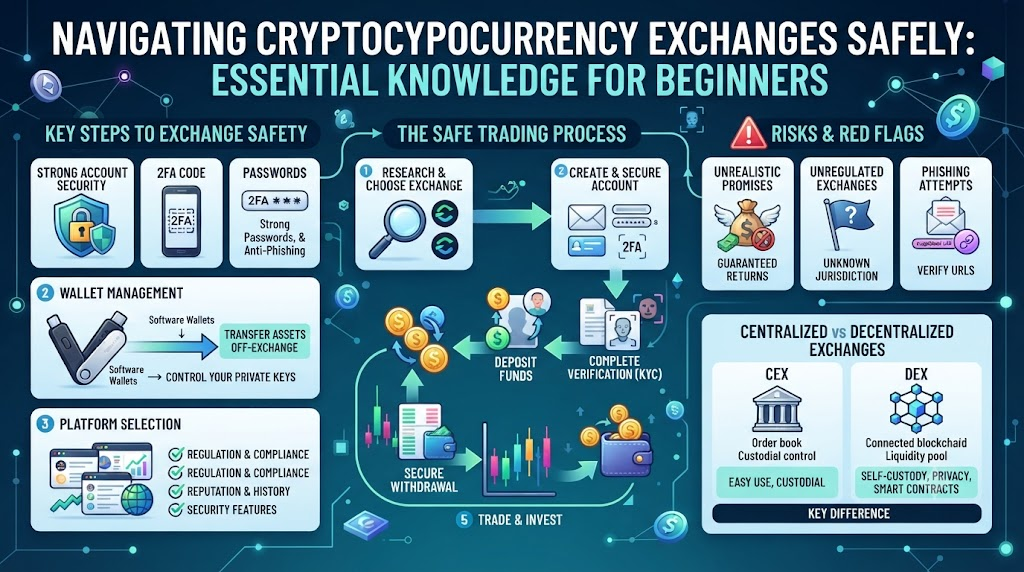
- Account Creation and Verification: Users register on the platform and typically complete identity verification checks to comply with regulatory standards.
- Funding the Account: Participants deposit traditional fiat currency via bank transfer or card, or transfer existing digital assets from an external crypto wallet.
- Placing an Order: The user selects a trading pair and submits a buy or sell order through the platform interface.
- Order Matching: The platform engine matches compatible buy and sell orders from different participants across the global network.
- Settlement and Custodial Transfer: Once matched, the platform updates the user ledger, crediting the purchased asset to their account balance or custodial wallet.
These platforms interact closely with underlying blockchain networks, public and private keys, and smart contracts when users deposit or withdraw funds on-chain.
Key Components of a Cryptocurrency Exchange
Matching Engines
The matching engine is the core software component that pairs buy orders with sell orders based on price and time priority. It ensures that trades execute efficiently and fairly for all participants in real time.
Order Books
An order book is a publicly visible electronic list of buy and sell orders organized by price level. It provides transparency into market demand and helps participants see current market sentiment.
Custodial vs. Non-Custodial Models
Platforms generally fall into two categories regarding custody. Centralized platforms hold assets on behalf of the user, while decentralized platforms allow users to trade directly from their personal crypto wallets using smart contracts.
Real-World Examples
Imagine a beginner named Alex who wants to acquire their first fraction of Bitcoin. Alex creates an account on a platform, completes security checks, and deposits funds. By navigating to the Bitcoin trading pair, Alex places a market order. The platform matches Alex with a seller, executes the trade instantly, and updates Alex account balance.
Another example involves swapping tokens within a decentralized exchange. A user connects a self-custody wallet directly to a Web3 liquidity pool. Instead of trading against an order book, the user interacts with an automated market maker governed by smart contracts to exchange one digital asset for another securely.
Benefits and Limitations
Benefits
- Accessibility: They make digital assets reachable for everyday participants globally.
- Liquidity: High trading volume ensures participants can enter and exit positions smoothly.
- Variety: Platforms often support thousands of different tokens and blockchain networks.
Limitations and Risks
- Security Vulnerabilities: Centralized platforms can be attractive targets for malicious actors.
- Operational Downtime: High market volatility can sometimes cause technical outages or lag.
- Regulatory Changes: Platforms must adapt continuously to shifting legal frameworks across jurisdictions.
Security and Safety Considerations
Protecting digital assets requires continuous vigilance and proactive security habits. Because transactions on blockchain networks are generally irreversible, maintaining strict personal security is paramount.
- Enable Two-Factor Authentication: Always secure account logins using authenticator apps rather than SMS verification.
- Beware of Phishing: Verify official website URLs carefully to avoid fraudulent imitation sites designed to steal credentials.
- Understand Custody: Keep only active trading funds on exchange platforms and move long-term holdings to secure personal wallets.
- Protect Credentials: Never share account passwords, API keys, or recovery phrases with anyone.
Common Mistakes Beginners Make
- Ignoring Platform Security: Failing to set up robust passwords and two-factor authentication leaves accounts vulnerable.
- Leaving All Funds on Exchanges: Keeping long-term holdings on trading platforms instead of secure personal storage increases exposure to platform risk.
- Falling for Scams: Trusting unofficial links, social media promotions, or unrealistic promises of quick returns.
- Overlooking Fees: Neglecting to check deposit, trading, and withdrawal fees can eat into transactional value unexpectedly.
- Trading Without Research: Entering positions without understanding the fundamental mechanics of the platform or asset.
Cryptocurrency Exchange vs Related Concepts
| Feature | Centralized Exchange | Decentralized Exchange | Crypto Wallet |
| Control | Platform holds custody | User maintains custody | User maintains full control |
| Interface | Traditional web and mobile apps | Web3 browser extension or dApp | Standalone app or hardware device |
| Primary Use | Fiat onboarding and asset trading | Peer-to-peer token swapping | Storing and securing digital assets |
Step-by-Step Beginner Guide
- Research Platforms: Explore reputable educational resources to understand the types of platforms available.
- Review Security Features: Check what security protocols a platform offers before creating an account.
- Register and Verify: Complete the registration process and follow necessary account verification steps.
- Fund Responsibly: Deposit only funds you understand how to manage within your personal financial plan.
- Start Small: Practice executing small transactions to understand order types and platform mechanics safely.
Future Considerations
The digital asset landscape continues to evolve through technological innovation and regulatory maturation. Future developments will likely focus on improving user experience, enhancing cross-chain interoperability, and strengthening cybersecurity standards. As Web3 technologies expand, educational platforms will play an increasingly vital role in helping the public understand complex financial infrastructure safely and responsibly.
Educational Disclaimer: CryptoBlockCoins provides educational information only and does not provide financial or investment advice. Cryptocurrency markets can be volatile, so readers should conduct independent research and consider professional advice before making financial decisions.
Frequently Asked Questions
- What is a cryptocurrency exchange?
An online marketplace where individuals can buy, sell, or convert digital assets using traditional currency or other tokens.
- Are all exchanges the same?
No, platforms differ significantly in structure, offering either centralized custodial services or decentralized peer-to-peer trading via smart contracts.
- Do I need a crypto wallet to use an exchange?
While centralized platforms hold funds for you, decentralized options require you to connect your own self-custody wallet to trade.
- Is it safe to keep my funds on an exchange?
While many platforms maintain strong security, keeping large amounts of digital assets on third-party platforms carries inherent counterparty risks.
- What is a trading pair?
Two assets that can be directly traded for one another on a platform, such as trading Bitcoin against traditional US Dollars.
- How do exchanges make money?
Platforms typically charge transaction fees, withdrawal fees, or spread fees for matching buyers and sellers.
- Can I use fiat currency on every platform?
Not all platforms support traditional fiat currency deposits; some only facilitate token-to-token trading pairs.
- What is KYC verification?
Know Your Customer is a standard identity verification process required by many regulated platforms to prevent financial crime.
- What is the difference between a market order and a limit order?
A market order executes instantly at current market prices, while a limit order executes only when the asset reaches a specific price set by the user.
- Why should beginners research before choosing a platform?
Proper research helps beginners understand fee structures, security measures, and operational risks before committing time or funds.
Conclusion
Navigating the digital asset landscape begins with a solid understanding of the tools and infrastructure that power the ecosystem. A cryptocurrency exchange serves as a vital gateway for participants looking to explore blockchain technology and digital finance safely. By focusing on education, prioritizing security, and maintaining realistic expectations, beginners can build a strong foundation of knowledge. Continuing your educational journey through trusted resources ensures you stay informed as technology and markets continue to evolve.
