Introduction
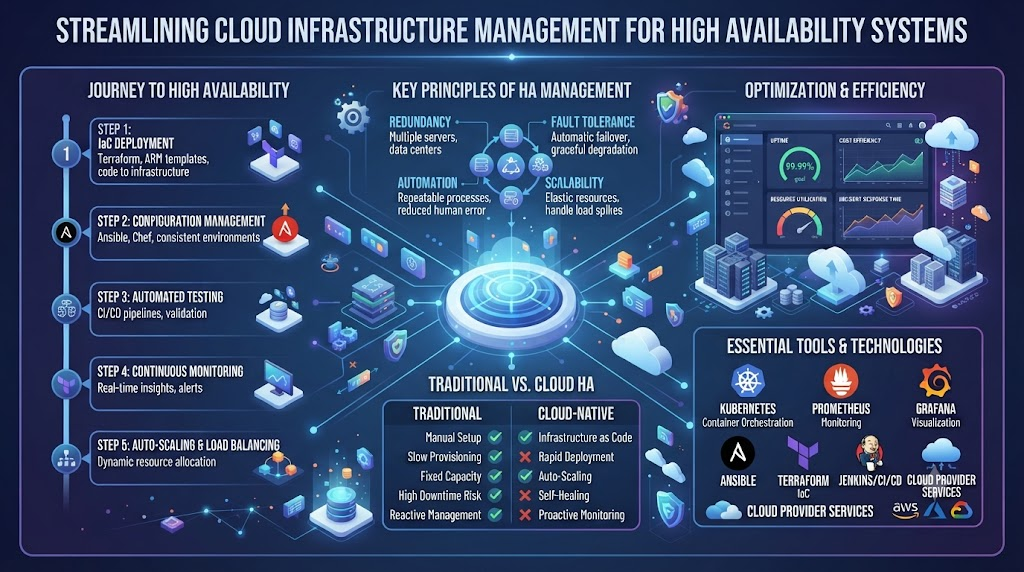
Engineering teams scaling modern infrastructure frequently encounter a critical hidden bottleneck: unchecked cloud expenditure that outpaces business growth. When cloud environments expand dynamically, tracking operational expenses becomes as vital as maintaining high availability. Without structured oversight, cloud financial management bridges the gap between engineering velocity and financial accountability, transforming how organizations handle variable cloud investments. Readers will learn core architectural frameworks, multi-provider cost strategies, and automation tactics to govern resource utilization efficiently. To explore foundational operational frameworks further, visit CloudOpsNow. Implementing structured cloud financial management ensures that reliability, performance, and fiscal discipline scale together across distributed environments.
2. What Is Cloud Financial Management?
Cloud financial management, often referred to as FinOps, is an operational framework and cultural practice that brings financial accountability to the variable spend model of the cloud. It combines financial principles with cloud engineering and operations to help organizations track, analyze, and optimize their infrastructure spending. The primary purpose is not merely to slash budgets, but to maximize business value and operational efficiency per dollar spent. Core concepts include granular cost allocation, real-time visibility, anomaly detection, and cross-functional collaboration between engineering, finance, and product teams. Within broader cloud operations management, it fits right alongside reliability engineering and security governance. Engineering teams use it to gain visibility into container clusters, storage buckets, and virtual machines without slowing down deployment velocity. Financial analysts, DevOps practitioners, and platform architects all benefit from shared metrics that align technical architecture with business goals.
3. How Does Cloud Financial Management Work?
The workflow of cloud financial management follows an iterative lifecycle split into three distinct phases: inform, optimize, and operate.
- Data Ingestion and Aggregation: Cloud metering services and telemetry agents capture raw billing data, resource tagging parameters, and usage metrics across the environment.
- Allocation and Showback: Centralized data pipelines process raw logs to assign shared infrastructure costs to specific teams, cost centers, or product lines based on usage tags.
- Anomaly Detection and Alerting: Monitoring systems evaluate historical spend patterns to flag unexpected cost spikes or misconfigured auto-scaling groups in real time.
- Optimization Execution: Platform teams evaluate recommendations for right-sizing instances, purchasing commitment discounts, or terminating idle block storage volumes.
- Continuous Governance: Automated policy enforcement pipelines review deployed infrastructure to ensure compliance with predefined budget limits and tagging standards.
4. Core Components of Cloud Financial Management
Cost Visibility and Allocation
Granular visibility forms the foundation of any financial discipline in the cloud. Organizations must capture untagged expenses and map shared multi-tenant resources accurately back to the business units consuming them.
Budgeting and Forecasting
Predictive analytics help teams anticipate future expenditures based on historical growth trends, seasonal traffic spikes, and upcoming infrastructure migrations. This prevents end-of-month budget surprises.
Commitment-Based Discounts
Long-term commitments, including reserved instances and savings plans, trade flexibility for steep price reductions. Effective management requires continuous tracking of utilization rates to ensure these commitments never go to waste.
Automated Remediation
Automation scripts and policy engines react instantly to cost anomalies, shutting down non-production resources outside working hours or automatically deleting orphaned snapshots.
5. Role of AWS, Azure, and GCP
Major hyperscale cloud providers supply native tooling designed to integrate financial tracking directly into core infrastructure workflows.
Amazon Web Services (AWS) utilizes services like AWS Cost Explorer, AWS Budgets, and the Cost and Usage Report (CUR) to deliver granular pricing insights and programmatic data access.
Microsoft Azure offers Azure Cost Management and Azure Advisor, providing centralized dashboards, anomaly alerts, and tailored right-sizing recommendations integrated directly with resource groups.
Google Cloud Platform (GCP) features the Google Cloud FinOps Hub, alongside detailed billing exports and Sustained Use or Committed Use Discounts designed to reward predictable, long-term workloads.
Across multi cloud management setups, unifying these distinct telemetry formats into a single pane of glass remains a primary challenge for enterprise cloud operations.
6. Cloud Operations and Automation Considerations
Integrating cost control into everyday CloudOps requires embedding financial checks directly into the continuous integration and deployment pipeline. Infrastructure as Code tools like Terraform allow platform engineers to estimate cost variations before executing infrastructure changes. By evaluating resource sizing parameters during pull requests, teams prevent expensive architectures from reaching production environments. Furthermore, automated container scaling policies ensure that Kubernetes clusters scale down during low-traffic windows, minimizing idle node expenditure without manual intervention.
7. Monitoring, Observability, and Reliability
Effective cost management depends on tight coordination with observability pipelines. While monitoring tools track CPU utilization and memory saturation, financial monitoring correlates those operational metrics with real-time monetary consumption. Establishing Service Level Objectives (SLOs) alongside financial thresholds ensures that cost-cutting measures never compromise system availability or performance. Tracking unit economics—such as the infrastructure cost per active user or transaction—provides a reliable metric for measuring engineering efficiency against overall business revenue.
8. Security and Governance
Governance frameworks enforce compliance by ensuring that cloud financial policies align with security guardrails. Implementing strict Identity and Access Management (IAM) policies prevents unauthorized users from spinning up high-capacity GPU instances or modifying budget alerts. Centralized secret management and automated resource tagging policies guarantee that all provisioned assets carry mandatory metadata, enabling precise audit logging and cost attribution across complex organizational structures.
9. Best Practices
- Establish Cross-Functional Collaboration: Bring finance, engineering, and product teams together regularly to review cost drivers and align on shared efficiency goals.
- Enforce Mandatory Resource Tagging: Implement automated policy checks to reject infrastructure deployments that lack required ownership, environment, and cost-center tags.
- Right-Size Resources Continuously: Regularly analyze CPU, memory, and network metrics to downgrade over-provisioned virtual machines and container workloads.
- Leverage Commitment Discounts Wisely: Balance flexible on-demand capacity with long-term savings plans and committed use contracts based on stable baseline utilization.
- Implement Automated Anomaly Alerts: Configure real-time notifications for unexpected spending spikes to catch runaway scripts or misconfigurations immediately.
- Track Unit Economics: Measure infrastructure expenditure against business growth metrics to evaluate true operational efficiency.
- Automate Non-Production Shutdowns: Use scheduled automation to spin down staging and development environments outside standard business hours.
10. Common Mistakes
- Treating Cost Control as a One-Time Project: Failing to treat cost optimization as an ongoing, continuous operational process.
- Relying Solely on Manual Reviews: Neglecting automated governance in favor of periodic spreadsheet reviews that quickly become outdated.
- Ignoring Data Transfer Costs: Overlooking inter-region and internet egress fees when designing distributed microservices architectures.
- Over-Committing to Savings Plans: Locking into rigid long-term commitments before fully understanding workload volatility.
- Failing to Allocate Shared Expenses: Leaving overhead costs unassigned, which obscures the true profitability of individual product lines.
- Isolating Finance from Engineering: Operating in silos where finance teams mandate arbitrary budget cuts without understanding technical dependencies.
11. Real-World Use Cases
- E-Commerce Traffic Scaling: Managing dynamic infrastructure scaling during high-volume retail events while maintaining automated budget caps to prevent runaway spend.
- Multi-Cloud Kubernetes Optimization: Unifying cost visibility across distributed clusters running on AWS, Azure, and GCP to identify underutilized node pools.
- Automated Ephemeral Environment Management: Spining up and tearing down full-stack staging environments on-demand for pull requests, eliminating idle weekend infrastructure waste.
12. Challenges and Limitations
Implementing robust cost governance introduces notable organizational and technical friction. Tool sprawl across multiple cloud ecosystems can overwhelm platform engineering teams. Resistance from development squads who fear that strict budgets will stifle innovation requires careful cultural alignment. Additionally, deciphering complex pricing tiers, data egress tariffs, and multi-currency billing structures demands specialized expertise that many growing engineering teams lack.
13. Step-by-Step Implementation Guide
- Assess Current State: Audit existing cloud accounts, billing dashboards, and tagging hygiene to map out baseline infrastructure expenditures.
- Form a Cross-Functional Team: Designate representatives from engineering, finance, and product management to steer the initiative.
- Define Tagging Standards: Establish clear, mandatory naming and metadata conventions for all cloud resources.
- Implement Visibility Tooling: Configure native hyperscale cost explorers and centralized dashboards to aggregate billing feeds.
- Set Up Initial Budgets and Alerts: Create granular spending thresholds and automated notification channels for unexpected cost deviations.
- Execute Quick Wins: Identify and eliminate idle block storage volumes, unattached elastic IPs, and severely over-provisioned instances.
- Automate Governance Policies: Integrate cost estimation checks into Infrastructure as Code pipelines and enforce continuous compliance rules.
14. Future of Cloud Financial Management
The future of cloud financial management is heavily intertwined with artificial intelligence and autonomous operations. Modern platforms increasingly leverage machine learning algorithms to predict traffic patterns and dynamically purchase short-term capacity discounts without human intervention. As platform engineering matures, automated feedback loops will feed cost data directly back into application codebases, empowering developers to write resource-efficient software by design.
Frequently Asked Questions
- What is the primary goal of cloud financial management?
The main objective is to maximize business value and operational efficiency from cloud investments rather than simply cutting infrastructure budgets.
- How does FinOps differ from traditional cloud cost cutting?
FinOps focuses on cultural change and cross-functional collaboration, uniting engineering, finance, and business teams to make data-driven spending decisions.
- Why is resource tagging important for cost allocation?
Tags provide the metadata required to trace infrastructure expenses back to specific departments, projects, or applications accurately.
- Can cloud financial management be fully automated?
While anomaly detection, automated shutdowns, and scaling can be automated, strategic planning and architectural trade-offs still require human oversight.
- How do commitment discounts work in the cloud?
Commitment discounts offer lower hourly rates in exchange for a one- or three-year usage pledge across specific resource families.
- What role do developers play in cost optimization?
Developers write code and define infrastructure configurations, meaning their architectural choices directly influence resource consumption and efficiency.
- How do multi-cloud environments complicate financial tracking?
Different pricing models, billing metrics, and native tooling across providers make centralizing and standardizing cost data complex.
- What are unit economics in cloud operations?
Unit economics measure infrastructure expenses against business outputs, such as cost per customer transaction or active user.
- How often should cloud spending be reviewed?
Teams should monitor costs continuously via automated alerts, with formal cross-functional reviews occurring on a weekly or monthly basis.
- Where should an organization begin its FinOps journey?
Begin by gaining complete visibility into existing spend, establishing clear tagging standards, and identifying quick optimization wins.
Conclusion
Mastering cloud financial management empowers organizations to scale their digital infrastructure sustainably without sacrificing agility or performance. By breaking down organizational silos between engineering and finance, teams can treat cloud spend as a driver of business value rather than an unpredictable overhead expense. Implementing continuous visibility, automated governance, and robust optimization practices ensures long-term operational success across any cloud environment. Organizations that embrace these principles position themselves to innovate rapidly while maintaining strict fiscal accountability.
