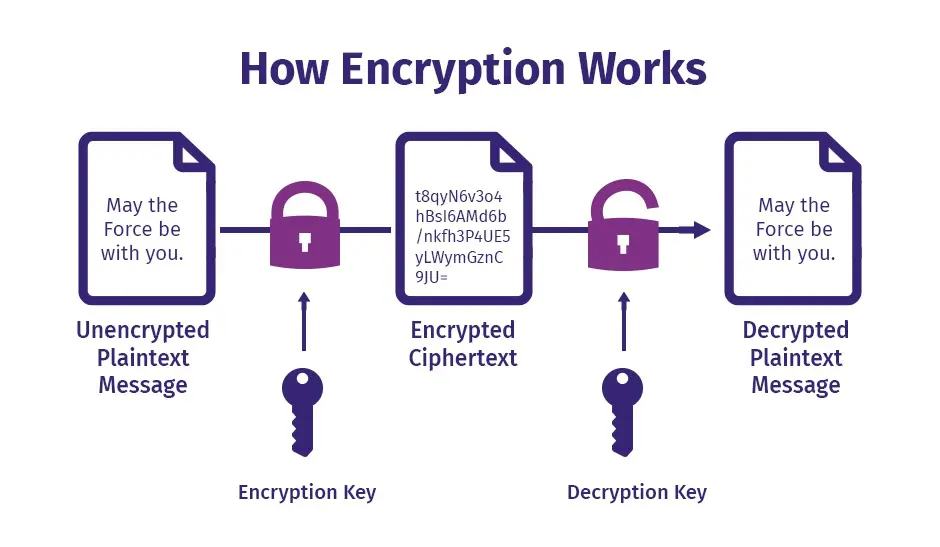
Data Encryption is the process of converting plain text into a coded form (ciphertext) to prevent unauthorized access. Only parties with a decryption key can revert the encrypted data back to its original form.
🧭 History / Background
Ancient roots: Cryptography dates back to ancient Egypt (e.g., hieroglyphs).
World Wars: The Enigma machine during WWII advanced modern cryptography.
Modern age: With the rise of the internet, digital encryption evolved (e.g., AES, RSA, TLS).
Today: Encryption is foundational in zero trust models and cloud-native DevSecOps.
💡 Why Is It Relevant in DevSecOps?
DevSecOps integrates security early and continuously in CI/CD pipelines.
Encryption ensures confidentiality, integrity, and compliance across the software lifecycle.
Encrypt secrets in GitHub Actions using GPG or HashiCorp Vault.
Prevent accidental leaks of passwords or tokens in pipelines.
🏥 Use Case 2: Healthcare (HIPAA Compliance)
Encrypt patient data before storing in cloud (e.g., AWS S3 with server-side encryption).
💳 Use Case 3: Finance Sector (PCI-DSS)
Tokenize and encrypt credit card numbers in real-time using symmetric encryption.
🛡️ Use Case 4: Zero Trust Microservices
All service-to-service communications over TLS 1.3 with mutual authentication.
Dynamic secrets and certificates through SPIRE + Vault.
✅ 6. Benefits & Limitations
🎯 Key Benefits
🔐 Confidentiality: Keeps sensitive data safe even if leaked.
🛡️ Compliance: Meets regulatory requirements.
🔄 Automated Key Rotation: Reduces manual work.
☁️ Cloud-Native Support: Fully supported by AWS, Azure, GCP.
⚠️ Common Limitations
Challenge
Description
Key Mismanagement
Compromised keys break entire encryption.
Performance Overhead
High CPU usage on large datasets.
Complexity
Requires strong understanding & governance.
Human Error
Mistakes in key sharing or logging plaintext.
🧠 7. Best Practices & Recommendations
🔒 Security Tips
Never store keys in source code.
Use hardware security modules (HSM) or KMS.
Enable automatic key rotation.
Monitor access logs and set up alerts.
🧪 Performance & Maintenance
Use streaming encryption for large files.
Encrypt at field-level, not just whole database.
✅ Compliance Alignment
Standard
Encryption Requirement
HIPAA
Data at rest and in transit
GDPR
Pseudonymization and encryption
PCI-DSS
Encryption of cardholder data
🤖 Automation Ideas
Integrate Vault into GitLab CI/CD pipelines.
Rotate secrets every X days automatically using Terraform + Vault.
🔄 8. Comparison with Alternatives
Feature
Data Encryption
Tokenization
Masking
Use Case
Security & Compliance
Reducing exposure
Dev/Test environments
Reversibility
Yes (with keys)
Sometimes
No
Compliance
High
High
Low
Speed
Slower (CPU intensive)
Faster
Fast
🏁 When to Use Data Encryption?
When dealing with highly sensitive data.
When compliance mandates encrypted storage/transmission.
When integrating DevSecOps pipelines with cloud-native security.
🏁 9. Conclusion
Data Encryption is not just a technical requirement — it’s a strategic pillar of secure software delivery in DevSecOps. By integrating encryption into your SDLC, you:
Software teams in Japan are under real pressure. Business leaders want new features every week. Customers expect apps to work all the time. But many internal teams…
Introduction Picture an analyst opening a dashboard first thing in the morning. The sales chart is empty. A pipeline broke overnight, and nobody knows why. The analyst…
Here’s something most software ads never admit: half the tools bought each year sit unused within three months. Sounds surprising? It shouldn’t. Bright banners promise magic fixes….
Hyderabad is a busy city. Something new happens every week. New cafes open. Bands play live shows. Comedians make people laugh. But there is one big problem….
Introduction Your sales team asks for a minor dashboard tweak on Monday morning. You update the query, hit refresh, and wait. By Tuesday afternoon, the live revenue…