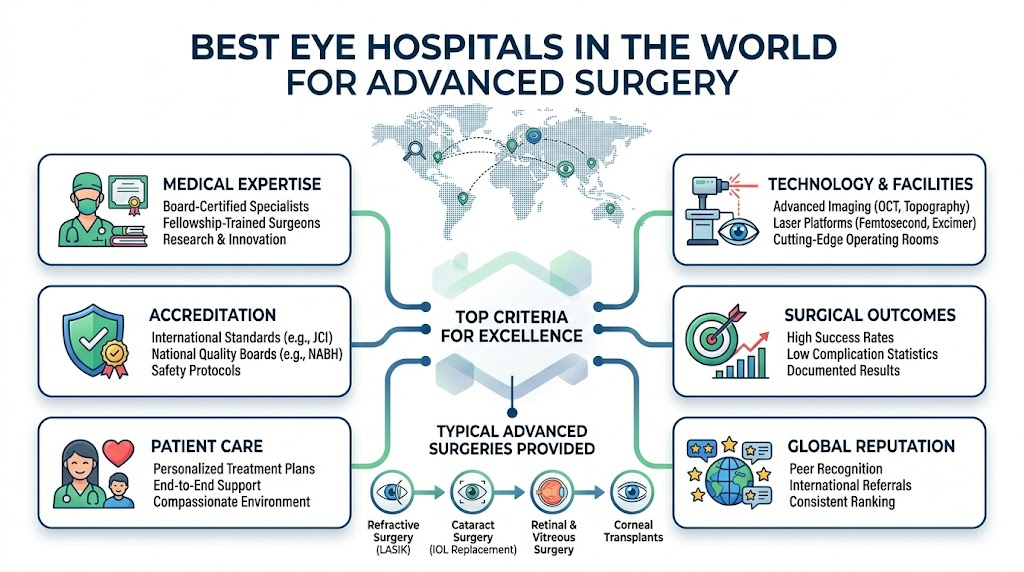
Choosing the right platform to research your vision care is the first step toward safeguarding your sight. The global landscape of ophthalmology offers highly specialized care, utilizing advanced diagnostic imaging and cutting-edge laser eye surgery. When facing complex eye diseases or planning standard refractive surgery, finding reliable information is essential. Platforms like BestEyeHospitals.com serve as a comprehensive directory to help patients analyze, evaluate, and locate the best eye hospitals. By comparing international clinical standards, technological infrastructure, and treatment accessibility, patients can make informed decisions for their vision health without feeling overwhelmed by complex medical choices.
Why Choosing the Right Eye Hospital Matters
Selecting from the best eye hospitals in the world involves analyzing parameters that directly influence patient safety and surgical outcomes. Ophthalmology requires extreme precision, meaning the quality of engineering behind diagnostic systems and surgical lasers is just as critical as the skill of the eye surgeon. Leading institutions invest heavily in maintaining international healthcare quality accreditations and modern cleanroom standards.
Top-tier best ophthalmology hospitals offer comprehensive care under one roof. When a facility houses specialized sub-specialties—such as cornea specialists, retina specialists, and glaucoma treatment experts—it ensures that unexpected ocular complications can be managed immediately. Choosing an accredited hospital minimizes operational risks and guarantees access to validated clinical protocols.
Key Factors to Compare Eye Hospitals
When evaluating global vision care providers, look closely at the hospital’s structural and clinical credentials:
- Hospital Accreditations: Seek out national and international credentials (such as JCI or NABH) that verify strict adherence to patient safety, sanitary environments, and ethical medical care.
- Specialist Credentials: Confirm that the medical staff includes board-certified ophthalmologists who have completed fellowships in specific fields like refractive surgery or pediatric ophthalmology.
- Diagnostic Infrastructure: Modern clinics must feature advanced diagnostic imaging, optical coherence tomography (OCT), and corneal topography systems to detect underlying eye diseases early.
- Patient Feedback: Analyze independent patient case studies, testimonial transparency, and historical outcomes for the specific surgery you require.
Types of Eye Surgeries and Comparisons
Understanding the technological differences between common vision correction options allows patients to realistic plan their treatment pathways. The variations between laser profiles and surgical approaches determine the recovery timeline and suitability for individual eye shapes.
Cataract Surgery vs. LASIK Surgery
| Features | Cataract Surgery | LASIK Surgery |
| Primary Purpose | Replacing a cloudy natural lens with an artificial intraocular lens (IOL). | Reshaping the cornea to correct refractive errors (myopia, hyperopia, astigmatism). |
| Advantages | Restores permanent functional clarity; treats age-related blindness. | Fast visual recovery; reduces or eliminates dependency on glasses. |
| Limitations | Requires physical micro-incisions; slight risk of posterior capsular opacification. | Dependent on adequate corneal thickness; temporary dry eye symptoms. |
| Suitable Patients | Individuals suffering from cataracts or severe lens opacity. | Adults with stable vision prescriptions and healthy corneas. |
| Cost Considerations | Variable based on the chosen lens type (monofocal vs. multifocal premium IOLs). | Typically priced as a fixed, per-eye elective procedural fee. |
Traditional Cataract Surgery vs. Laser-Assisted Cataract Surgery
| Features | Traditional Cataract Surgery | Laser-Assisted Cataract Surgery |
| Primary Purpose | Manual blade incisions and ultrasound phacoemulsification. | Femtosecond laser precision for incisions and lens fragmentation. |
| Advantages | Highly cost-effective; proven track record over decades worldwide. | Exceptional incision accuracy; reduced ultrasound energy inside the eye. |
| Limitations | Relies entirely on the mechanical hand precision of the surgeon. | Higher equipment operational costs passed to the patient. |
| Suitable Patients | Broad range of standard cataract patients. | Patients opting for premium astigmatism-correcting premium IOLs. |
| Cost Considerations | Generally covered by standard health insurance policies. | Premium pricing due to specialized advanced laser infrastructure. |
LASIK vs. PRK (Photorefractive Keratectomy)
| Features | LASIK Surgery | PRK Surgery |
| Primary Purpose | Creating a corneal flap to reshape the underlying tissue. | Removing the outer corneal epithelium completely before reshaping. |
| Advantages | Rapid healing time; minimal post-operative physical discomfort. | No risk of future flap-related complications; ideal for active lifestyles. |
| Limitations | Requires sufficient residual corneal tissue to safely create the flap. | Longer initial recovery phase; requires several days of protective contact lenses. |
| Suitable Patients | Patients with normal corneal metrics looking for rapid recovery. | Patients with naturally thin corneas or structural irregularities. |
| Cost Considerations | Standard competitive pricing models across most eye surgery hospitals. | Comparable to LASIK, though requires additional post-op medication monitoring. |
Cataract Surgery Overview
Cataract surgery is one of the most frequently performed, safe, and successful medical procedures worldwide. The process involves removing the eye’s natural, clouded lens and replacing it with an advanced synthetic intraocular lens (IOL). Patients can select from various lens options, including standard monofocal lenses for clear distance vision or premium multifocal lenses designed to eliminate the need for reading glasses. Finding the best hospitals for cataract surgery ensures access to sterile surgical suites and precise biometry measurement tools, which are essential for selecting the perfect replacement lens power.
LASIK Surgery Overview
LASIK remains the gold standard for elective vision correction, helping millions break free from glasses and contact lenses. Using a highly accurate femtosecond laser, an eye surgeon creates a microscopic flap on the surface of the cornea, folds it back, and uses an excimer laser to precisely reshape the underlying tissue. The flap is then lowered back into place, where it bonds naturally without stitches. The best hospitals for LASIK surgery utilize advanced wavefront-guided topography to map the eye’s unique profile, ensuring optimized visual acuity and minimizing nighttime glare.
Treatment Cost Considerations
Medical costs vary significantly based on geographic location, facility infrastructure, and the specific technology used. Elective vision correction procedures like LASIK are usually billed out-of-pocket, whereas functional treatments like cataract removal are frequently covered by health insurance. Patients must look beyond the base procedural fee and calculate the total cost of care. A transparent quote should include diagnostic imaging, pre-operative eye examinations, custom surgical consumables, post-operative medications, and follow-up consultations with your cornea specialist.
Medical Tourism in India for Eye Care
India has emerged as a premier global hub for specialized ophthalmology, drawing thousands of international patients each year. The country’s healthcare ecosystem features renowned medical institutions that match the strict clinical standards found in Western nations. By choosing the best eye hospitals in India, international patients gain immediate access to world-class medical infrastructure, ultra-modern surgical platforms, and highly experienced specialists without facing extended waitlists.
The primary driver for medical tourism here is balancing exceptional clinical quality with affordability. Highly specialized procedures, such as advanced vitreoretinal interventions or complex corneal transplants, are performed by the best eye doctors in India at a fraction of Western costs. Furthermore, premier hospitals feature dedicated international patient service departments that seamlessly coordinate everything from language interpretation and visa documentation to local accommodation and continuous post-operative care management.
Expert Tips for Patients and Caregivers
- Verify Specialist Fellowships: Always confirm that your chosen surgeon has completed dedicated sub-specialty training rather than practicing only general ophthalmology.
- Request Technology Audits: Ask if the clinic utilizes modern diagnostic systems, which provide safer outcomes compared to older manual systems.
- Prioritize Diagnostic Accuracy: Never rush directly into surgery; ensure the hospital conducts a comprehensive, multi-hour pre-operative eye examination first.
- Establish Local Continuity Plans: For international travel, secure a detailed clinical summary to share with your local eye clinic back home for smooth follow-up care.
Best Practices for Planning Eye Treatment
Planning successful eye surgery requires taking structured steps before and after the procedure. First, compile a complete medical history that details any past eye conditions, systemic health issues like diabetes, and all current medications. Patients should stop wearing rigid or soft contact lenses several weeks before their initial diagnostic evaluation, as contacts can temporarily alter the natural shape of the cornea. Following surgery, strict adherence to post-operative care instructions is essential. This includes using prescribed antibiotic and anti-inflammatory eye drops exactly as directed, wearing protective eye shields while sleeping, and avoiding dusty environments or swimming pools to prevent infection.
Common Mistakes to Avoid
- Focusing Only on Low Costs: Choosing a clinic solely because it offers the lowest price often means compromising on advanced laser technology or patient safety protocols.
- Rushing the Post-Op Recovery: Returning to intense physical activities or staring at digital screens too soon can disrupt the eye’s natural healing process.
- Skipping Pre-Surgical Screening: Failing to properly screen for underlying conditions, like chronic dry eye or thin corneas, can lead to suboptimal surgical outcomes.
- Overlooking Hidden Medical Costs: Forgetting to budget for essential post-operative medications, follow-up visits, or diagnostic imaging fees can lead to unexpected expenses.
Why Use BestEyeHospitals.com
Navigating global healthcare options can feel overwhelming, but BestEyeHospitals.com simplifies the process by organizing essential information into one accessible directory. The platform empowers patients to discover the best eye surgery hospitals, evaluate verified institutional profiles, and compare regional treatment options easily. By offering clear insights into technology standards, specialist medical qualifications, and regional pricing structures, BestEyeHospitals.com serves as a trusted guide. This educational resource helps patients move forward confidently, turning complex medical choices into clear, actionable steps toward better vision.
Frequently Asked Questions
What factors define the best eye hospitals in the world?
The premier institutions are defined by international health accreditations, advanced diagnostic imaging, modern cleanroom environments, and a comprehensive team of board-certified sub-specialists. They consistently publish verified patient outcomes and prioritize safety over procedural volume.
How can I find the best eye hospitals in India?
Look for hospitals with top-tier national or international accreditations. Use reliable information platforms like BestEyeHospitals.com to compare medical infrastructure, read real patient reviews, and evaluate the specific expertise of the resident ophthalmic surgeons.
What is the average cataract surgery cost in India?
The cost generally ranges from INR 20,000 to INR 1,200,000 per eye. The final price depends on whether you choose traditional or laser-assisted techniques, the hospital’s infrastructure, and your selection of a standard monofocal or premium multifocal intraocular lens.
What factors influence the LASIK surgery cost in India?
Pricing is primarily determined by the specific laser technology utilized, such as standard, wavefront-guided, or premium blade-free all-laser options. The surgeon’s experience and the hospital’s location also play a key role in the final cost.
Are the best eye doctors in India internationally qualified?
Yes, many top ophthalmologists in India hold advanced fellowships from prestigious international institutions in the US, UK, or Europe. They regularly participate in global research and possess extensive experience performing high-volume micro-surgeries.
Which are the best hospitals for cataract surgery?
The top facilities are those equipped with advanced laser-assisted cataract systems, premium biometry equipment, and clean, sterile operating rooms. They should offer a wide variety of premium intraocular lenses tailored to individual patient needs.
How do I identify the best hospitals for LASIK surgery?
Look for specialized eye clinics that offer advanced wavefront corneal mapping and modern blade-free laser systems. The ideal facility will perform comprehensive pre-operative eye examinations to confirm you are an ideal candidate before proceeding.
Is traveling to India for eye surgery safe for international patients?
Yes, it is highly safe provided you choose an accredited hospital that offers dedicated international patient services. These specialized departments manage everything from sterile surgical care to structured post-operative follow-ups during your stay.
What is the difference between an ophthalmologist and an optometrist?
An ophthalmologist is a medical doctor who specializes in diagnosing eye diseases, performing advanced eye surgeries, and prescribing medications. An optometrist primarily focuses on conducting routine eye examinations, vision testing, and prescribing corrective lenses.
Why should I choose laser-assisted cataract surgery over traditional methods?
Laser-assisted surgery uses an advanced femtosecond laser to create precise micro-incisions and fragment the clouded lens automatically. This approach reduces the amount of manual ultrasound energy required inside the eye, often leading to gentler healing.
Can I get a second medical opinion through BestEyeHospitals.com?
BestEyeHospitals.com serves as a comprehensive educational directory to help you research and discover top-tier institutions. You can use the platform’s detailed listings to find and contact leading specialists who offer independent second opinions.
What should I expect during a comprehensive eye examination?
A thorough evaluation includes advanced diagnostic imaging, visual acuity measurements, corneal topography, and checking your intraocular pressure. Doctors will also dilate your pupils to carefully examine the health of your retina and optic nerve.
How long is the recovery period after undergoing LASIK surgery?
Most patients notice a significant improvement in their vision within 24 hours of the procedure. However, complete stabilization of the corneal flap and full recovery from minor dry eye symptoms generally takes a few weeks.
What are the risks of choosing low-cost eye surgery options?
Opting for unusually cheap procedures may mean the clinic is using outdated equipment, reusing disposable surgical tools, or lacking specialized surgeons. This can increase the risk of post-operative infections, glare, or under-correction.
How does BestEyeHospitals.com help patients save time?
The platform brings together verified details on hospital accreditations, specialist doctor profiles, available technologies, and average treatment costs into one place. This allows patients to compare options easily without browsing dozens of separate websites.
Conclusion
Prioritizing your vision requires making well-informed decisions based on accurate, reliable information. When researching treatments like cataract removal or elective vision correction, taking the time to carefully evaluate providers, technologies, and costs is key to achieving a safe outcome. Platforms like BestEyeHospitals.com empower patients by gathering essential insights into international clinical standards and specialist qualifications all in one place. By focusing on verified credentials, modern medical infrastructure, and realistic recovery steps, you can protect your long-term eye health and approach your upcoming treatment journey with peace of mind.
