Introduction
Few countries capture the imagination quite like India. It is a vast, kaleidoscopic land where ancient traditions effortlessly blend with modern innovation. For any traveler, exploring the sub-continent is a profound journey of sensory discovery, filled with architectural marvels, spiritual sanctuaries, and diverse landscapes that shift dramatically from one state to the next. When planning your journey through India tourism, the sheer scale of choices can feel overwhelming. This is why thorough travel planning and relying on local insights are essential to crafting a smooth experience. Immersing yourself in authentic cultural tourism—whether by tasting street food in crowded bazaars, staying in local communities, or hiring passionate guides—transforms an ordinary vacation into a life-changing adventure. Platforms like Holiday Landmark offer invaluable assistance by helping you discover curated destinations, craft balanced itineraries, and connect directly with local hosts to unlock the true essence of Indian hospitality.
Why This Destination Matters
India holds an unparalleled position on the global tourism map due to its thousands of years of layered history, religious pluralism, and astounding geographical diversity. It is the birthplace of major world religions, making pilgrimage tours in India a cornerstone of its cultural fabric. From the historical monuments of the Mughal era to the living heritage sites of the ancient Dravidian empires, India offers an open-air museum experience.
Beyond historical monuments, the true traveler appeal lies in its contrasting realities. You can spend your morning meditating in a centuries-old monastery and your evening experiencing the high-energy luxury travel scene of Mumbai or Delhi. The country has embraced eco-tourism and sustainable tourism, allowing travelers to give back to the regions they visit while gathering memories that last a lifetime.
Destination Overview
- Geography: Spanning from the snow-capped peaks of the Himalayas in the north to the tropical coastline of the Indian Ocean in the south, India features deserts, rainforests, fertile plains, and pristine beaches.
- Climate: Predominantly tropical, divided into three main seasons: winter (cool and dry), summer (hot), and monsoon (heavy rainfall). The northern mountain regions experience alpine climates with heavy winter snowfall.
- Local Culture: A beautiful mosaic of multiple languages, distinct regional traditional arts, varied dress styles, and deeply rooted family values. Hospitality is guided by the ancient ethos of “Atithi Devo Bhava” (The Guest is God).
- Major Attractions: The Golden Triangle (Delhi, Agra, Jaipur), the tranquil backwaters of Kerala, the sacred Ganges river at Varanasi, and the majestic fortresses of Rajasthan.
- Travel Relevance: Ideal for weekend getaways, extended backpacking India trips, family vacations, or dedicated wildlife safaris.
Top Attractions
1. The Taj Mahal, Agra
An iconic symbol of eternal love, this white marble mausoleum is a masterpiece of Indo-Islamic architecture. Walking through its grand gateway at sunrise reveals a shimmering, ethereal monument that easily exceeds its global reputation.
2. Varanasi Ghats, Uttar Pradesh
One of the oldest continuously inhabited cities in the world, Varanasi is the spiritual heart of India. The stone steps leading down to the sacred Ganges River host intense daily rituals of life, death, and devotion, including the mesmerizing evening Ganga Aarti.
3. The Backwaters of Alleppey, Kerala
A network of serene, canopy-covered canals, lakes, and lagoons. Gliding through these waters on a traditional thatched-roof houseboat offers an intimate glimpse into peaceful rural life and coastal eco-tourism.
4. Jaipur’s Historic Forts, Rajasthan
The “Pink City” features remarkable architectural marvels like the Amber Fort, Hawa Mahal, and City Palace. These structures display a flawless blend of Rajput and Mughal architecture, offering a deep dive into royal Indian history.
5. Hampi Ruins, Karnataka
A surreal, boulder-strewn landscape holding the UNESCO World Heritage-listed remnants of the wealthy 14th-century Vijayanagara Empire. It is a haven for history buffs, architecture lovers, and solo travel backpackers.
Mandatory Comparison Table #1: Top Indian Attractions
| Attraction | Famous For | Ideal Duration | Best Season |
| Taj Mahal | Mughal Architecture & Romance | 3–4 Hours | October to March |
| Varanasi Ghats | Spiritual Rituals & Ganga Aarti | 2–3 Days | October to March |
| Alleppey Backwaters | Houseboat Cruises & Eco-tourism | 1–2 Days | September to March |
| Amber Fort (Jaipur) | Royal Heritage & Hilltop Views | Half Day | October to March |
| Hampi Ruins | Ancient Architecture & Boulders | 3 Days | November to February |
| Jaisalmer Desert | Sand Dunes & Golden Fort | 2 Days | November to January |
| Ajanta & Ellora | Ancient Rock-cut Cave Temples | 2 Days | October to March |
Things to Do in India
- Go on a Wildlife Safari: Track the elusive Bengal tiger through the dense forests of Ranthambore, Kanha, or Bandhavgarh National Park.
- Embark on Himalayan Trekking: Challenge yourself with high-altitude treks in Himachal Pradesh or Uttarakhand, offering panoramic vistas of snowbound peaks.
- Savor Food Experiences: Indulge in a sensory journey through regional local cuisine, from fiery northern curries to comforting southern dosas and chaotic street food markets.
- Attend Vibrant Festivals: Align your travel planning with iconic celebrations like Holi (the festival of colors) or Diwali (the festival of lights) to witness communities coming together in joy.
- Explore Local Markets: Shop for intricate traditional handicrafts, handwoven textiles, and exotic spices at bustling bazaars like Delhi’s Chandni Chowk or Jaipur’s Johari Bazaar.
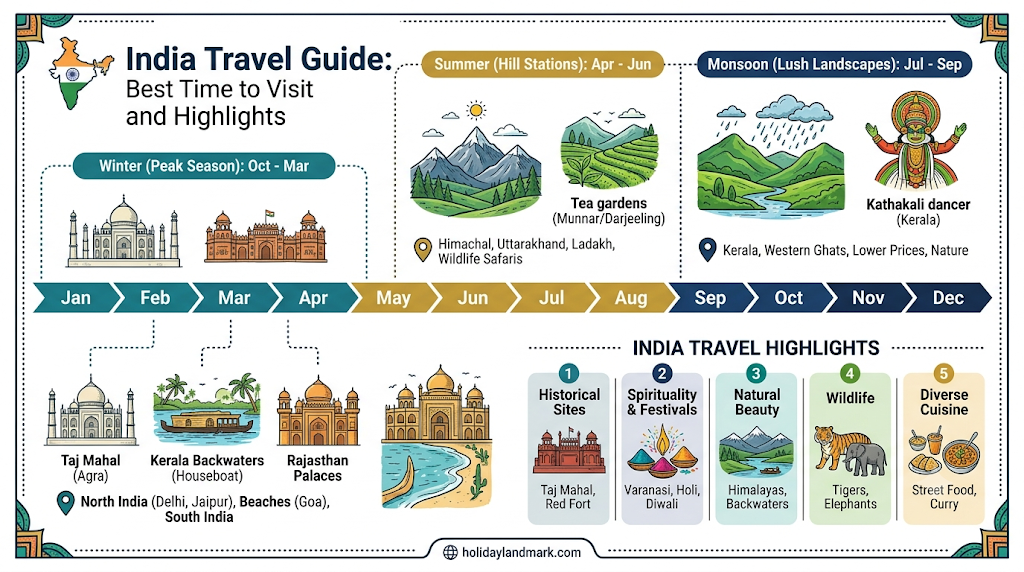
Best Time to Visit India
Winter (October to March)
This is universally considered the best time to visit India. Temperatures across the plains and southern peninsula are pleasant and dry, making it ideal for intensive sightseeing and outdoor adventure activities in India. The only disadvantage is that popular tourist hubs experience high crowd levels and peak prices.
Summer (April to June)
The plains experience intense heat, with temperatures often soaring past 40°C (104°F). However, this is the prime season to escape to northern hill stations like Shimla, Manali, and Leh-Ladakh, or to spot wildlife gathered around shrinking watering holes in national parks.
Monsoon (July to September)
Heavy rains bring lush green transformations to places like Kerala, the Western Ghats, and the valley regions. While it offers excellent opportunities for budget travel due to steep discounts, it can cause travel disruptions, landslides in mountainous regions, and temporary closures of national parks.
Mandatory Comparison Table #2: Seasonality & Travel Matrix
| Season | Weather | Crowd Level | Travel Experience |
| Winter | Cool, pleasant, and dry | High / Peak | Excellent for sightseeing, festivals, and heritage exploration. |
| Summer | Extremely hot in plains; cool in mountains | Moderate | Perfect for high-altitude trekking and northern hill stations. |
| Monsoon | Humid with heavy downpours | Low | Ideal for budget travel, Ayurvedic rejuvenation, and lush scenery. |
How to Reach
- By Air: Major international airports in Delhi, Mumbai, Bengaluru, Chennai, and Kochi connect India seamlessly to the rest of the world. Domestic budget airlines link these mega-hubs to smaller regional cities efficiently.
- By Train: The Indian Railways network is one of the largest in the world. Taking a long-distance train journey is an essential cultural experience. Booking well in advance in AC classes (1AC, 2AC, or 3AC) ensures comfort.
- By Road: A rapidly expanding network of expressways connects major cities. For road trips, hiring a private car with a professional driver or utilizing intercity AC sleeper buses are reliable options.
- Local Transportation: Navigating cities is made easy with app-based ride-hailing services (Ola, Uber), colorful auto-rickshaws for short distances, and clean metro systems in metropolitan cities.
Suggested India Travel Itinerary
2-Day Express Itinerary (The Golden Triangle Snapshot)
- Day 1: Arrive in Delhi; explore the majestic Red Fort, Humayun’s Tomb, and drive past India Gate.
- Day 2: Take an early morning express train to Agra; marvel at the Taj Mahal and explore the grand Agra Fort before returning.
3-Day Cultural Weekend Getaway (Jaipur Royal Escape)
- Day 1: Reach Jaipur; check into a heritage property and explore the colorful local markets of the old city.
- Day 2: Visit Amber Fort in the morning, followed by stops at the Hawa Mahal and the astronomical Jantar Mantar.
- Day 3: Visit the City Palace and Albert Hall Museum; enjoy a traditional Rajasthani thali before departure.
5-Day Tropical Escape (Glimpse of Kerala)
- Day 1: Arrive in historic Kochi; stroll around Fort Kochi to see the iconic Chinese Fishing Nets and Mattancherry Palace.
- Day 2: Drive to Munnar; wander through rolling tea plantations and enjoy panoramic hill station views.
- Day 3: Travel to Alleppey; board a traditional houseboat for an overnight cruise through the tranquil backwaters.
- Day 4: Head down to Varkala or Kovalam for a relaxing day on pristine sandy beaches.
- Day 5: Transfer to Thiruvananthapuram airport for your onward journey.
7-Day Comprehensive Heritage Itinerary (Classic Rajasthan)
- Day 1–2: Delhi exploration covering historical monuments, street food trails, and modern landmarks.
- Day 3: Travel to Agra to experience the stunning Taj Mahal at sunset.
- Day 4–5: Drive to Jaipur; immerse yourself in royal history, palace architecture, and gemstone shopping.
- Day 6–7: Take a train or flight to Udaipur (the City of Lakes); enjoy a romantic boat ride on Lake Pichola and visit the massive City Palace complex.
Where to Stay
Choosing the right accommodation can completely reshape your journey. India offers a spectacular variety of stays tailored to every style and budget.
- Luxury Palaces & Resorts: Experience unparalleled royal hospitality by staying in restored 19th-century palaces in Rajasthan or sprawling beachfront wellness resorts in Goa.
- Best Homestays in India: Staying with local families offers travelers an authentic peek into daily household life, delicious home-cooked regional specialties, and priceless cultural exchange.
- Boutique Hotels & Eco-lodges: Positioned near wildlife reserves or tucked away in hill stations, these properties emphasize eco-tourism and low-impact sustainable tourism.
- Budget Hostels: Backpacking India has been revolutionized by vibrant, clean, social hostel chains that offer affordable dorms and co-working spaces for solo travel enthusiasts.
Optional Comparison Table #3: Accommodation Overview
| Accommodation Type | Budget | Experience | Best For |
| Hostels & Guesthouses | Budget ($10–$25) | Social, basic, vibrant | Solo travelers, backpackers |
| Authentic Homestays | Mid-Range ($30–$80) | Warm hospitality, home food | Cultural immersion, families |
| Heritage Hotels | Premium ($100–$250) | Royal ambiance, historical charm | Couples, history lovers |
| Luxury Resorts | Ultra-Luxury ($300+) | World-class amenities, wellness | Indulgence, honeymooners |
Local Food to Try
Indian cuisine is an incredibly diverse tapestry of flavors, completely transcending the generic “curry” stereotype found globally.
- Signature Dishes: Savor a true North Indian Butter Chicken paired with garlic naan, or the complex, fragrant layers of a slow-cooked Hyderabadi Biryani.
- Street Food Marvels: Try Golgappas (or Pani Puri)—crisp, hollow puris filled with spiced potato and tangy, flavored water. Also, don’t miss Samosas or Mumbai’s favorite potato-slider, Vada Pav.
- Traditional Southern Meals: Enjoy a traditional Masala Dosa (fermented rice crepes filled with spiced potatoes) served on a banana leaf alongside fresh coconut chutney and piping hot Sambar.
- Cultural Significance: Food in India is deeply tied to geography and religious traditions. It serves as a celebration of local harvest patterns and communal unity.
Local Tour Guides
Navigating historical cities with complex backgrounds can feel confusing without proper context. This is where engaging professional local tour guides in India makes a profound difference.
Local guides don’t just point out structural architecture; they breathe life into ancient monuments by sharing folklore, hidden historical angles, and family anecdotes passed down through generations. A skilled guide acts as a cultural bridge, helping you navigate local customs, overcome language barriers, and discover hidden food stalls away from tourist traps. By utilizing destination discovery platforms like Holiday Landmark, travelers can easily connect with trusted, certified local experts who offer deeply personalized insights and meaningful human connection.
Cultural Experiences
To truly appreciate India, you must look beyond standard sightseeing and step into its living culture.
- Vibrant Festivals: Witnessing the energy of Durga Puja in Kolkata or the spectacular devotional scale of Kumbh Mela provides memories that few other places can match.
- Traditional Performing Arts: Watch an expressive Kathakali dance performance in Kerala or a mesmerizing Sufi Qawwali musical session at Delhi’s Hazrat Nizamuddin Dargah.
- Handicrafts and Artistry: Visit specialized generational clusters to observe the creation of intricate Chikankari embroidery in Lucknow or delicate pottery making in rural communities.
Adventure Activities in India
For thrill-seekers, India offers an abundance of diverse terrains ready to be explored.
- White-Water Rafting: Battle world-class, churning rapids on the cold waters of the Ganges River in Rishikesh.
- High-Altitude Trekking: Conquer iconic trails like the Valley of Flowers in Uttarakhand or the rugged Markha Valley trek in Ladakh.
- Thrilling Wildlife Safaris: Explore the dense jungles of Central India in open-top 4×4 vehicles to track leopards, tigers, and exotic bird species.
- Scuba Diving & Paragliding: Dive into the crystal-clear waters surrounding the remote Andaman Islands, or soar high above the scenic tea gardens of Bir Billing in Himachal Pradesh.
- Safety Recommendations: Always ensure your adventure operators hold valid certifications, use properly maintained safety gear, and closely follow weather updates before heading out.
Village Tourism in India
Stepping away from chaotic metropolitan centers reveals the tranquil heart of rural India. The practice of village tourism in India has grown significantly, allowing travelers to experience a slower, peaceful pace of life.
Staying in destinations like Hodka in Gujarat, Pipli in Odisha, or Kumbalangi in Kerala provides a direct window into sustainable, agricultural ways of life. Visitors can participate in daily organic farming, learn traditional art forms directly from master artisans, and live in beautifully maintained, traditional homes. Most importantly, this form of tourism directs your financial support straight to local families, fostering sustainable community development.
Pilgrimage & Spiritual Experiences
India has been a global magnet for deep spiritual exploration for millennia. Its ancient landscapes are dotted with sacred routes and architectural masterpieces dedicated to faith.
- Sacred Cities: Cities like Varanasi, Haridwar, and Rishikesh draw millions of spiritual seekers looking to bathe in the holy waters of the Ganges.
- The Southern Temples: Architectural marvels like the Meenakshi Temple in Madurai or the Brihadeeswarar Temple in Thanjavur display incredible stone carving traditions.
- The Himalayan Char Dham: A profoundly challenging, high-altitude spiritual circuit nestled deep within Uttarakhand’s mountains.
- Monastic Sanctuaries: The peaceful Buddhist monasteries of Dharamshala, Spiti, and Ladakh offer serene environments for deep meditation and introspection.
Budget & Travel Costs
| Expense | Budget | Mid-Range | Premium / Luxury |
| Accommodation | ₹800 – ₹1,500 / night | ₹3,000 – ₹7,000 / night | ₹15,000 – ₹40,000+ / night |
| Food & Meals | ₹300 – ₹600 / day | ₹1,200 – ₹2,500 / day | ₹5,000 – ₹10,000+ / day |
| Transportation | ₹200 – ₹500 (Metro/Buses) | ₹1,500 – ₹3,500 (Cabs/Trains) | ₹6,000 – ₹15,000 (Flights/Private Car) |
| Activities & Entry | ₹100 – ₹500 / day | ₹1,000 – ₹3,000 / day | ₹5,000 – ₹12,000 / day |
| Shopping | ₹500 – ₹1,500 | ₹3,000 – ₹8,000 | ₹20,000+ (Fine Silks & Art) |
Safety & Travel Tips
- Water Safety: Never drink tap water directly. Stick strictly to sealed mineral water bottles or verified filtered water stations.
- Dress Codes: Dress conservatively when visiting religious monuments. Always cover your shoulders and knees, and remember to remove your shoes before entering temples or mosques.
- Scam Awareness: Be cautious of overly aggressive transport touts at busy railway stations or airports. Always use official, pre-paid transport counters or reputable app-based rides.
- Solo Travel Advice: Stay alert, plan your transport to arrive during daylight hours, and keep your close family or friends updated with your live location.
- Health Prep: Carry a basic medical kit containing hydration salts, motion sickness pills, and stomach-settling medication.
Responsible & Sustainable Tourism
As global traveler numbers rise, minimizing your environmental footprint while maximized your positive social impact is essential.
- Support Local Communities: Prioritize family-run homestays and purchase handicrafts directly from individual artisans rather than mass-market tourist emporiums.
- Reduce Single-Use Plastics: Carry a sturdy, reusable water bottle and cloth shopping bags to avoid adding to local waste challenges.
- Respectful Wildlife Viewing: Choose wildlife safaris that strictly follow ethical viewing distances, and avoid activities that exploit animals for entertainment.
- Ethical Photography: Always ask for explicit permission before taking portraits of local residents, especially children or spiritual practitioners.
How HolidayLandmark Helps Travelers
Navigating a country as vast and culturally complex as India requires careful planning, and this is exactly where HolidayLandmark becomes a valuable companion. The platform serves as a thoughtful travel resource, enabling seamless destination discovery tailored to your specific interests.
Whether you want to map out a balanced, multi-city travel itinerary, discover genuine village tourism experiences, or arrange safe adventure activities, the platform connects you with dependable options. By bridging the gap between independent travelers and authentic local homestays or certified guides, it ensures your journey supports local communities while keeping your travels authentic, smooth, and deeply immersive.
FAQ Section
Q1: Is India safe for first-time solo international travelers?
Yes, India is generally safe for solo travelers if you follow basic precautions. Staying alert, using reliable transport apps, choosing well-reviewed accommodations, and arriving in new cities during daylight hours ensures a safe experience.
Q2: What is the official currency used in India, and can I use cards everywhere?
The official currency is the Indian Rupee (INR). While credit cards and mobile UPI payments are widely accepted in urban cities, hotels, and large restaurants, it is essential to carry cash for small street vendors, rural homestays, and local transport.
Q3: Do I need a visa to travel to India?
Most international passport holders require a visa to enter India. Fortunately, the Indian government offers an efficient e-Visa system online for tourists from many countries, which must be secured before your flight.
Q4: How can I avoid getting sick from food and water during my trip?
Stick strictly to sealed bottled water or verified filtered water. Avoid raw salads, ice cubes in small stalls, and unpeeled fruits. Opt for freshly cooked, piping hot food at busy eateries with high turnover.
Q5: What should I pack for an extended trip across India?
Pack versatile, lightweight, breathable cotton clothing that covers your shoulders and knees to respect local religious customs. Bring a sturdy pair of walking shoes, a reliable sun hat, quality insect repellent, and a basic first-aid kit.
Q6: How easy is it to communicate in English across India?
English is widely spoken and understood in major metropolitan hubs, hotels, airports, and major tourist spots. In more remote villages, learning a few basic phrases in the regional language goes a long way in building friendly connections.
Q7: How do I book train tickets for traveling between Indian cities?
Train tickets can be booked online through the official IRCTC website or authorized travel platforms. Because trains are highly popular and book up weeks in advance, completing your transport planning early is highly recommended.
Q8: What are the must-try dishes for vegetarian travelers?
India is an absolute paradise for vegetarians. You should definitely try Dal Makhani, Paneer Tikka Masala, Chole Bhature, and a wide variety of southern Dosas and Idlis, which are naturally vegetarian.
Q9: Do I need specific vaccinations before visiting India?
It is wise to consult your travel doctor at least 4 to 6 weeks before departure. Generally, vaccines for Hepatitis A, Typhoid, and Tetanus are highly recommended for most travelers exploring the sub-continent.
Q10: Is tipping common practice in the Indian tourism industry?
Yes, tipping is widely practiced and appreciated in India. In standard restaurants, a tip of 7% to 10% of the bill is normal. For personal drivers and local tour guides, a small daily tip shows genuine appreciation for good service.
Conclusion
Exploring India is far more than a typical vacation; it is a profound journey that challenges, inspires, and permanently shifts your perspective on the world. The country’s incredible strength lies in its endless variety. In a single journey, you can trace the history of grand empires through majestic fortresses, find quiet contemplation along holy river banks, and watch the sun set behind tropical coastlines. To get the most out of your visit, balancing your itinerary between famous historical landmarks and immersive local experiences is key. Staying in welcoming homestays, stepping off the beaten path to explore village tourism, and letting certified guides share their stories will reveal the true warmth of Indian hospitality. Embracing a philosophy of mindful, responsible tourism ensures these beautiful heritage sites and fragile natural ecosystems remain vibrant for future generations to enjoy.
